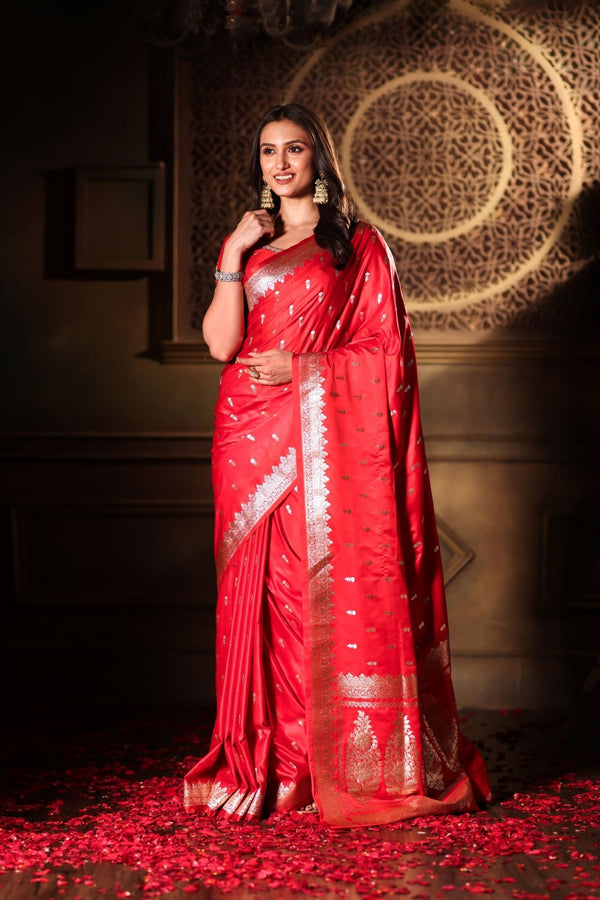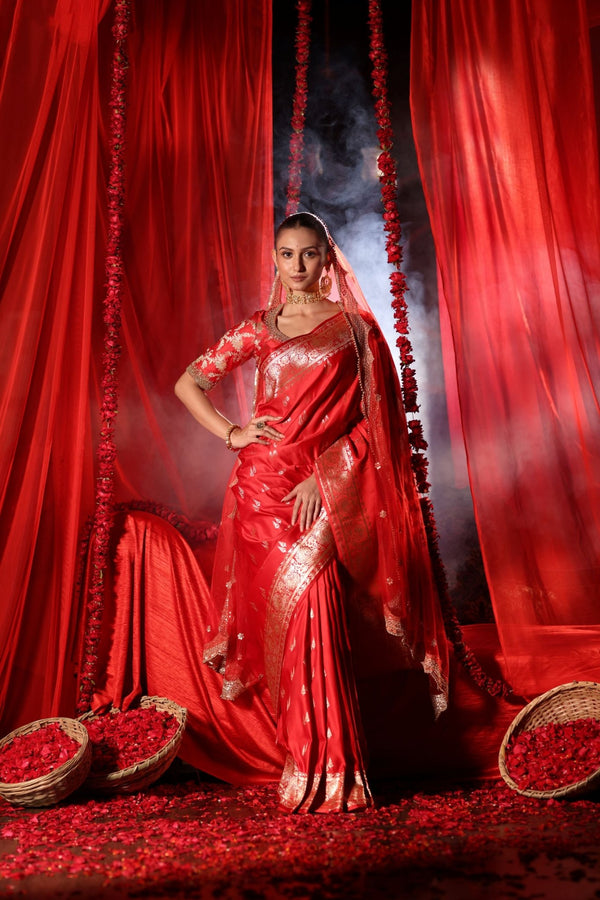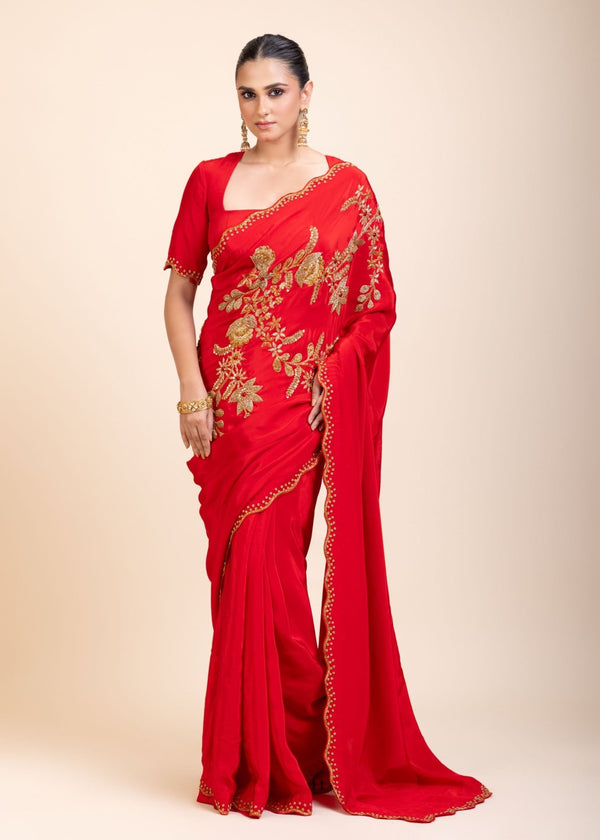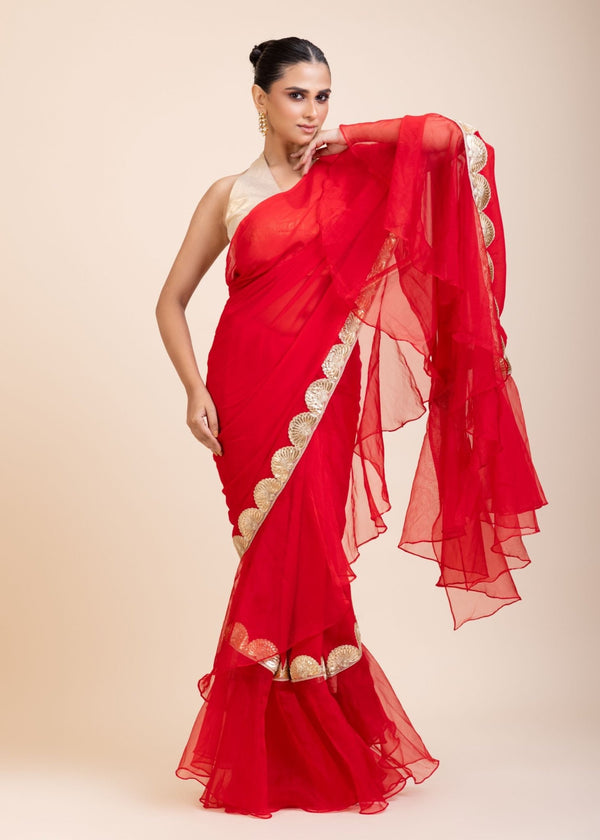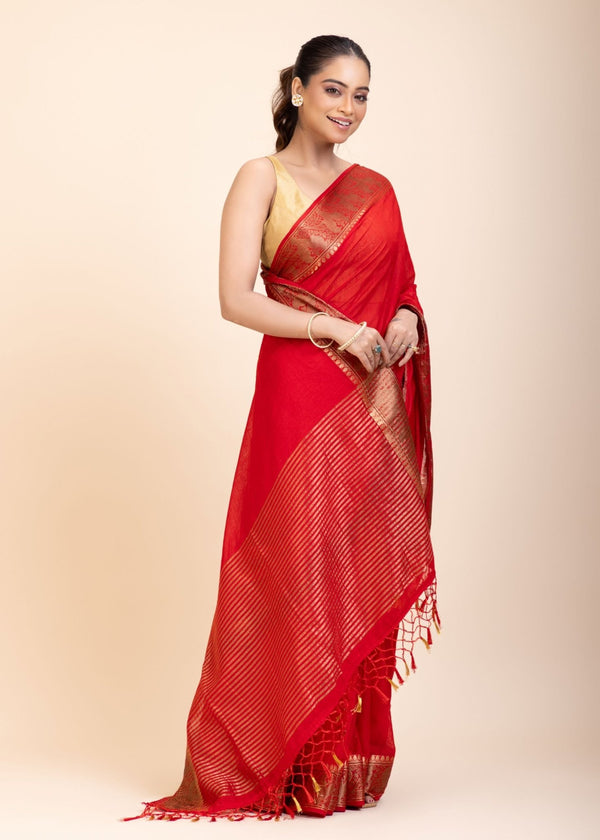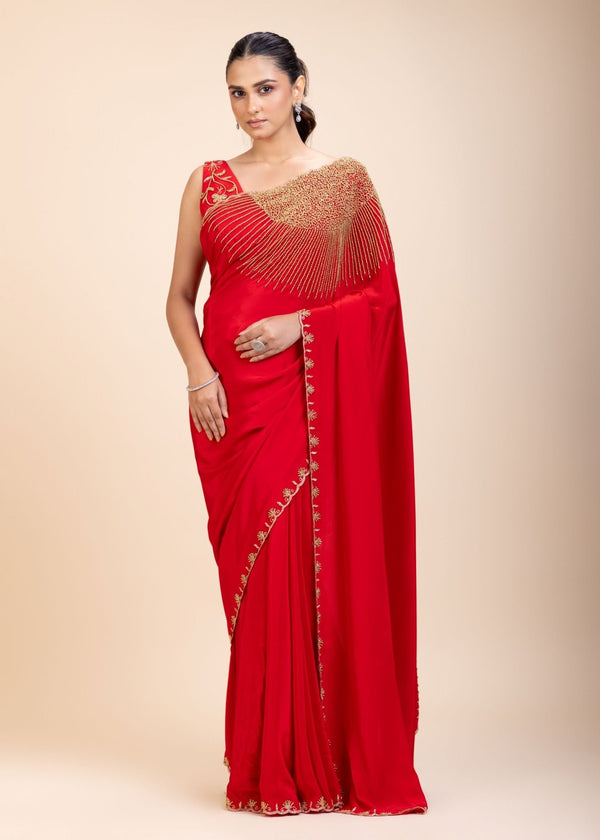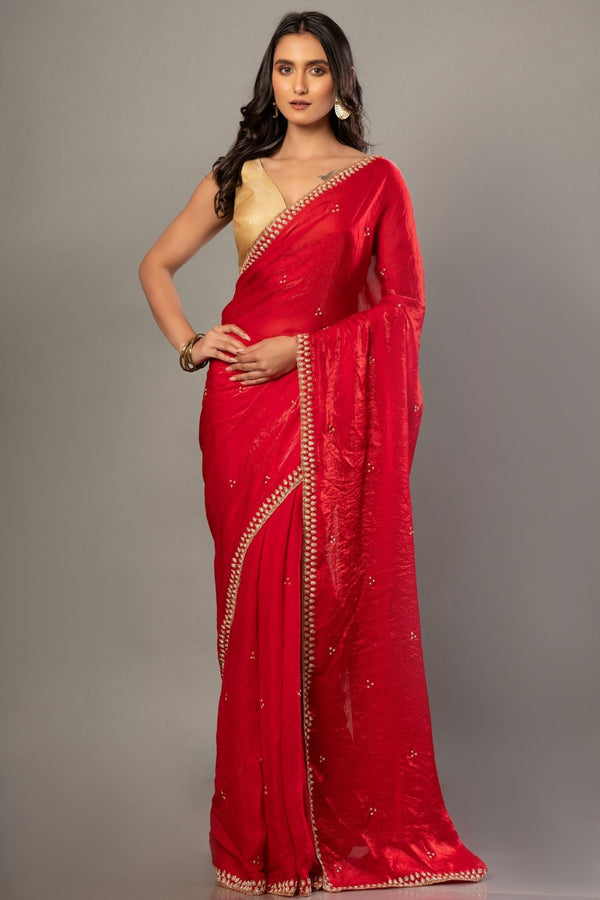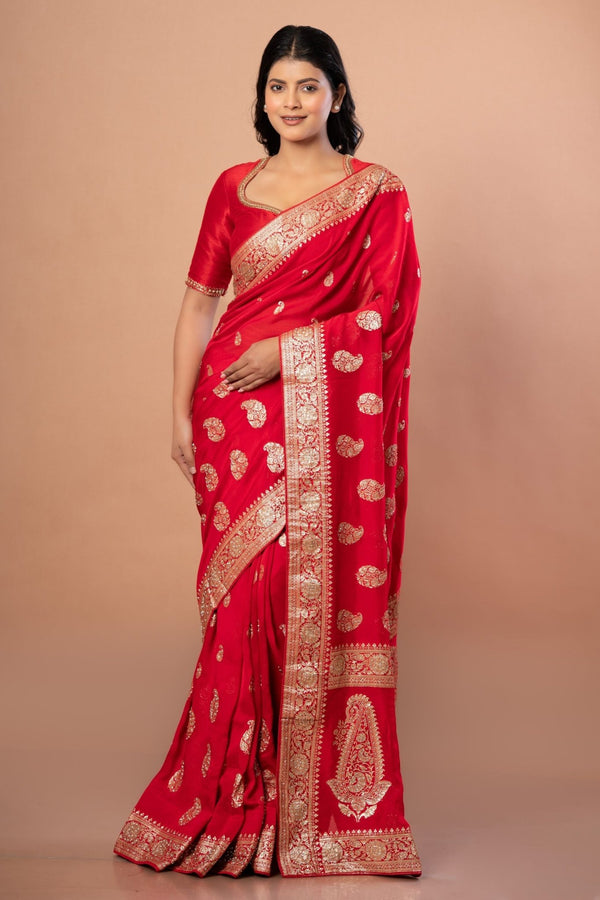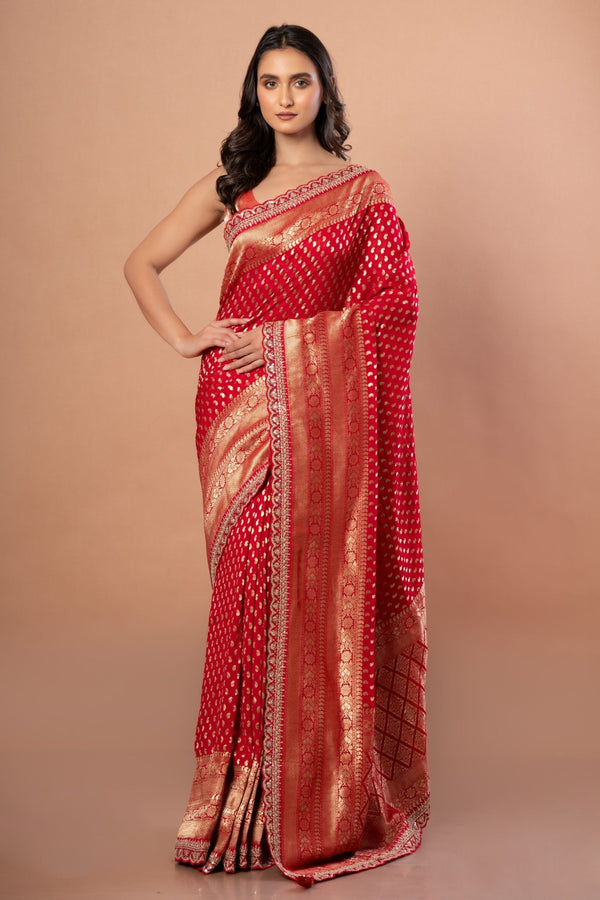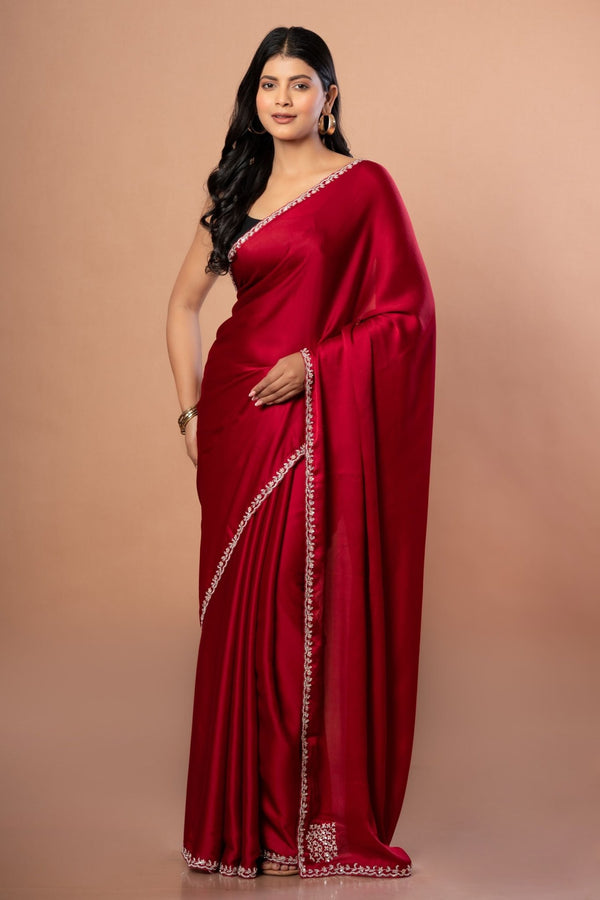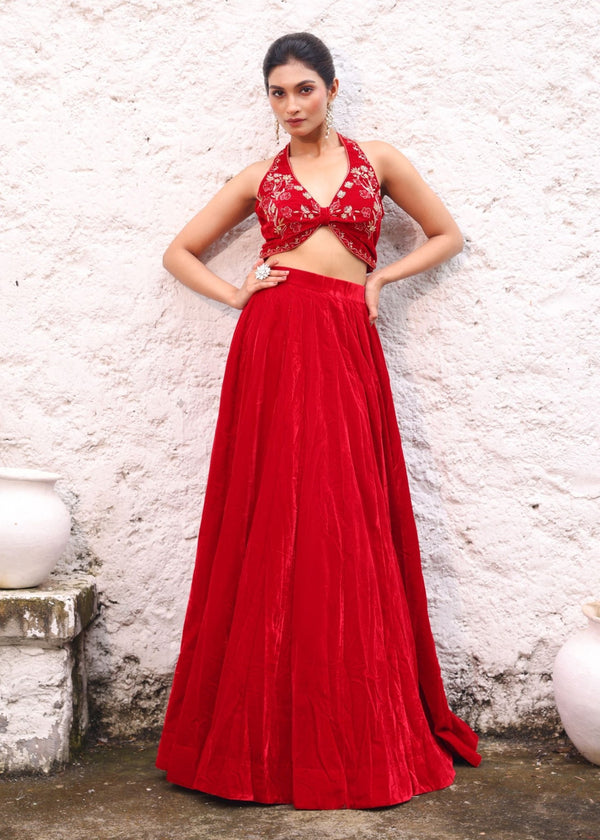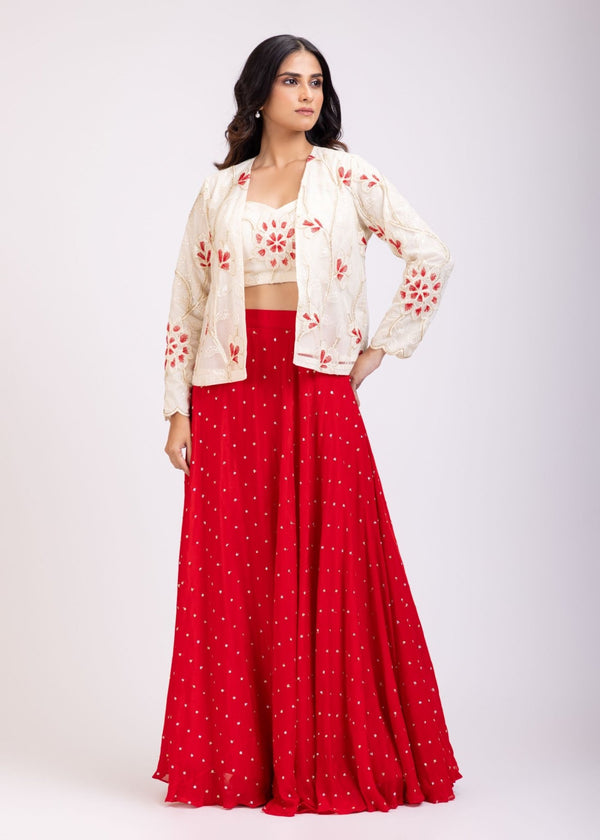




Red is one of the most timeless colours for Indian weddings. It can look traditional, glamorous, romantic, or modern depending on the outfit, fabric, embroidery, and styling. But when you are deciding between a red saree and a red lehenga, the choice is not simply about which outfit looks prettier. Your role at the wedding, the ceremony, comfort level, body proportions, venue, and amount of movement you expect can all influence which outfit works better. A red saree offers the elegance of a classic Indian drape, while a red lehenga creates a more structured and festive silhouette. Both can look stunning, but they create very different experiences. If you are a bride, bridesmaid, close family member, or wedding guest, understanding these differences can help you choose an outfit that feels appropriate rather than simply following a trend.
Red Saree vs Red Lehenga: The Key Difference
The easiest way to understand the choice is to think about silhouette, movement, occasion, and styling flexibility. A saree gives you more freedom to change the overall look through draping, blouse design, jewellery, and pallu styling. A lehenga, on the other hand, creates a defined outfit with a skirt, blouse or choli, and usually a dupatta.
| Your priority | Better choice | Why |
|---|---|---|
| Long wedding ceremony | Saree | Easier to adjust the drape and generally less restrictive |
| Lots of dancing | Lehenga | No long pallu to constantly manage |
| Traditional wedding | Saree | Handloom and woven sarees naturally complement traditional settings |
| Grand reception | Lehenga | Structured silhouette photographs well in evening settings |
| Rewearing the outfit | Saree | Changing the blouse and drape can create a completely different look |
| Heavy jewellery | Simpler saree | Prevents the overall look from becoming visually crowded |
| Statement blouse | Saree | The blouse becomes an important focal point |
This is why there is no universal winner. The better choice depends on what you want the outfit to do for you.
When a Red Saree Is the Better Choice
Choose a red saree when you want your wedding look to feel elegant, traditional, and versatile. A silk, Banarasi, Kanjivaram, Jamdani, or richly woven saree can create a sophisticated appearance without needing a heavily embellished outfit. For a reception, a red organza or georgette saree can feel lighter and more contemporary, while a red silk saree or a Banarasi silk saree can provide the richness expected at a traditional wedding.
The saree is also a practical choice when you already have a blouse that you love or want to create different looks from the same saree. A heavily embroidered blouse can make a simple saree look festive, while a plain or minimally detailed blouse can balance an ornate saree.
A red saree works especially well when:
- You prefer traditional Indian dressing.
- You want flexibility in how you drape and style the outfit.
- You want to reuse the saree for future occasions.
- You prefer a graceful rather than heavily structured silhouette.
- You are attending a wedding as a close family member or guest.
- You want your jewellery and blouse to become part of the overall styling.

When a Red Lehenga Is the Better Choice
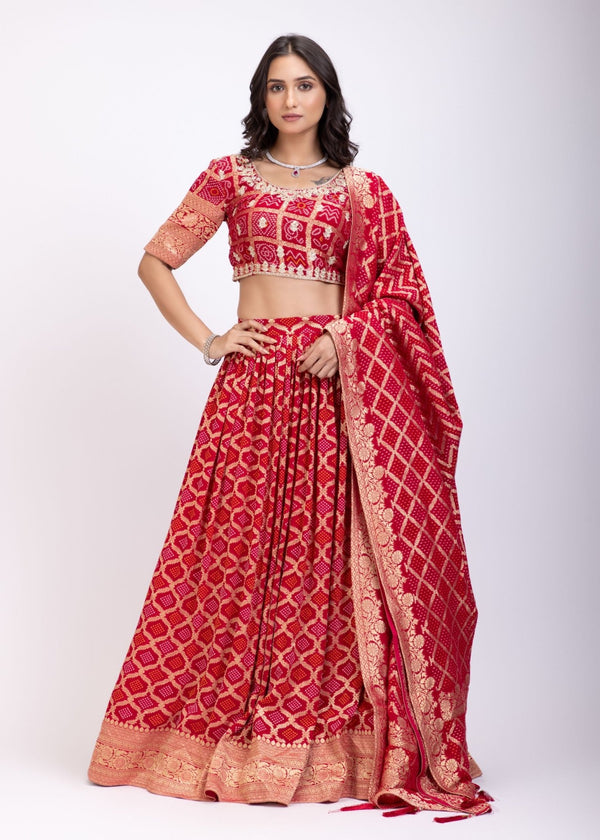
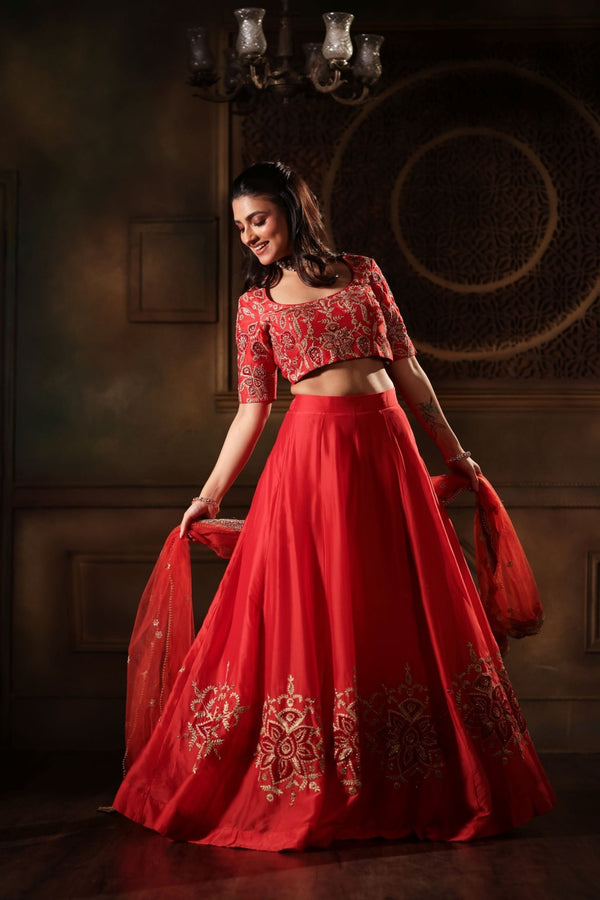
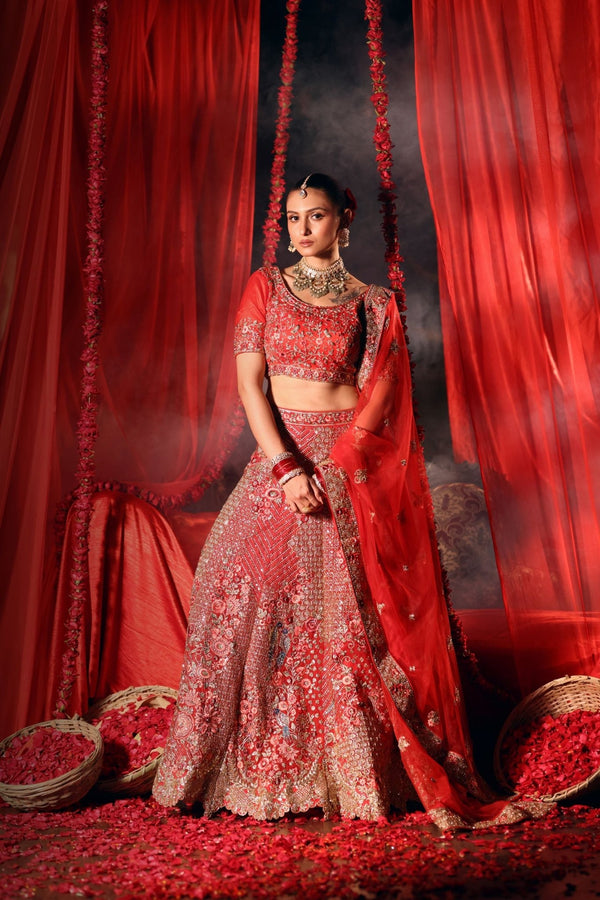
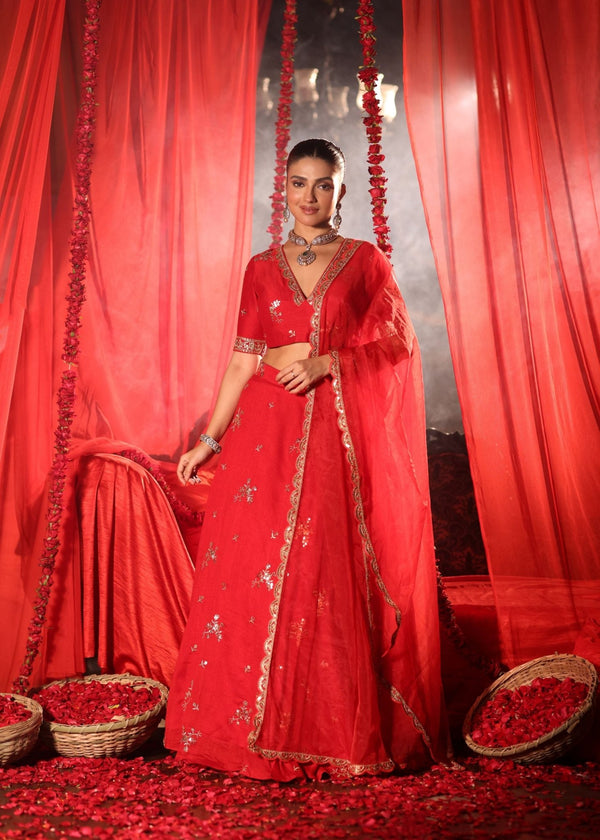
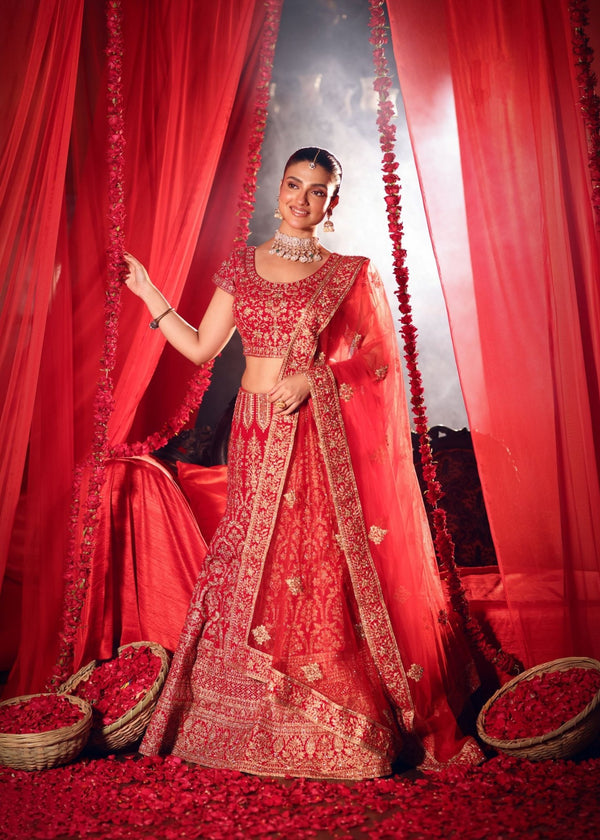
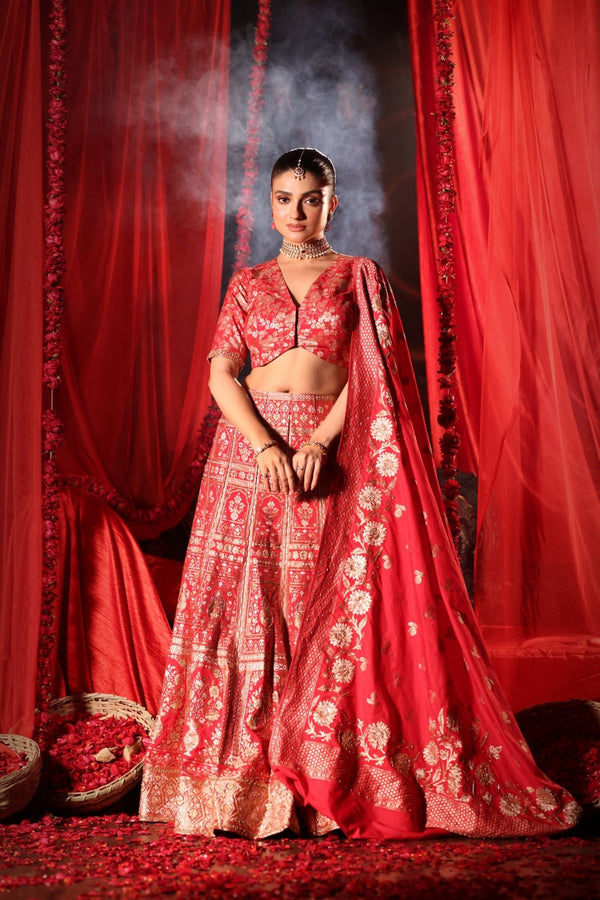
A red lehenga is a strong choice when you want a more dramatic and celebratory appearance. The fitted or structured choli, flared skirt, and dupatta create a complete festive silhouette. This makes the lehenga particularly popular for bridal celebrations, sangeet ceremonies, engagement parties, and grand receptions.
Lehengas also make sense when movement is an important part of the event. If you expect to dance, participate in photographs, or move around frequently, a well-fitted lehenga can sometimes feel more manageable than a saree with a long pallu. However, the skirt's flare, waist fit, blouse construction, and dupatta placement still matter. A beautiful lehenga that is too heavy or poorly fitted can quickly become uncomfortable.
A red lehenga may be the better choice when:
- You want a statement-making wedding outfit.
- You are attending a sangeet or reception.
- You want a more structured silhouette.
- You enjoy detailed embroidery and embellishment.
- You expect to dance or move around frequently.
- You want a coordinated blouse, skirt, and dupatta look.

Red Saree or Red Lehenga Based on Your Wedding Role
Your role at the wedding should be one of the first things you consider. A bride may choose either outfit depending on the ceremony, but the same level of bridal grandeur may not be appropriate for a wedding guest. Bridesmaids and close family members can usually experiment more with colour combinations, blouse designs, embroidery, and contemporary styling.
For example, a bride could choose a richly embroidered red bridal lehenga for the main wedding ceremony and a red silk saree for another celebration. A bridesmaid might choose a lighter red saree with a contrasting blouse, while a wedding guest could opt for a less embellished red saree or a simple festive lehenga.
A Simple Decision Guide
- Bride → Red lehenga or richly woven red saree
- Bridesmaid → Contemporary red saree or moderately embellished lehenga
- Close family member → Silk, Banarasi, or festive red saree
- Wedding guest → Elegant red saree or lightweight lehenga
- Sangeet guest → Lehenga if dancing and movement are priorities
- Reception guest → Saree or lehenga depending on the venue and dress code
The important point is to consider the formality of the event, not only your relationship with the couple.
Which Outfit Gives You Better Value for Money?
When comparing a red saree and a red lehenga at the same price, the better investment is not always the outfit with more embroidery or a more expensive-looking finish. Value for money depends on how often you can wear the outfit, how easily you can restyle it, how comfortable it remains over time, and whether individual pieces can be used separately. For example, a ₹30,000 handwoven silk saree may look relatively simple compared with a heavily embellished ₹30,000 lehenga, but the saree can become several different outfits simply by changing the blouse, jewellery, drape, or accessories. This makes the cost-per-wear potentially lower over time.
Why a Saree Can Offer Better Long-Term Value
A good saree is often easier to adapt to different occasions. You can wear the same red saree with a heavily embroidered blouse for a wedding, a simple silk blouse for a family celebration, or a contemporary blouse for a reception. The pallu can also be draped differently to change the overall appearance. If the saree has a timeless weave, border, or fabric rather than highly occasion-specific embellishment, it may remain relevant for years rather than being associated with one particular wedding.
There is also value in the fact that the blouse does not have to remain permanently connected to the saree. A red saree can be paired with a contrasting blouse in another colour, while the original blouse can potentially be worn with another saree. This creates more combinations without requiring another complete outfit.
When a Lehenga Can Be the Better Investment
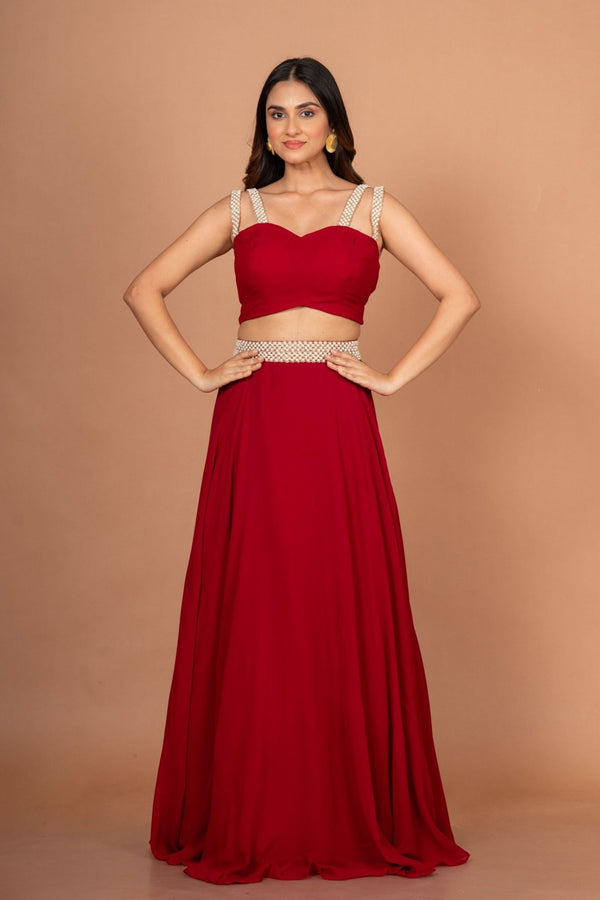
A lehenga should not automatically be considered less versatile. A well-designed lehenga can offer excellent value when its components are chosen thoughtfully. The skirt can sometimes be paired with another blouse or crop top, the choli can be styled with a different saree or skirt, and the dupatta can be reused with another ethnic outfit. The key is to avoid buying a lehenga where every element is so heavily matched that it can only be worn together.
For example, a red lehenga with a relatively timeless skirt, a detachable dupatta, and a versatile blouse can provide more styling options than a heavily themed bridal set. The more independently wearable each component is, the greater the long-term value of the lehenga.

How Fabric Changes the Look of a Red Saree or Lehenga
The colour red may remain the same, but the fabric can completely change how the outfit looks and feels. This is one area where shoppers often focus too much on colour and not enough on construction.
For a traditional daytime wedding, a lightweight silk, handwoven saree or a breathable cotton silk saree can be more comfortable than a heavily layered outfit. For an evening reception, velvet, rich silk, satin blends, brocade, or heavily embroidered fabrics can create a more dramatic appearance. Organza and georgette can offer a lighter, more fluid look when you want something festive without excessive weight.
For lehengas, the same principle applies. A heavily embroidered velvet or brocade lehenga can feel luxurious but may be warmer and heavier. Lightweight georgette, organza, silk blends, or carefully constructed layered skirts can provide movement while still looking festive.

Before buying, check:
- Fabric weight – Will you be comfortable wearing it for several hours?
- Lining – Does the skirt or blouse have comfortable inner construction?
- Embroidery placement – Is the detailing attractive without making the outfit excessively heavy?
- Drape or flare – Does the garment move naturally when you walk?
- Blouse fit – Can you sit, raise your arms, and move comfortably?
- Weather and venue – Will the fabric suit an indoor, outdoor, summer, or winter wedding?
These practical details often make more difference to your experience than the difference between a saree and lehenga.
Styling a Red Saree vs Styling a Red Lehenga
Styling is where you can give the same red outfit a completely different personality. A red saree with traditional gold jewellery can look classic, while the same saree paired with a velvet red blouse design and diamond-inspired jewellery can create a richer, more contemporary wedding look. You can also experiment with blouse necklines, sleeve lengths, belts, statement earrings, waist chains, and different pallu styles.
A red lehenga already has a strong visual presence, so styling it requires more balance. If the lehenga has dense embroidery, you may not need an equally heavy necklace and earrings. If the choli is relatively simple, statement jewellery can become the focal point.

Styling Direction
For a traditional look:
Red saree + gold jewellery + traditional blouse + classic drape
For a modern look:
Red saree + contemporary blouse + statement earrings + minimal accessories
For a grand festive look:
Red lehenga + embellished choli + layered jewellery + styled dupatta
For a lighter wedding-guest look:
Red lehenga + simpler blouse + statement earrings + minimal necklace
The goal is not to match every element. A good wedding outfit usually works because the fabric, jewellery, blouse, and accessories have a clear visual balance.
Which One Is More Flattering for Your Body Shape?
There is no single saree or lehenga style that is universally best for every body shape. Instead of choosing an outfit based on a generic body-type rule, focus on fit, proportions, fabric fall, and where visual details are placed.
A saree can be particularly flexible because the drape can be adjusted around the waist, torso, and shoulder. The blouse can also be tailored to create the neckline and sleeve shape you prefer. A lehenga creates more structure around the waist and hips, so accurate measurements and a comfortable waistband become especially important.
For both outfits, avoid choosing a garment simply because the model photograph looks good. The same neckline, skirt volume, or embroidery placement can look different depending on height, proportions, fabric, and tailoring.
A useful rule: choose the outfit that fits your body comfortably rather than choosing the outfit that is supposedly "best" for your body type.
Red Saree vs Red Lehenga: Which Is Easier to Rewear?
If versatility matters, the red saree usually has the advantage. You can change the blouse, jewellery, hairstyle, and draping technique and create a noticeably different look. A richly woven red saree can also work for weddings, festivals, receptions, family celebrations, and other formal occasions.
A lehenga can also be reworn, but it may require more styling creativity. You can pair the skirt with a different blouse, wear the choli with another saree or skirt, or style the dupatta separately. A less heavily embroidered lehenga generally offers more opportunities for this kind of reuse.
This is worth considering when you are making a significant investment. Instead of asking only, "Which outfit looks better?", ask, "How many occasions can I realistically wear this again?"
Common Mistakes to Avoid When Choosing a Red Wedding Outfit
Even a beautiful red saree or lehenga can become uncomfortable or visually unbalanced if the outfit is chosen only for its appearance.
Avoid these common mistakes:
- Choosing a very heavy outfit for a long wedding ceremony.
- Buying a blouse without allowing enough room for comfortable movement.
- Pairing extremely heavy jewellery with an already heavily embroidered outfit.
- Ignoring the venue and weather.
- Choosing a shade of red without checking it in natural and indoor lighting.
- Selecting a lehenga with excessive flare when the venue has limited space.
- Wearing an unfamiliar saree drape for the first time at an important event.
- Prioritising trends over comfort and personal style.
A wedding outfit should look beautiful in photographs, but it should also work when you are sitting, walking, eating, greeting people, and spending several hours at the celebration.
Should You Wear a Red Saree or Red Lehenga?
The choice between a red saree and red lehenga ultimately comes down to the kind of wedding experience you want. Choose a red saree if you value elegance, traditional craftsmanship, styling flexibility, and long-term wearability. Choose a red lehenga if you want a more structured, festive, and statement-making look, particularly for celebrations where dancing and movement are part of the occasion.
If you are still undecided, use this simple test: choose the red saree for timeless elegance and choose the red lehenga for dramatic celebration. Then consider the ceremony, your role, fabric weight, comfort, budget, and how often you are likely to wear the outfit again.
The best wedding outfit is not necessarily the most heavily embroidered one. It is the one that fits well, suits the occasion, feels comfortable for hours, and allows you to feel confident in your own style.