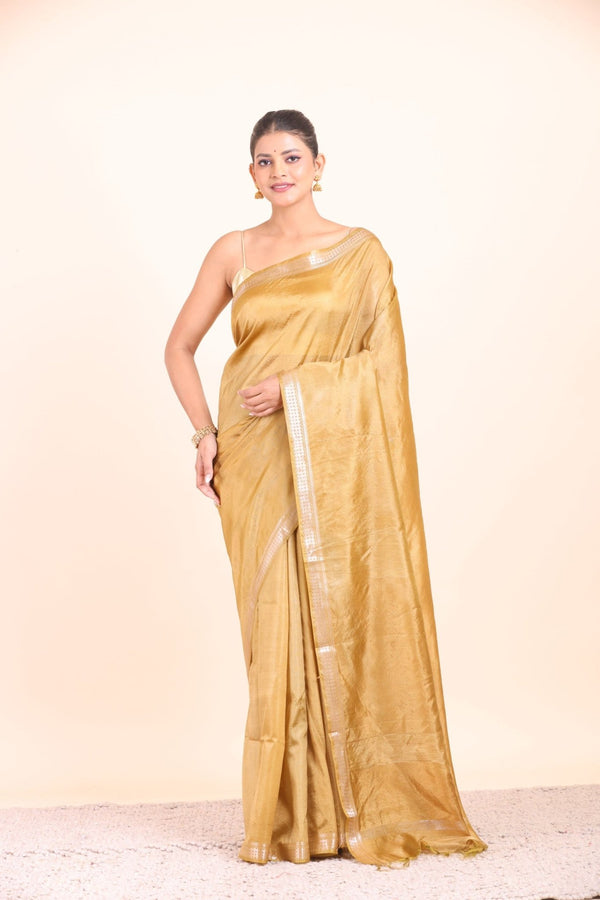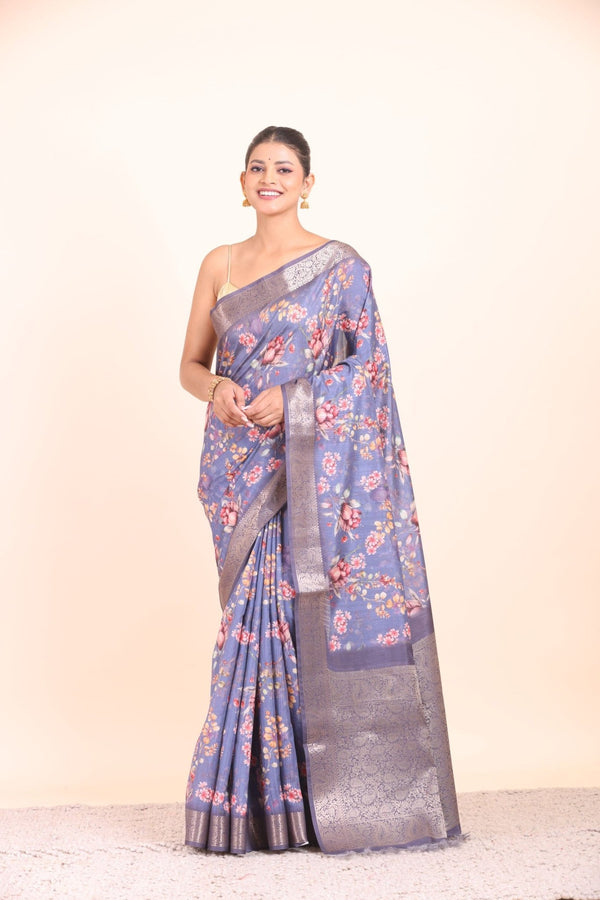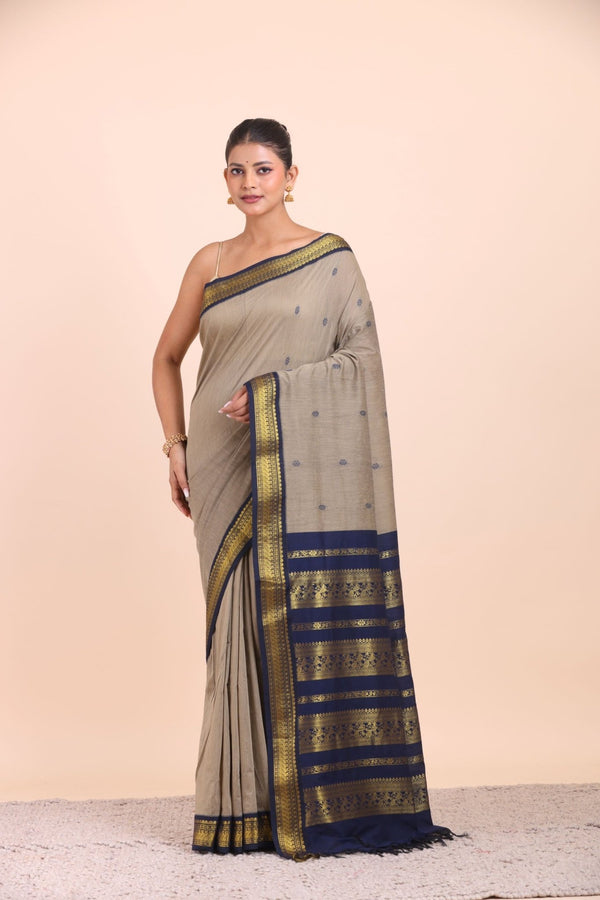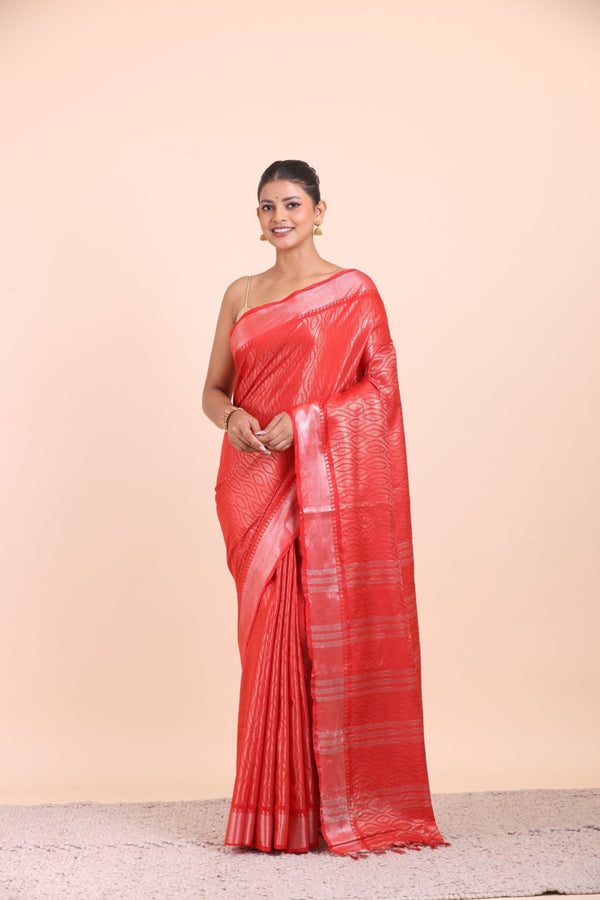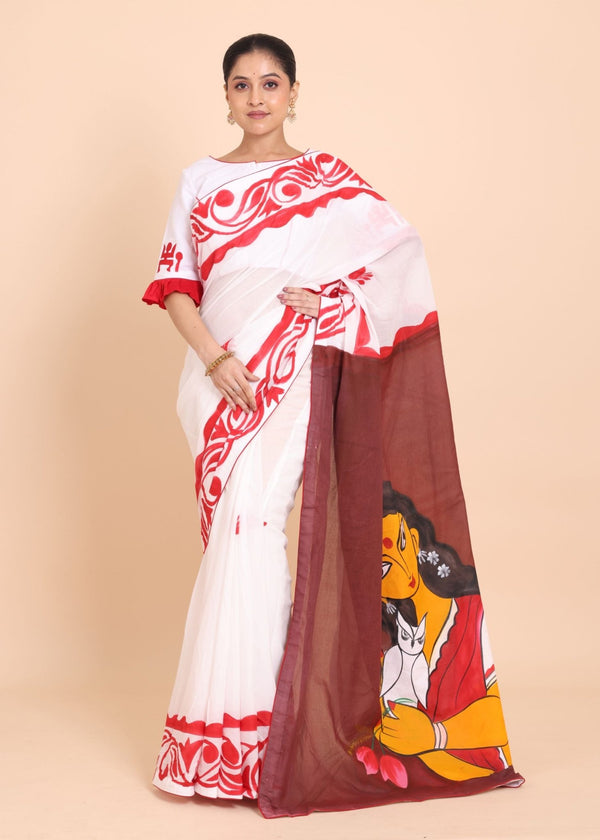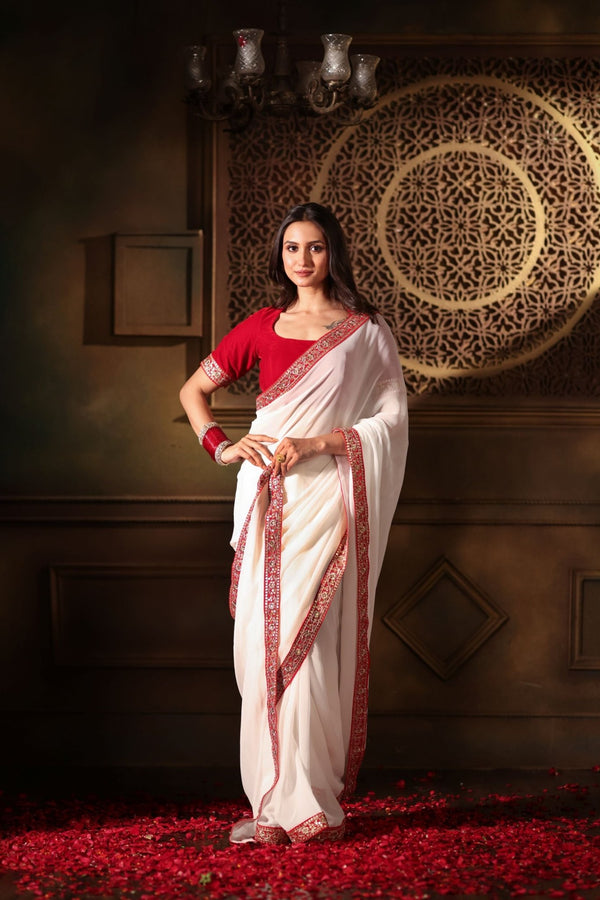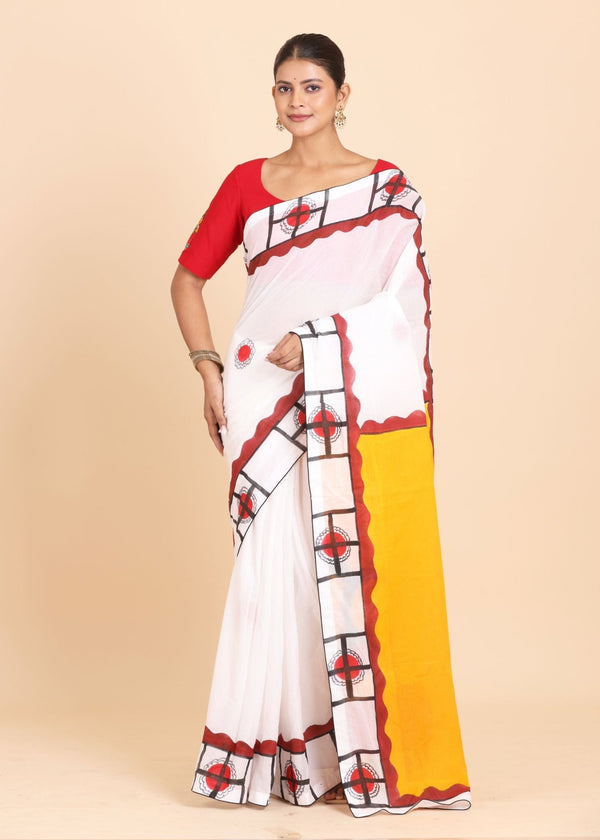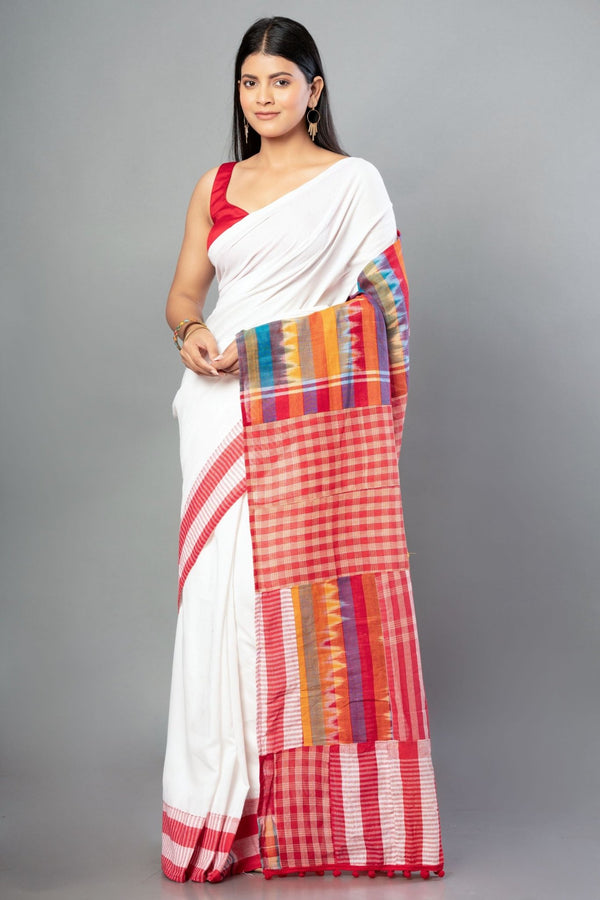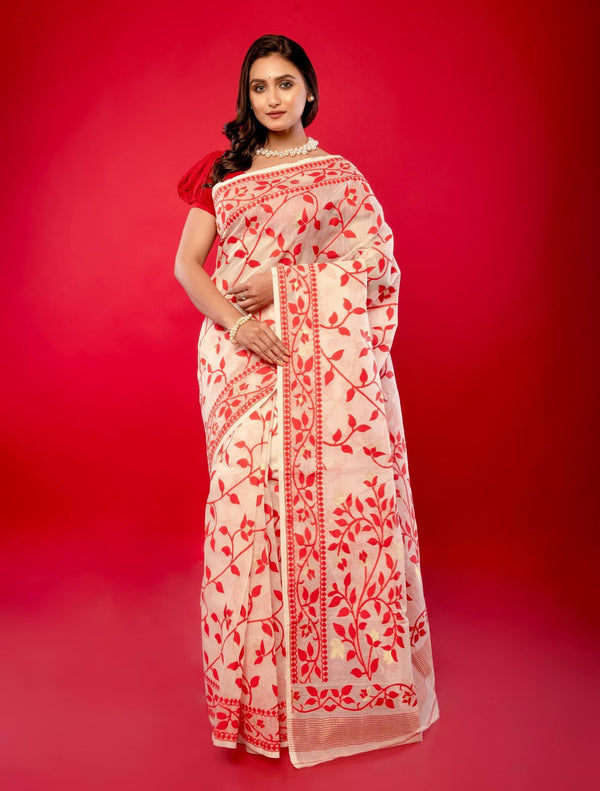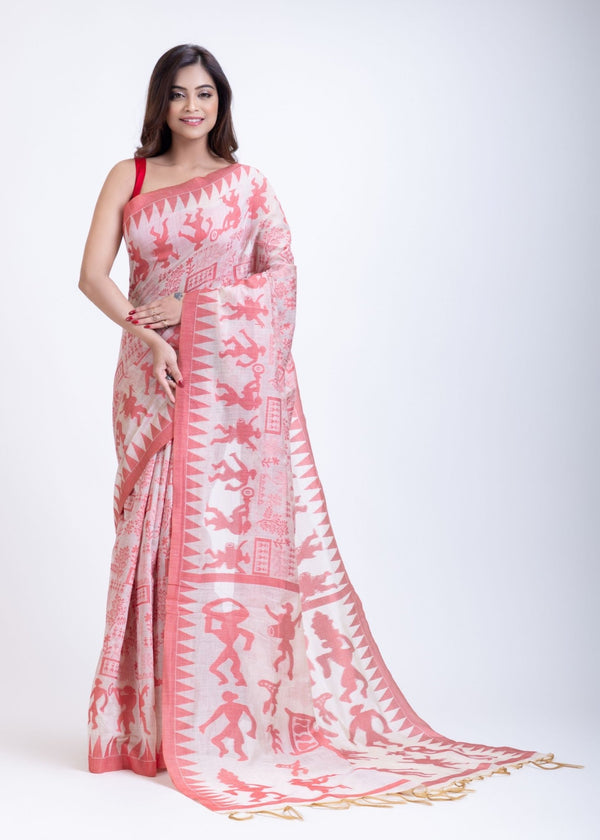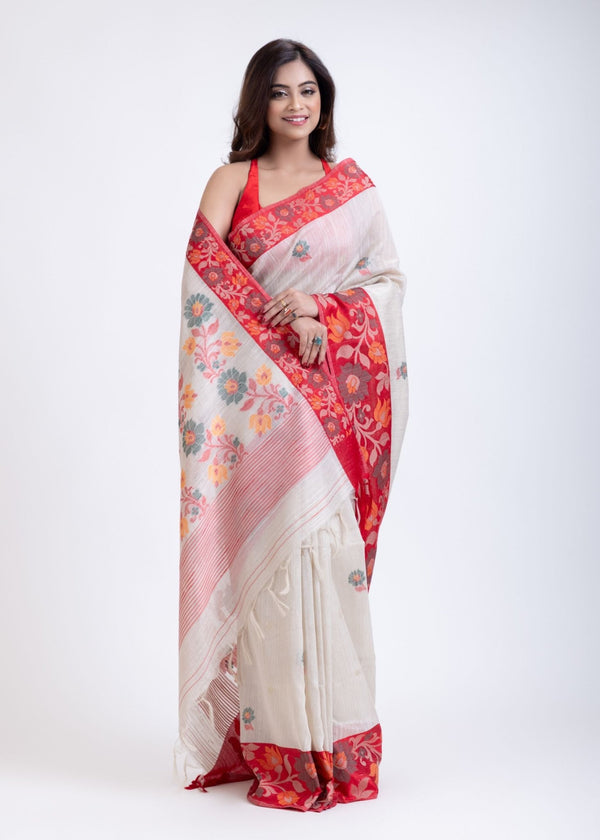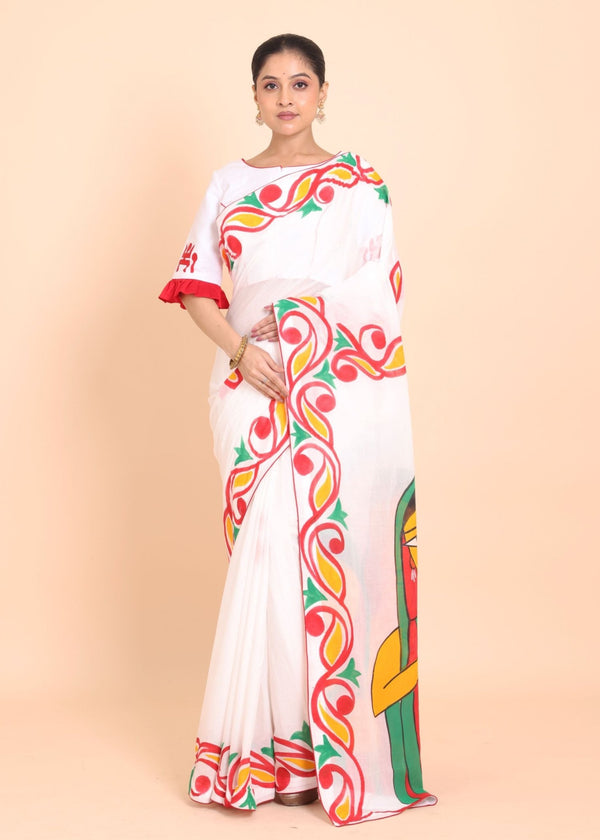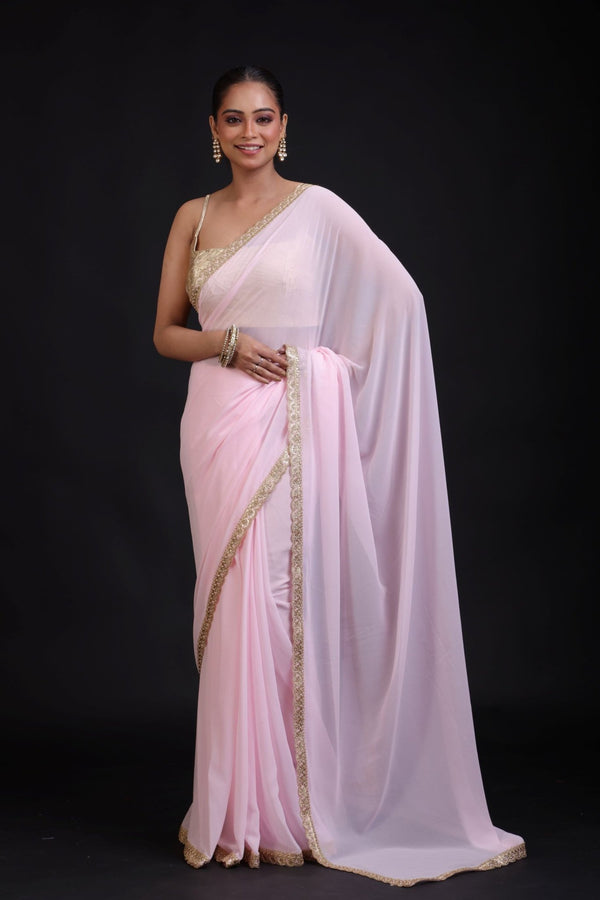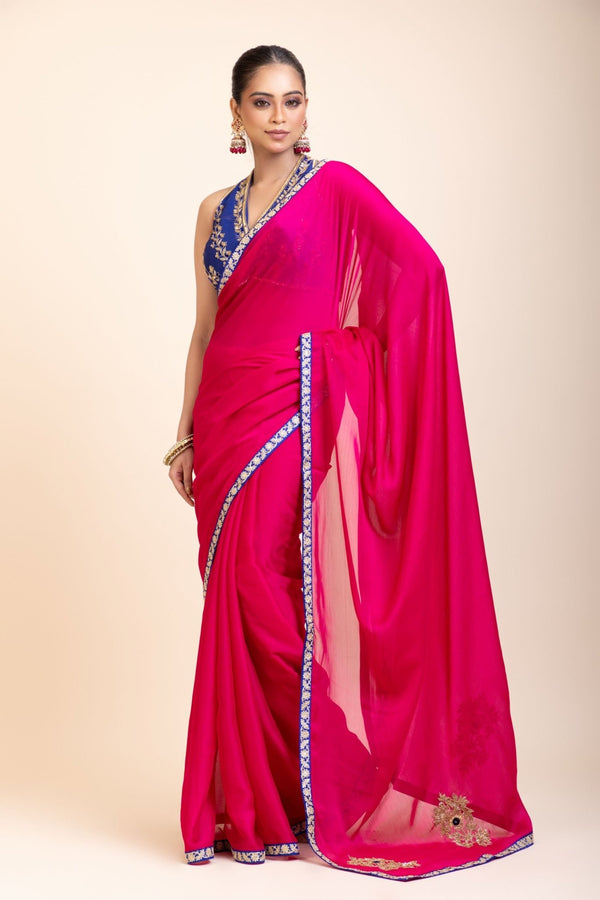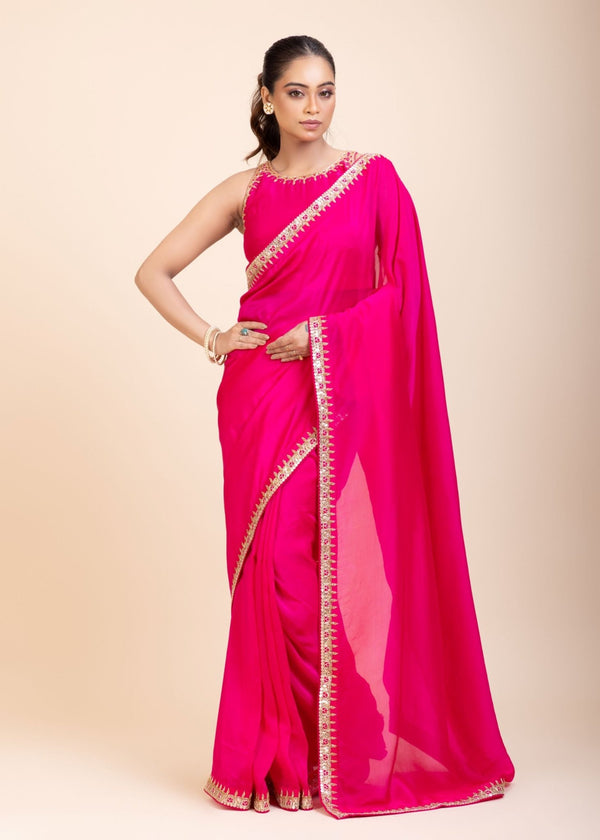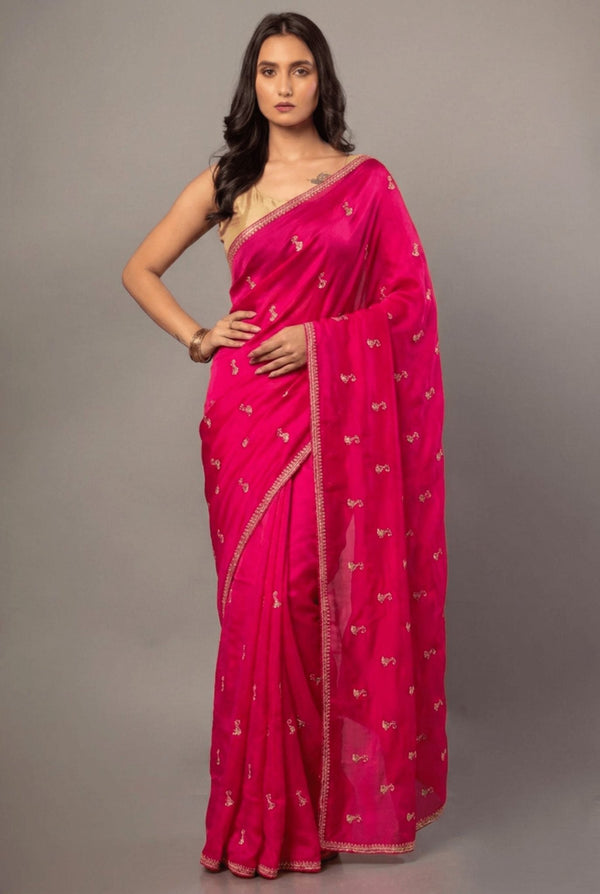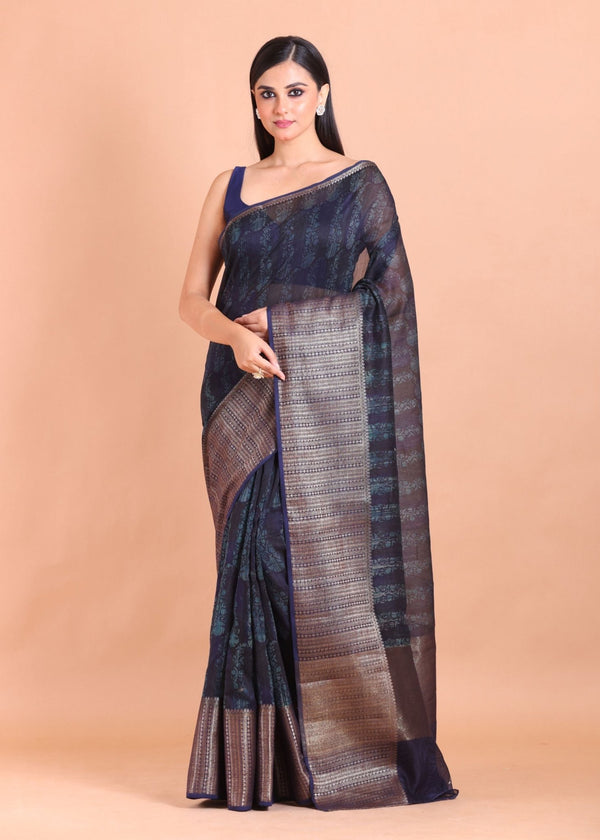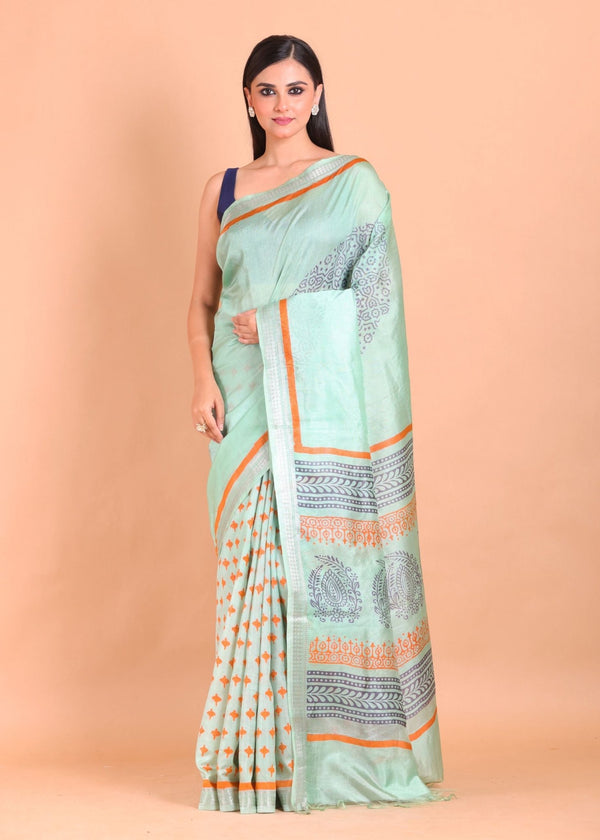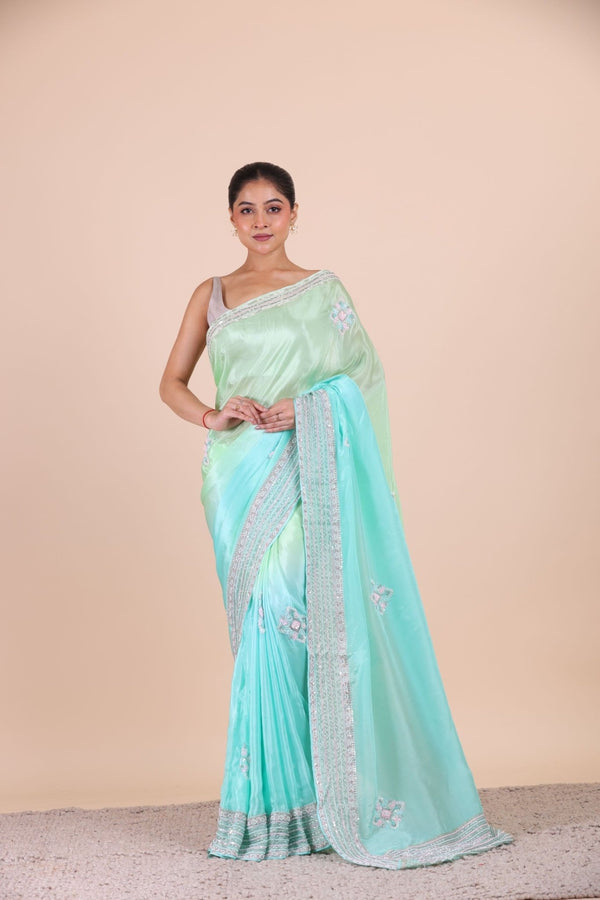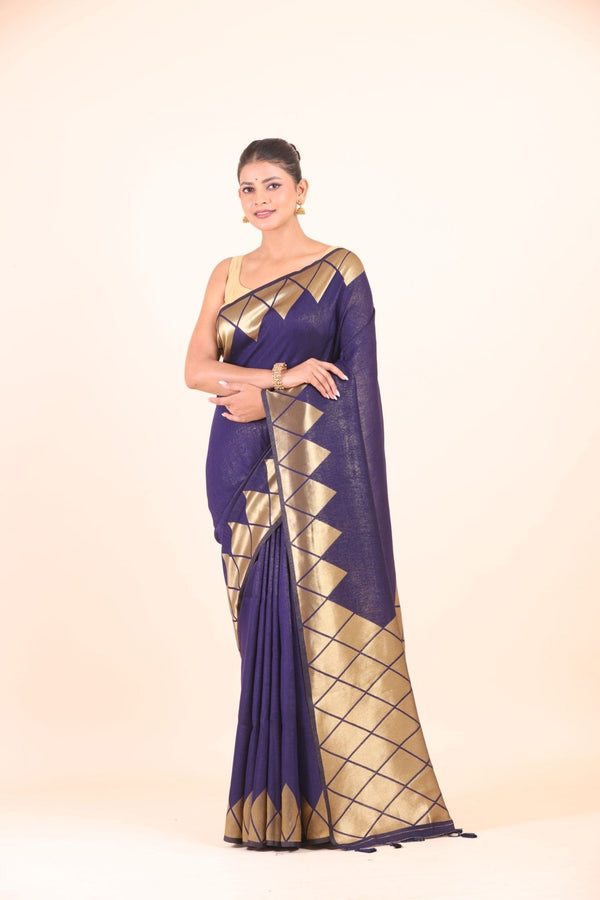




Choosing a saree for your wedding day is not just a styling decision, it is one of the most personal choices you will make in the entire planning process. The colour you wear on that day will live in every photograph, every memory, and every retelling of the story for years to come. So, when brides ask which colour saree looks best for a wedding, the honest answer is: it depends on more than just what is trending.
This guide lists down some of the most-loved bridal saree colours. Each of those saree colours carries a traditional feel and are visually impactful, so you can make that decision with real clarity. Scroll down to dive deep into colours of sarees for brides in weddings.
Why Saree Colour Matters for a Bride in Wedding
For a bride, the saree colour sets the emotional tone of the entire look. A deep red commands attention and is synonymous with celebrations. A blush pink feels intimate and romantic. An emerald green reflects groundedness, regality, and cultural layeredness. Each colour communicates something without a single word being spoken and on a wedding day, that visual language matters enormously.
There is also the question of how colour works with skin tone, lighting, and the overall wedding palette. A shade that photographs stunningly in natural daylight may flatten under artificial banquet lighting. A colour that looks muted in person can come alive in silk. These are the practical realities that experienced bridal stylists account for, and that brides often only discover after the fact.
Beyond aesthetics, colour carries cultural and regional meaning in Indian weddings. Red is auspicious across most communities. White and cream hold significance in certain South Indian ceremonies. Gold-worked greens and maroons are deeply rooted in Bengal, Maharashtra, and Tamil Nadu bridal traditions. Knowing your colour is also knowing your story.
Best Bridal Saree colours for weddings
Not every colour carries the same weight on a wedding day. The right bridal saree colour depends on the ceremony, the fabric, and what you want that day to feel like. Here are the shades that have stood the test of time and why each one earns its place.
Classic Red Bridal Saree For Wedding For A Bride
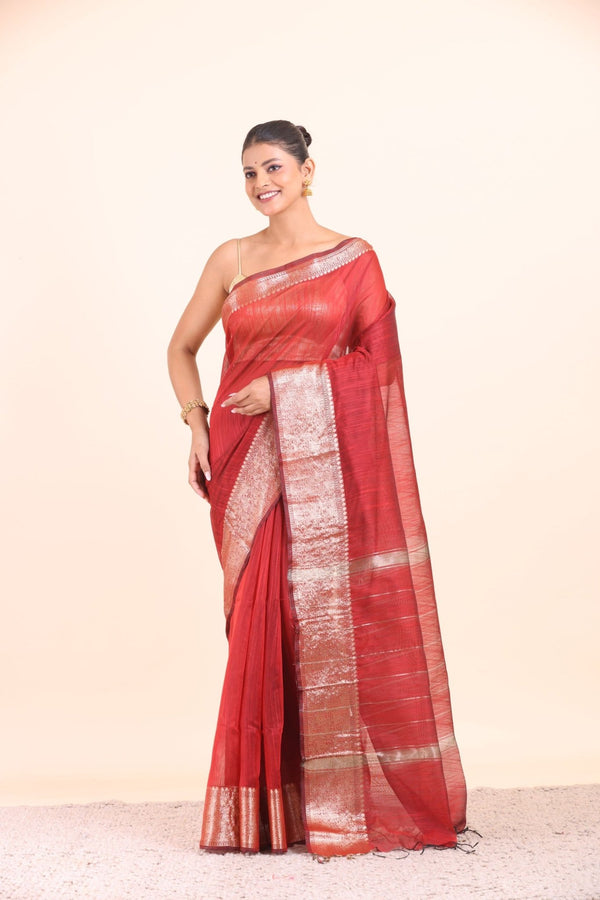
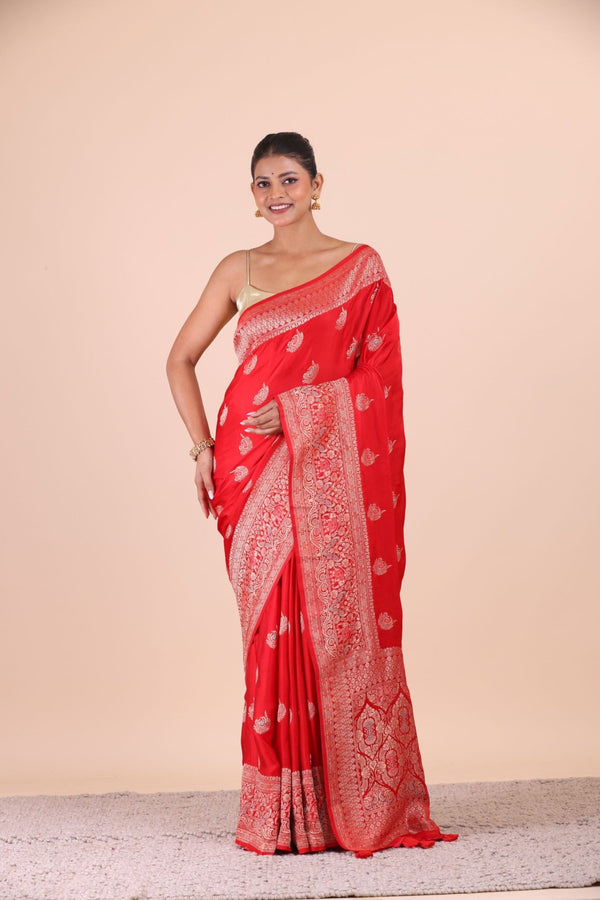
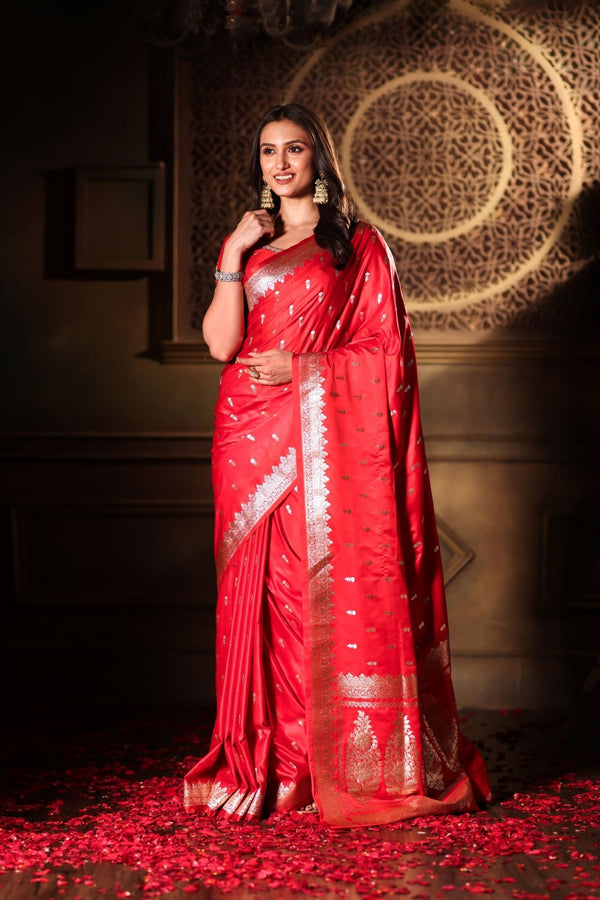
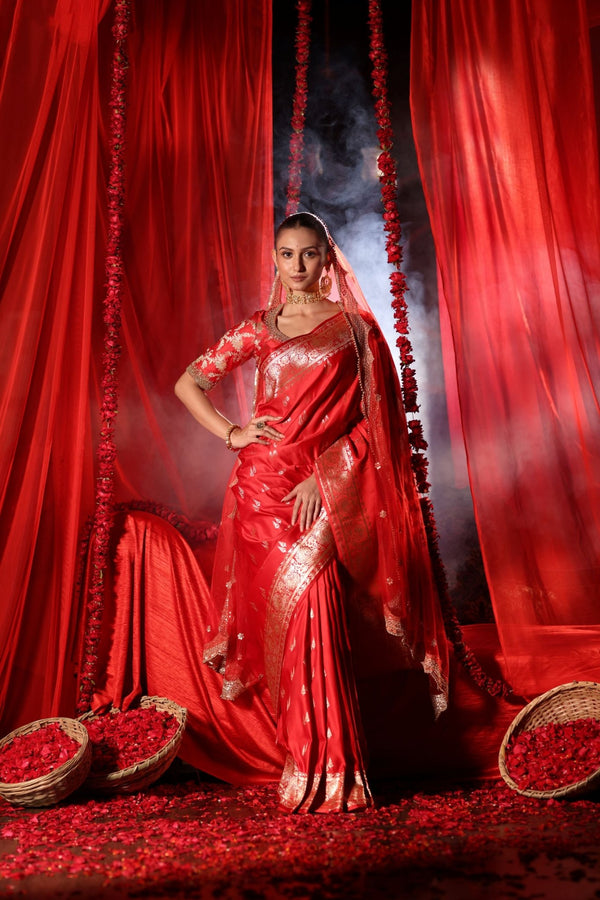
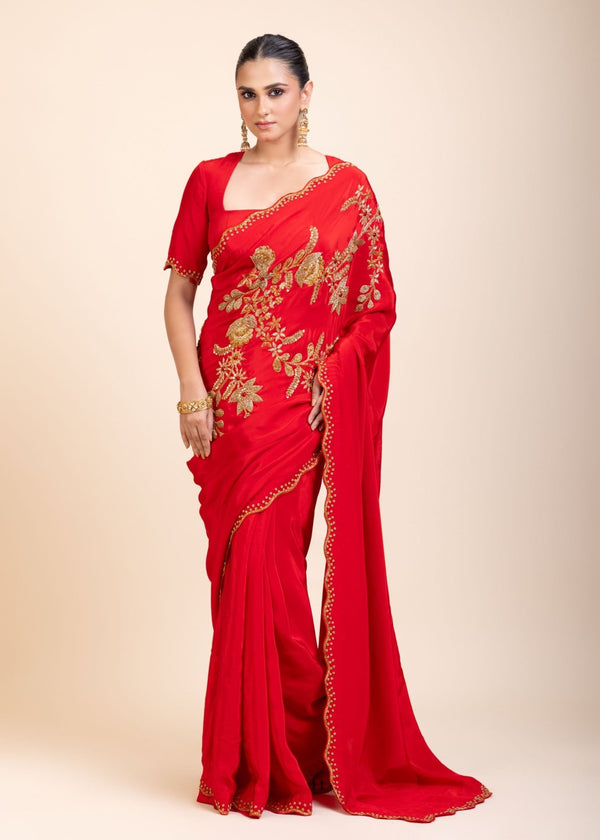
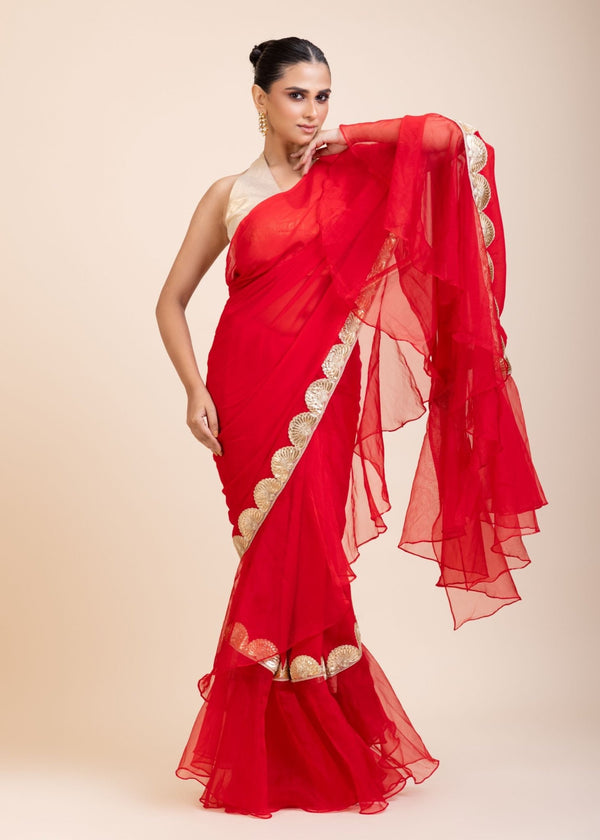
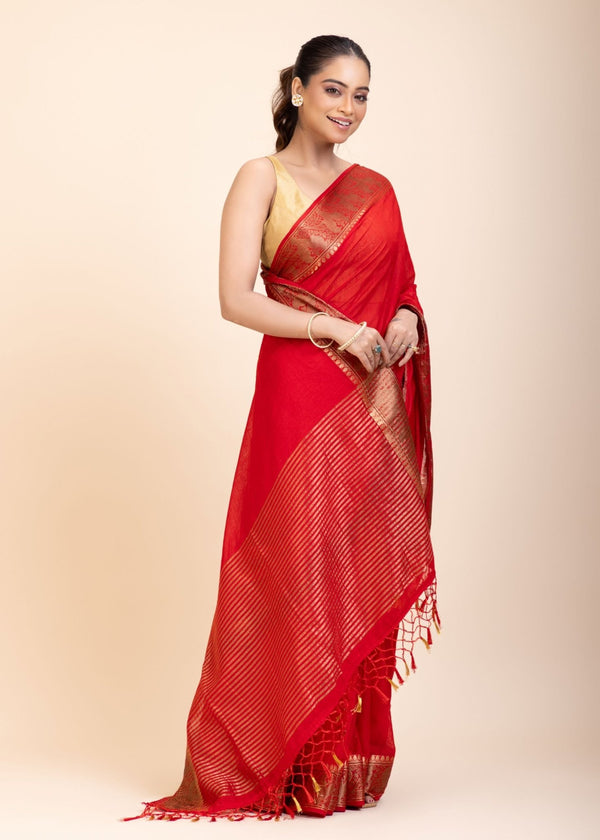
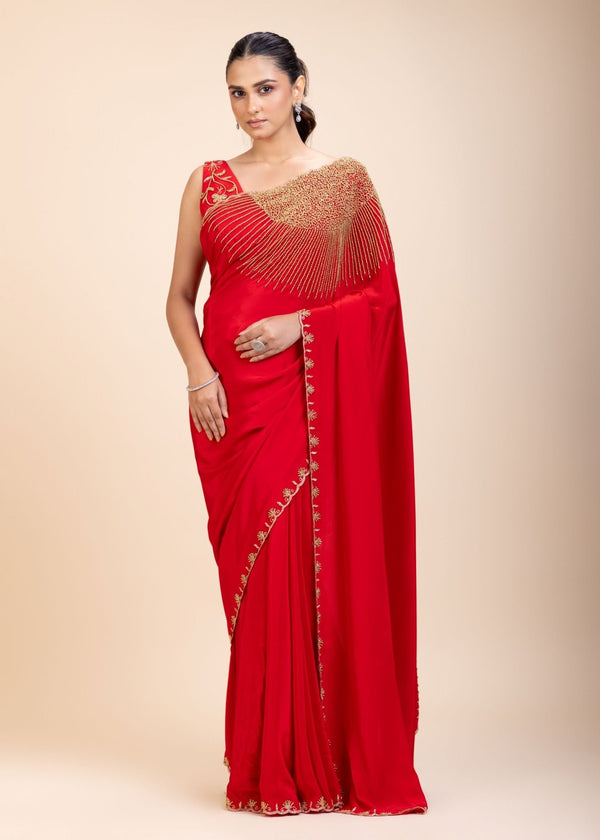
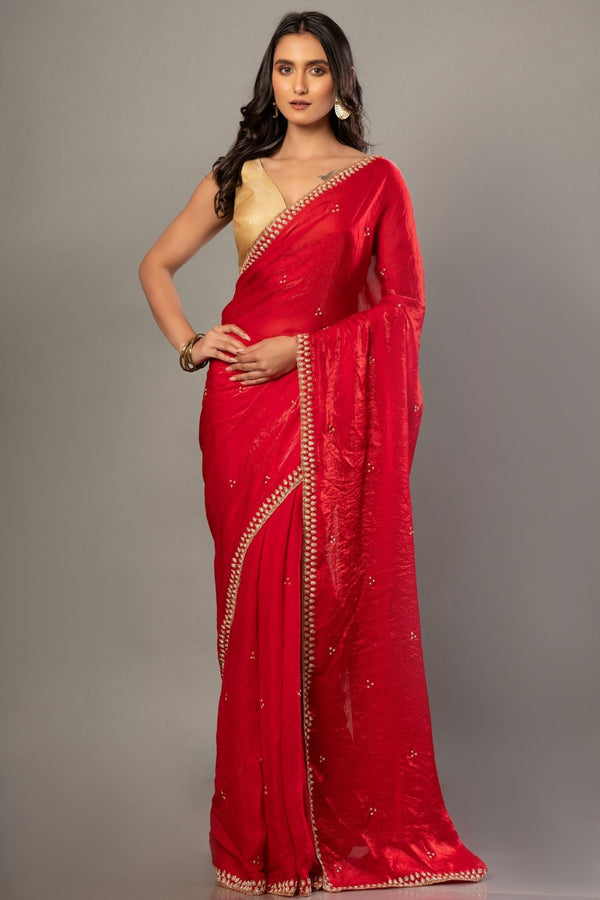
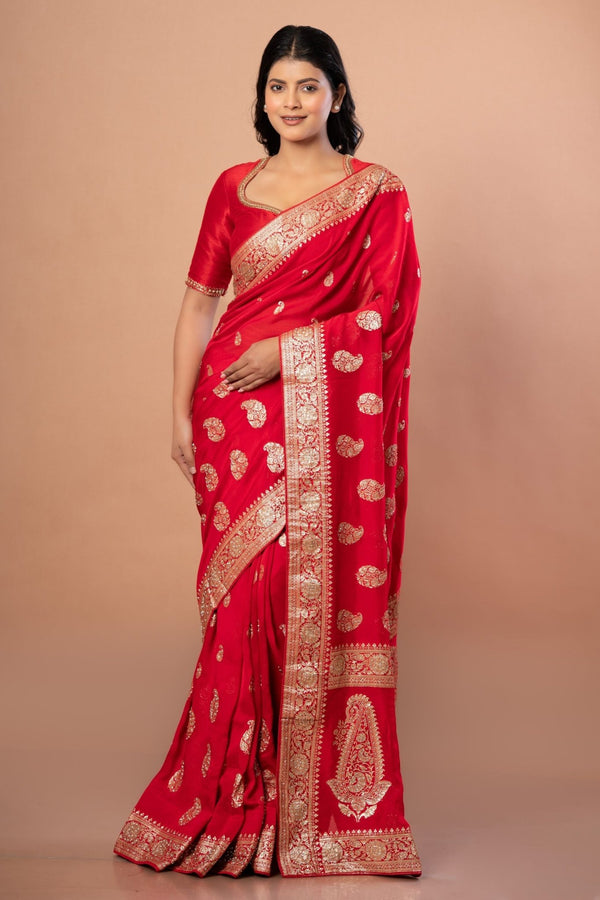
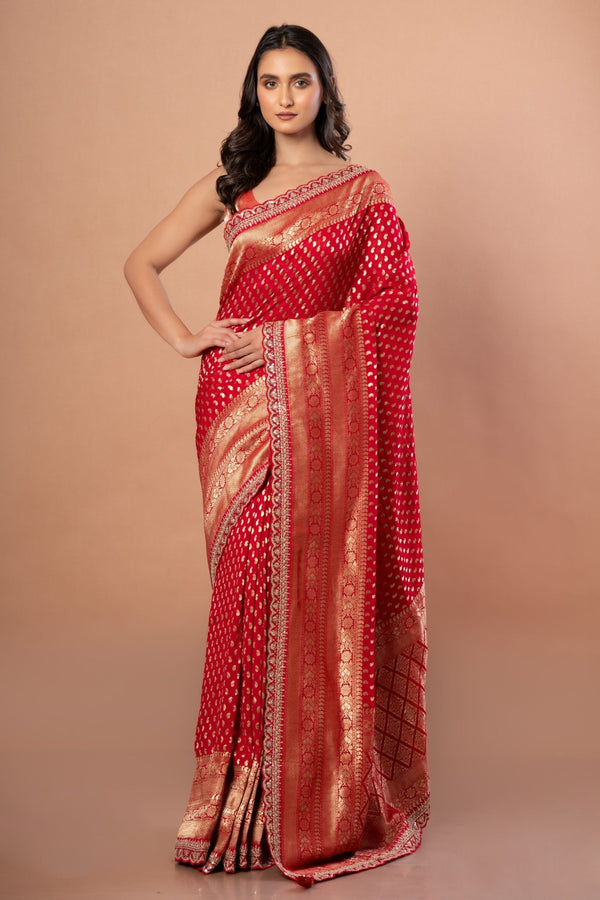
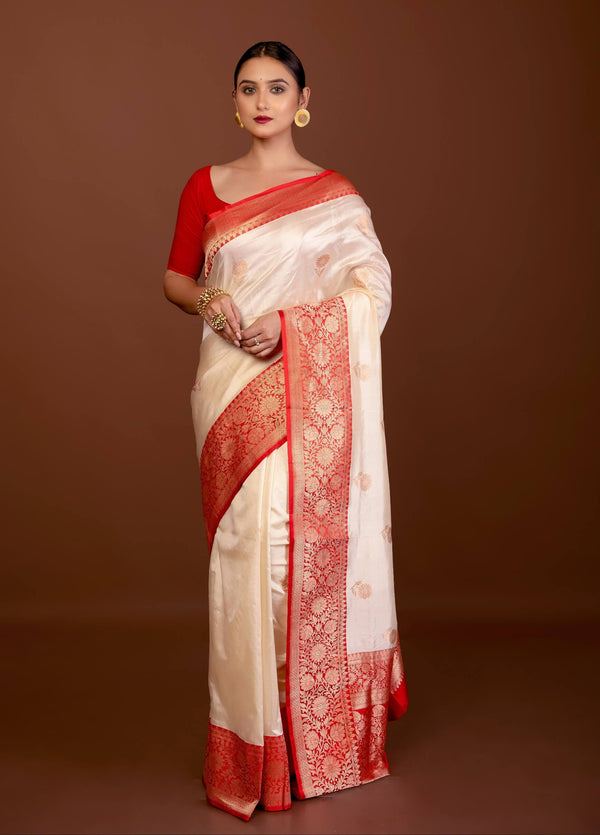
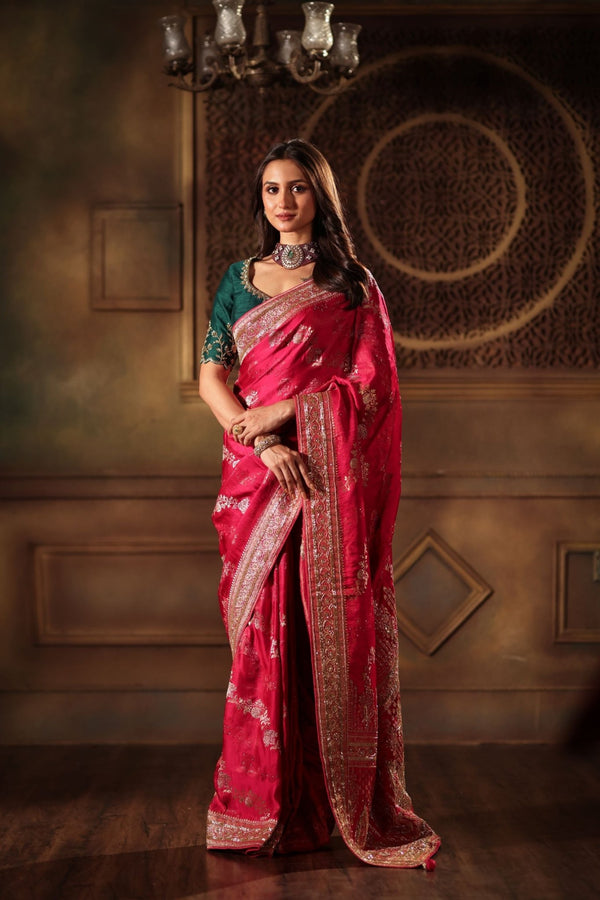
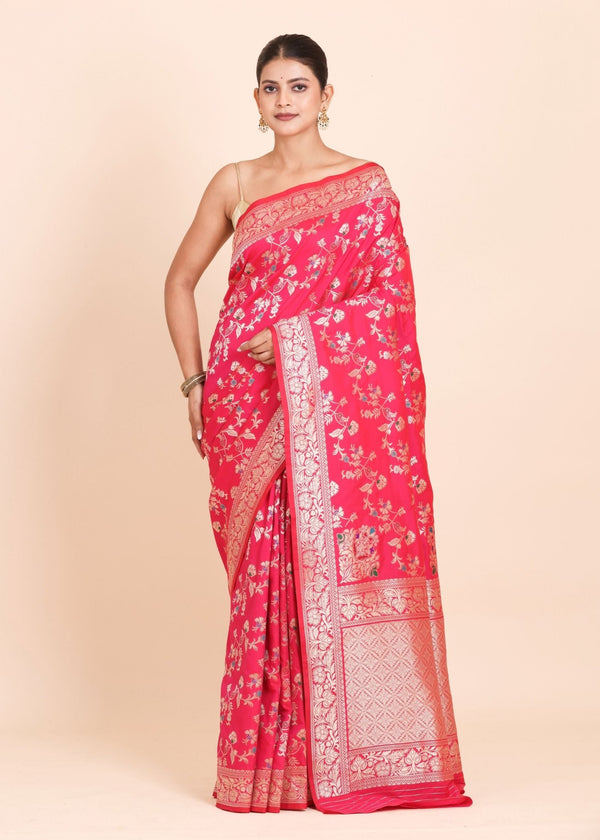
Red needs no introduction in Indian bridal wear but it deserves more than a passing mention. A red bridal saree is not just tradition. It is the colour of auspiciousness, of Sindoor, of the ceremonial fire at the heart of most Hindu weddings. In many communities, wearing red on your wedding day is not a stylistic choice at all — it is a deeply held cultural expression. What makes red exceptional as a bridal colour is its range. Deep crimson Kanjivaram silks with gold zari borders carry an entirely different character than a scarlet Banarasi with floral brocade, or a ruby-toned georgette saree with cut-glass embellishments. Red can be heavy and grand for a muhurat ceremony, or slightly lighter in a crepe-silk blend for a reception look.
For brides choosing red, the fabric makes all the difference. Silk, whether Kanjivaram, Banarasi saree, or Katan elevates red from a colour to a statement. The sheen of silk under wedding lights turns deep red into something almost luminous.

Pink Bridal Sarees For Brides
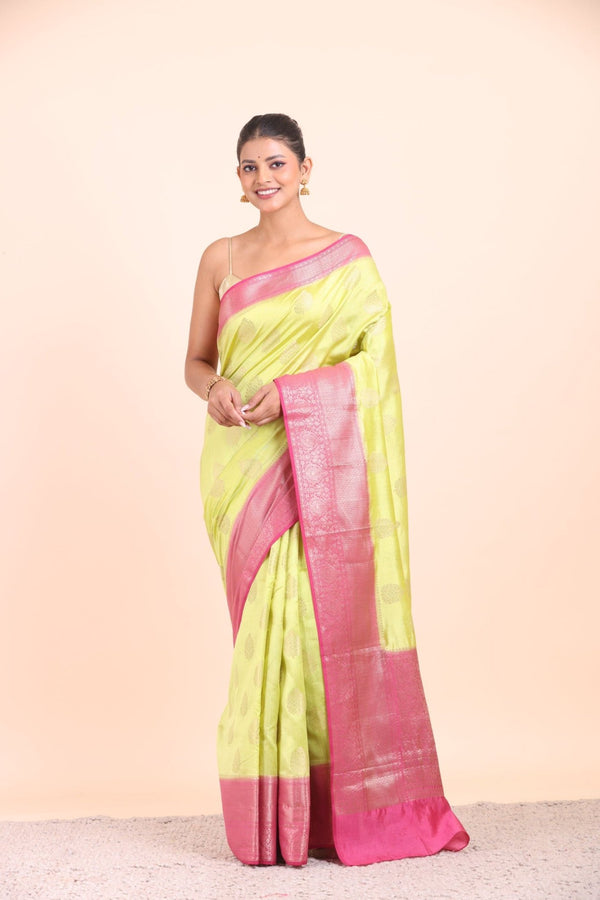
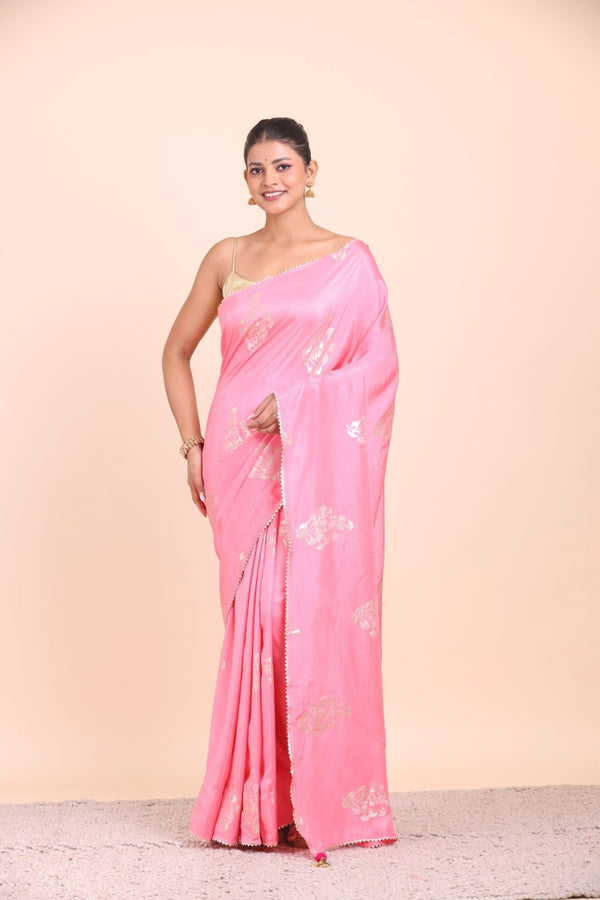
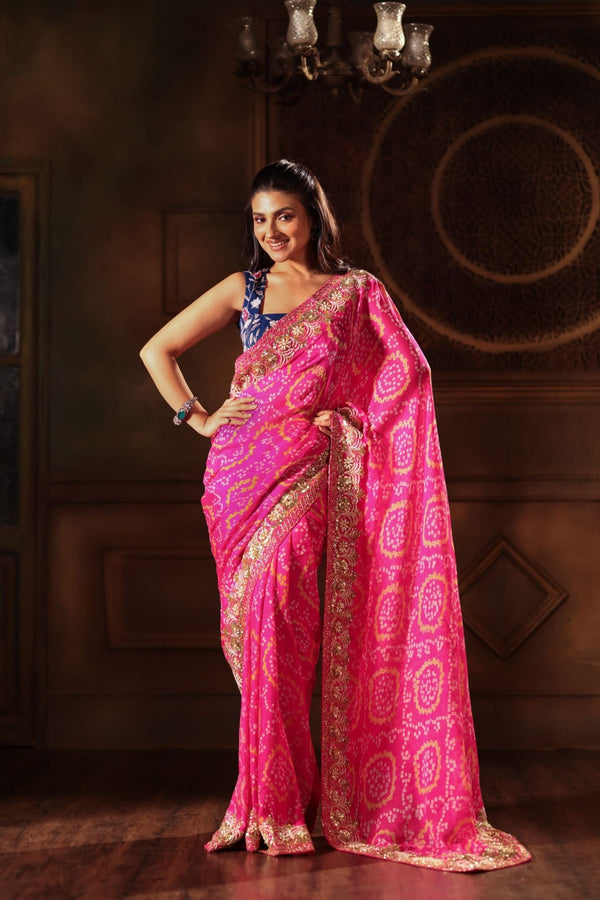
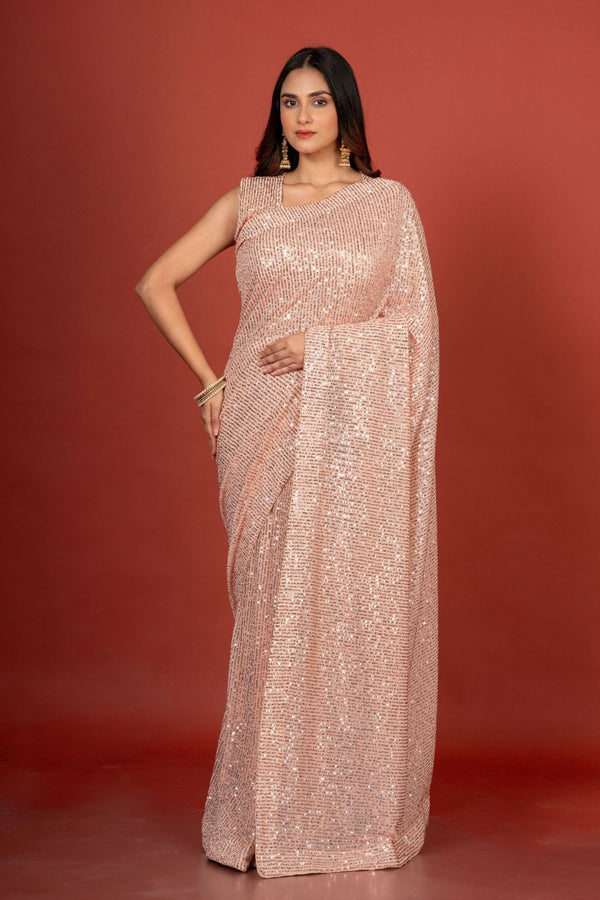
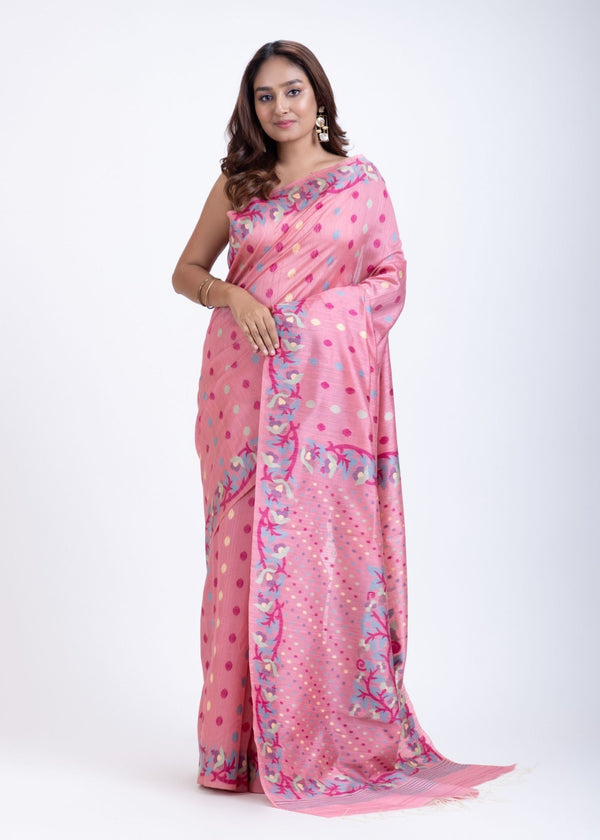
Pink has moved from being a bridesmaid colour to a full bridal choice and the shift is well-earned. The range within pink is significant. Blush pink and dusty rose read as soft, intimate, and quietly luxurious — ideal for ring ceremonies, court weddings, or brides who want beauty without grandeur.
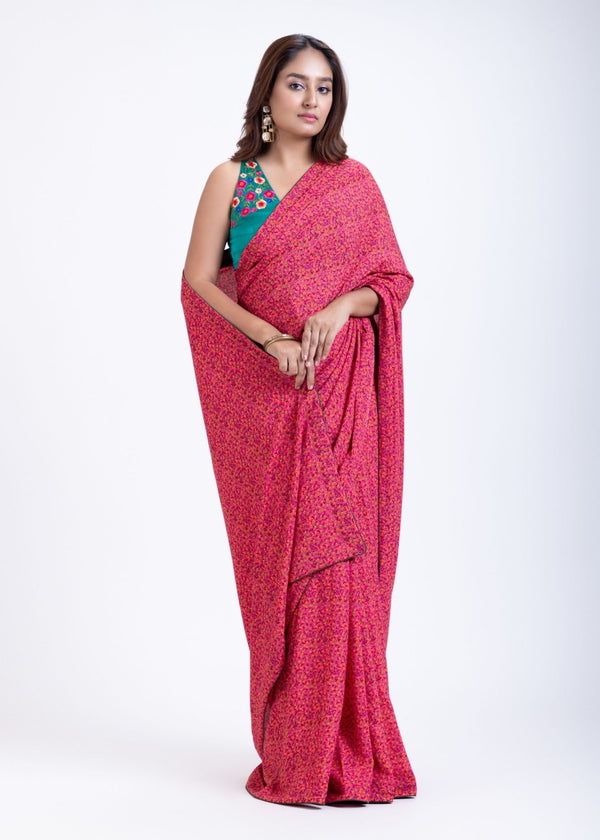
Rani pink and hot magenta, on the other hand, are bold choices that hold their own on a wedding mandap just as confidently as red. For brides with deeper skin tones, jewel-toned pinks — fuchsia, magenta, deep rose — tend to photograph particularly beautifully, with the richness of the colour complementing rather than washing out. A heavily embroidered pink blouse paired with a rich silk or lehenga in these jewel tones can instantly elevate the entire bridal look. For lighter skin tones, peachy-pinks and blush work with equal grace.
In terms of fabric, pink saree party wear styles in organza, georgette, or soft silk with thread embroidery or sequin work make elegant choices for receptions and sangeet celebrations, offering a contemporary look while still feeling unmistakably bridal.

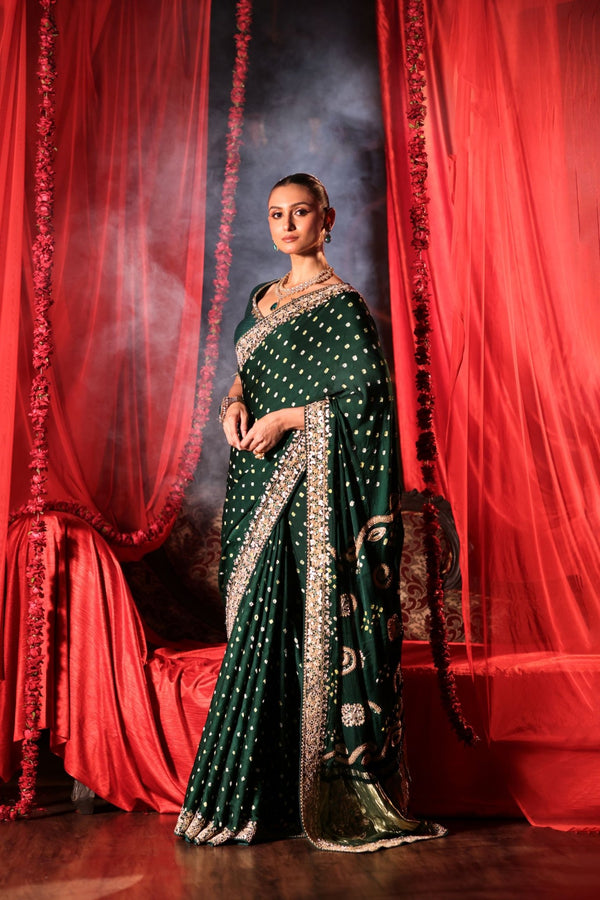
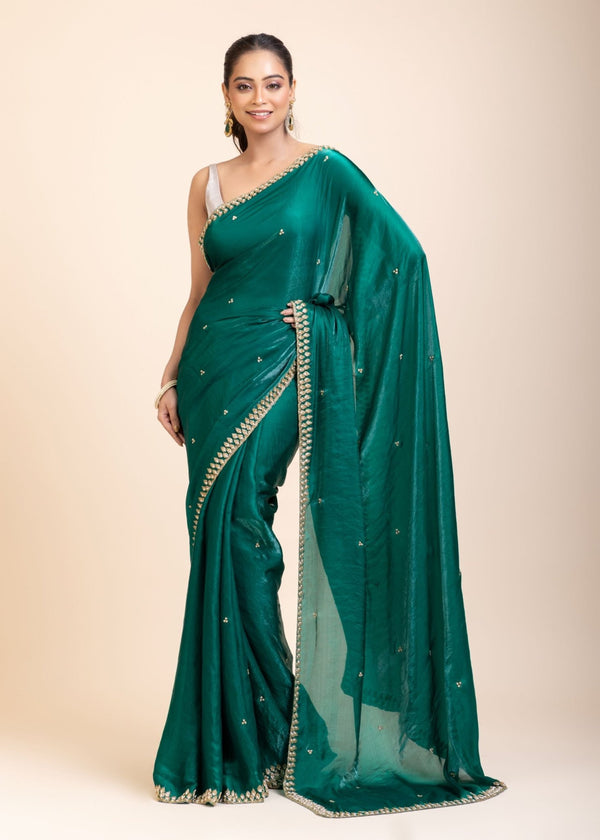
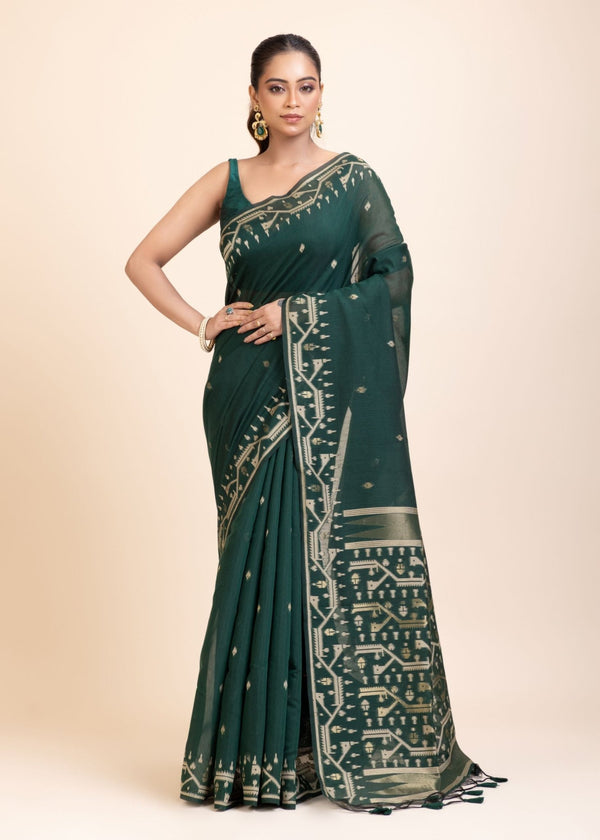
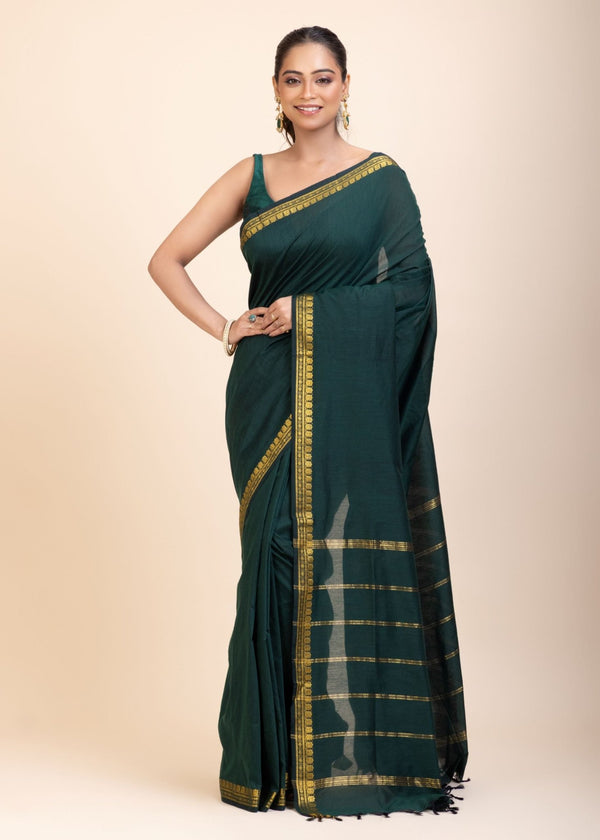
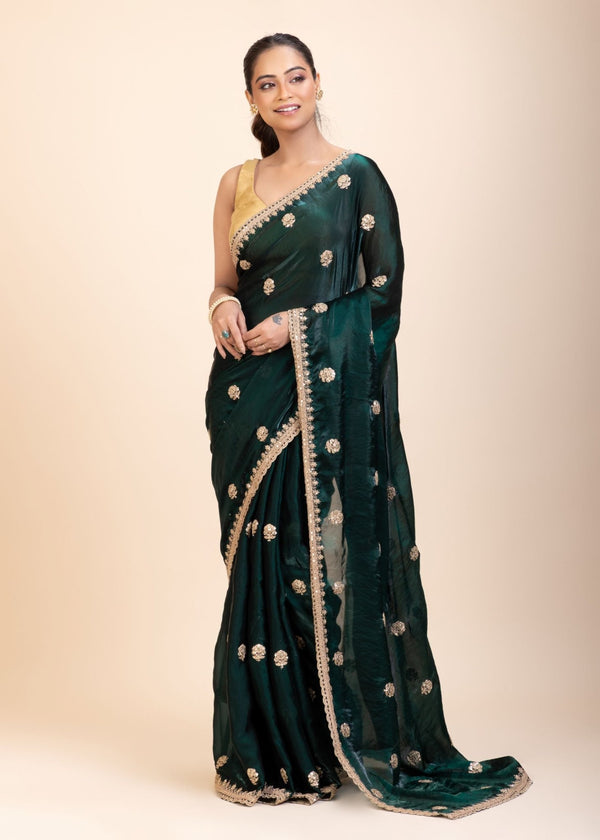
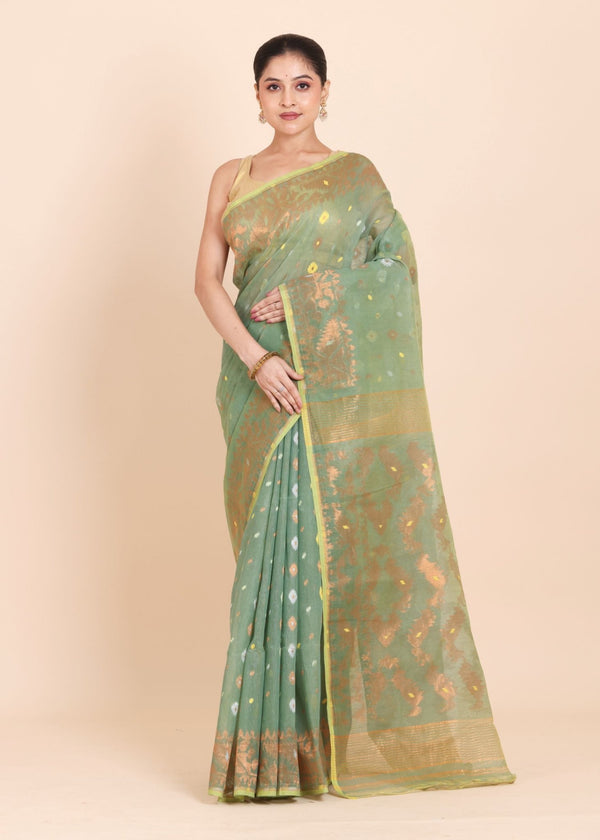
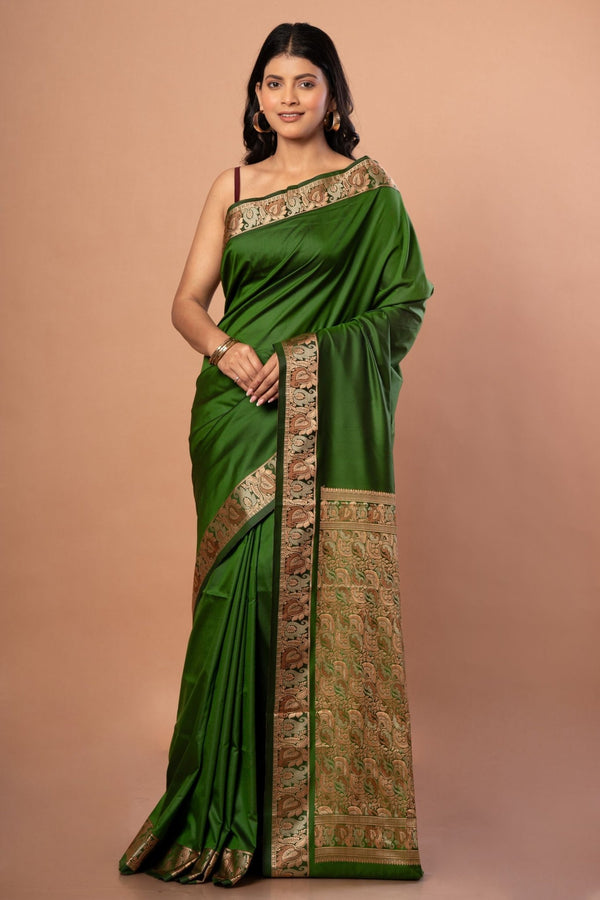
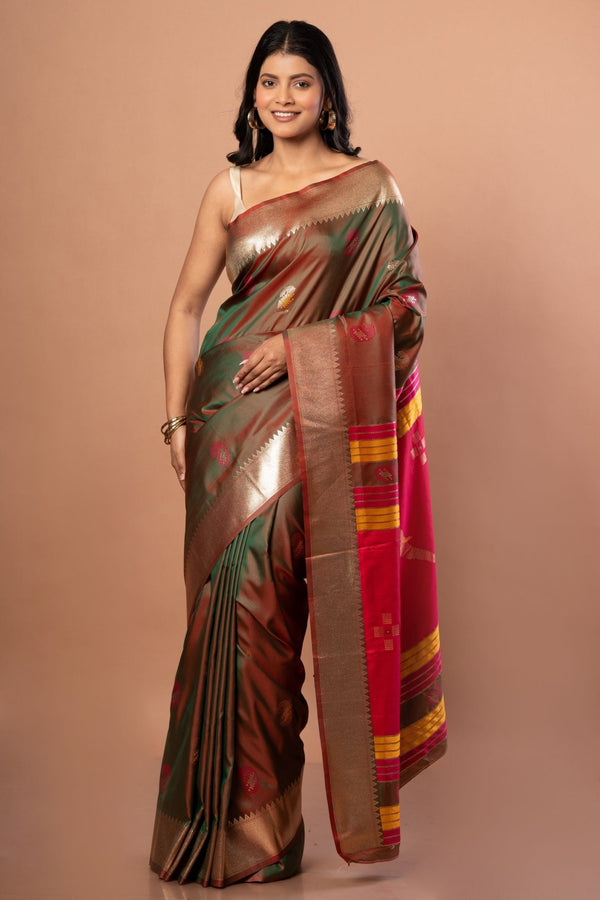
Emerald Green Bridal Saree
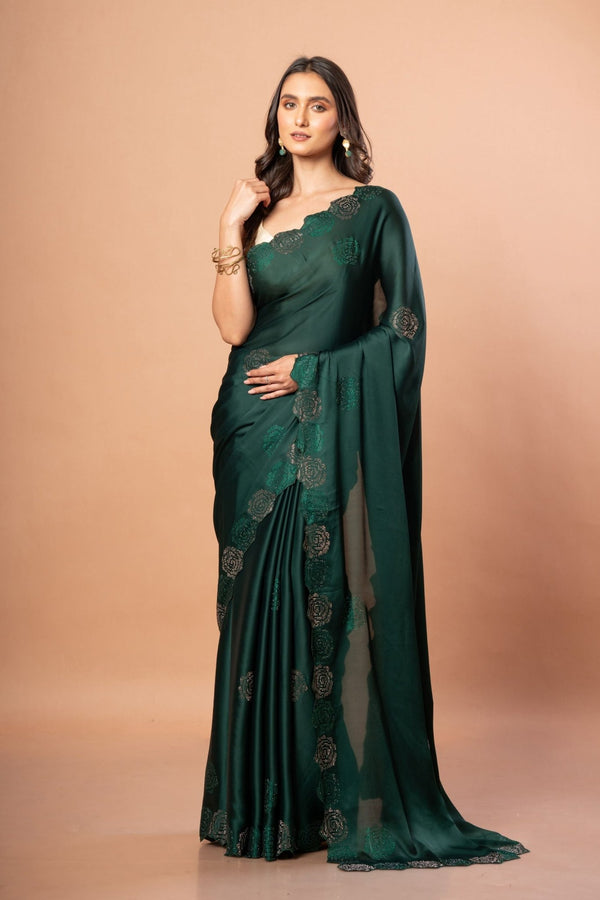
Green as a bridal colour has a long and distinguished history — and emerald green, specifically, is one of the most striking choices a bride can make.
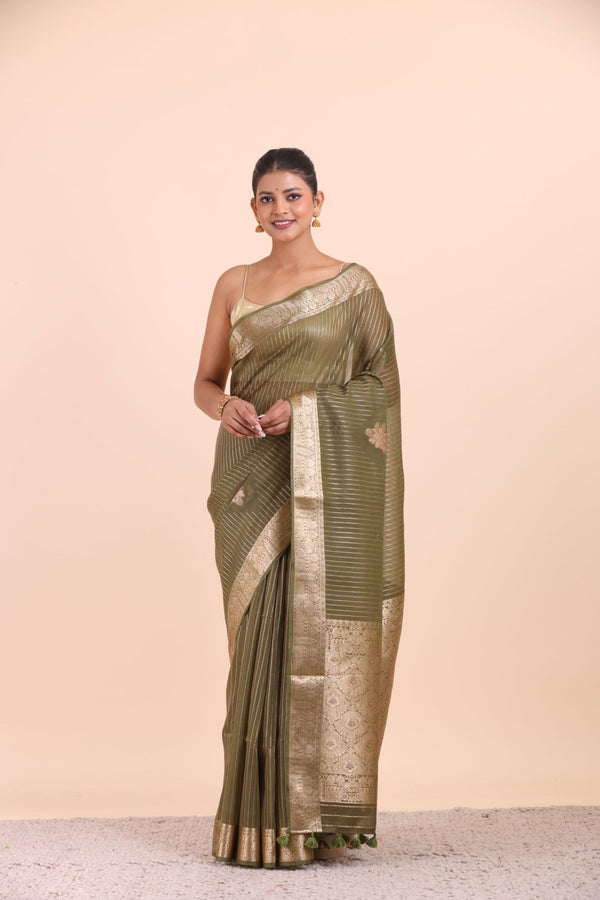
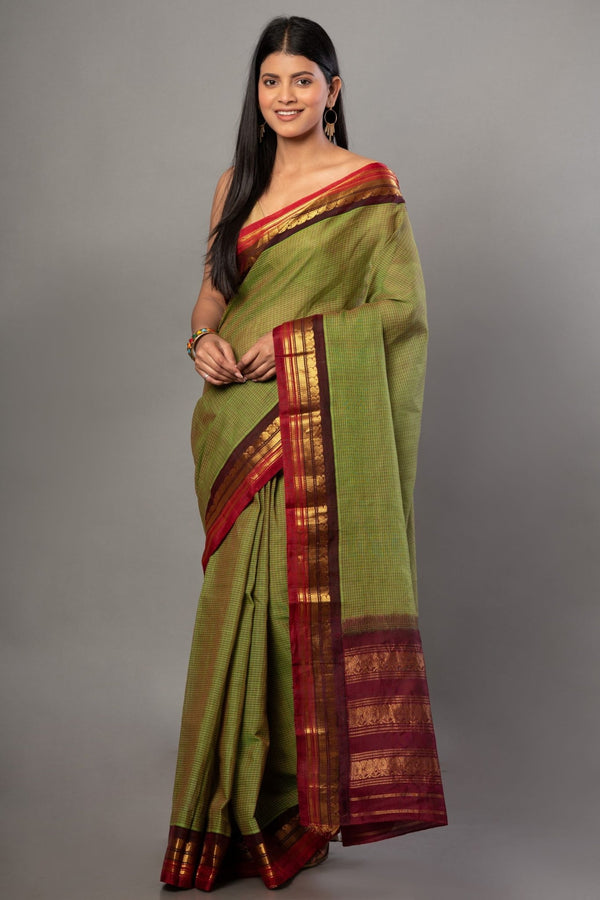
In Maharashtra, the Nauvari saree in shades of green is a traditional bridal choice. In Bengal, red-and-white is the dominant combination, but deep greens often feature in post-wedding ceremonies. Across South India, Kanjivaram silks in peacock green and bottle green saree with contrasting gold or red borders are classic bridal and festive pieces. The power of emerald green lies in its depth. Unlike colours that flatten under artificial lighting, a well-woven silk in deep green tends to deepen and enrich under banquet lights. Paired with gold temple jewellery, a green bridal saree has an almost architectural quality — structured, regal, and composed.
For brides looking for something that is both traditional and visually distinct from the sea of red at Indian weddings, emerald green is one of the strongest choices available.

Maroon Sarees For Weddings For Brides
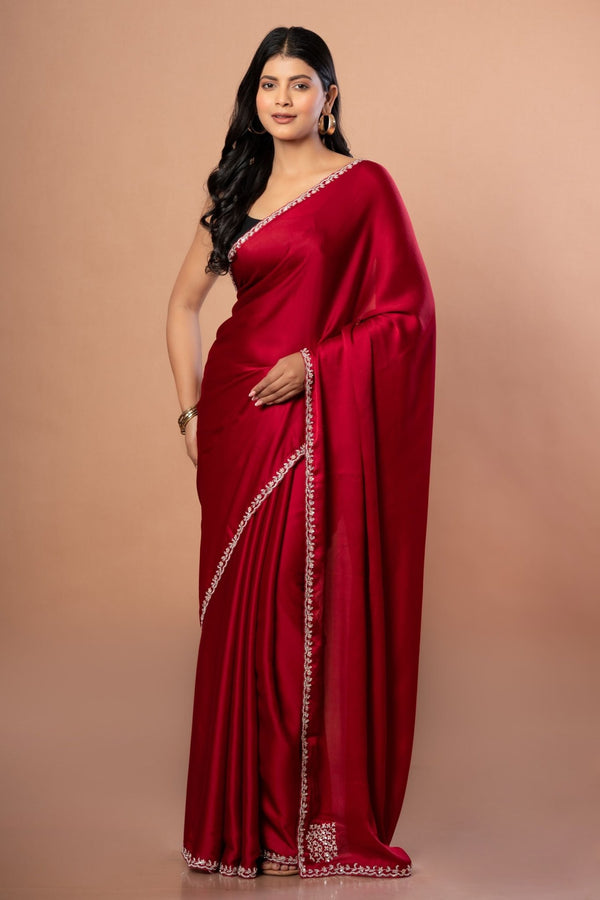
Maroon sits in that precise space between deep red and burgundy — and it is a colour that carries enormous bridal credibility. Where red can sometimes feel intense or high-contrast, maroon offers the same warmth and richness with a slightly more subdued, sophisticated character. It works across functions — from the wedding ceremony itself to the reception and even a few post-wedding events — without ever looking out of place. In terms of fabric, maroon in pure silk with gold zari weave is one of the most timeless bridal combinations in Indian fashion. A Banarasi maroon with floral meenakari work, or a Kanjivaram in wine-maroon with a gold border, both carry the weight of occasion without needing heavy embellishment to do so.
Maroon also pairs exceptionally well with gold, polki, and uncut diamond jewellery — which tends to be the preference for brides going for an heirloom aesthetic.

Royal Blue Bridal Saree For Brides In Weddings
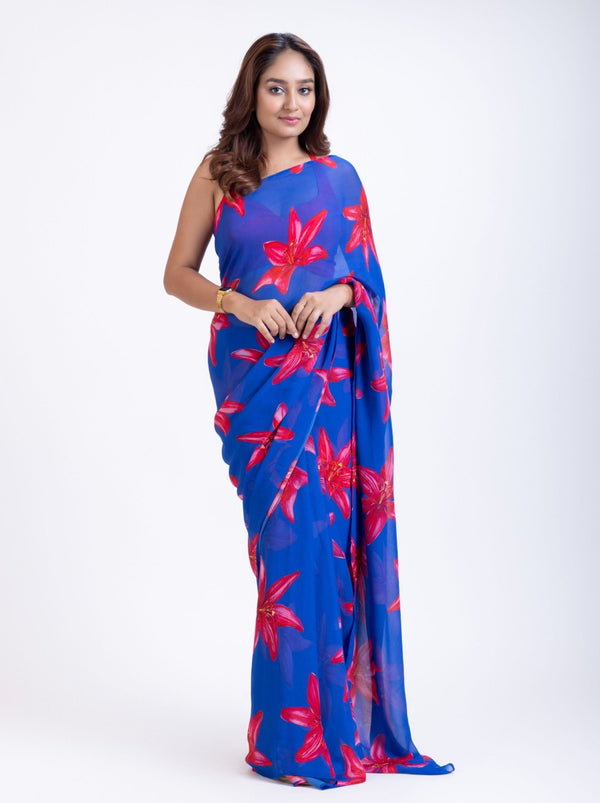
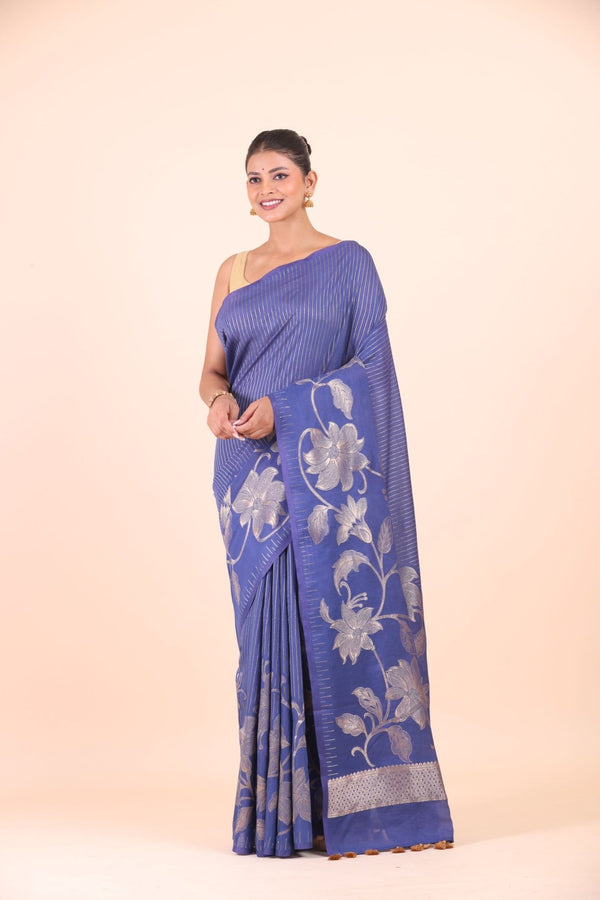
Royal blue is the non-traditional bridal choice that has steadily earned its place at Indian weddings particularly for receptions, sangeets, and second-day functions. Blue is not conventionally associated with Indian bridal wear in the way red or green is. But that is precisely what makes a royal blue bridal saree so striking. It stands apart from the expected colour palette, and in a rich fabric Kanjivaram silk, heavy georgette, or a structured organza — it looks genuinely regal. The cultural associations of blue are shifting too. In certain communities, blue has begun appearing at main wedding ceremonies, especially among brides looking for a colour that is both contemporary and distinctly non-Western in its expression.
For maximum impact, royal blue sarees work best with silver or diamond jewellery rather than gold. The cool tone of blue against the warmth of gold can sometimes create a visual tension, whereas silver lets the colour breathe.

Traditional vs Contemporary Bridal Saree Colours
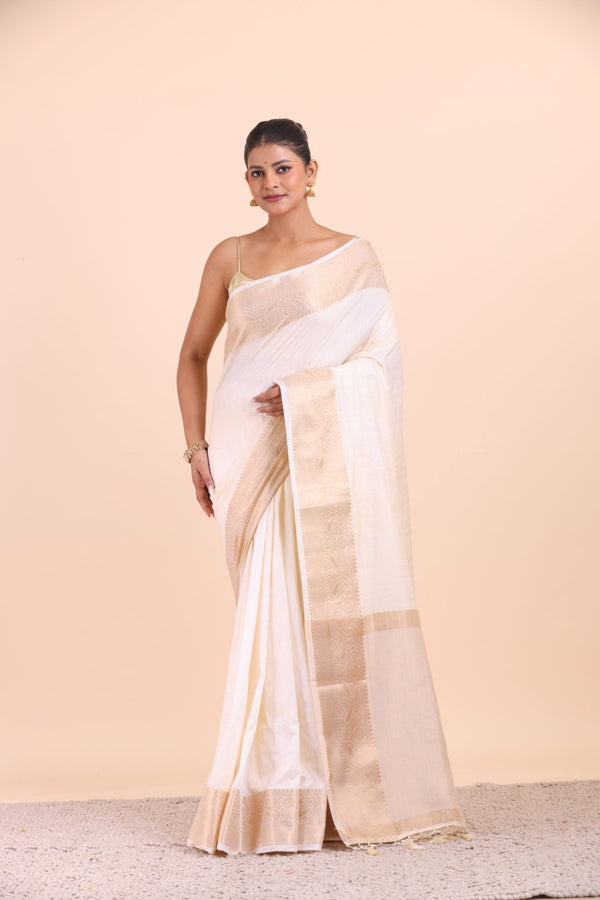
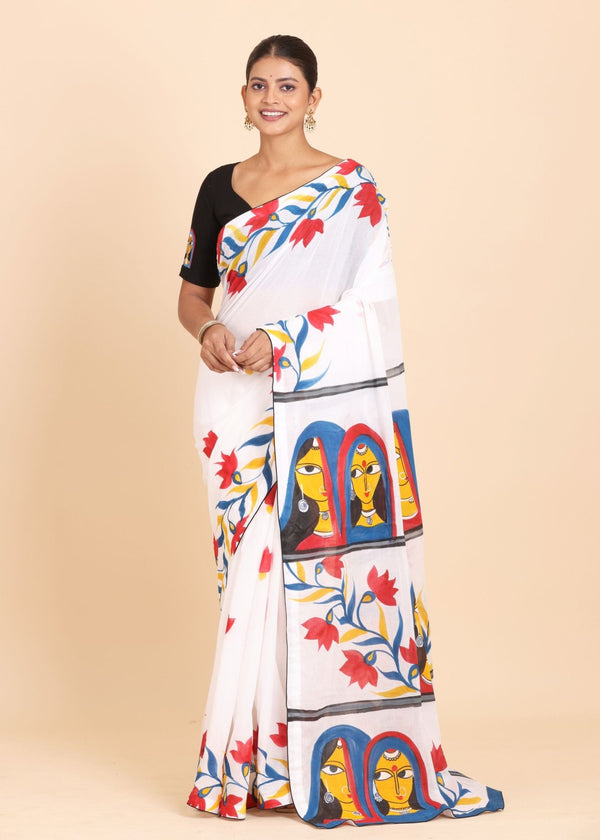
The divide between traditional and contemporary in bridal saree colour is less a line and more a spectrum and most brides today sit somewhere in the middle. Traditional bridal colours — red, maroon, deep green, off-white — are rooted in cultural and ceremonial significance. They carry meaning that goes beyond personal taste, and for many families, these are non-negotiable for specific rituals. A red Kanjivaram for the muhurat. An off-white cotton saree with a red border for specific South Indian ceremonies. A white Tant saree for certain Bengali wedding rituals. Contemporary bridal saree colours — pastel pink, royal blue, lavender, gold-toned ivory — reflect the modern bride's desire for personal expression within an ethnic framework. These colours are not replacements for tradition; they are additions to it. Many brides today wear a traditional red for the ceremony and a blush pink or royal blue for the reception, creating a complete bridal wardrobe that honours both worlds.
The most thoughtful bridal looks tend to be the ones where colour choices are deliberate — tied to the occasion, the lighting, the jewellery, and the wearer's own comfort in the colour.

Expert Colour Saree Fashion Guide For Weddings For A Bride
Bridal saree colour consultation is one of the most nuanced parts of what an ethnic fashion house does, and there are a few consistent principles that hold across every bride, regardless of size, skin tone, or wedding style. A colour you love may not serve every occasion equally well. Rich, dark colours — maroon, deep green, royal blue — are well-suited to evening events where artificial lighting can deepen their intensity. Lighter, more luminous shades — blush pink, soft gold, ivory — tend to perform better in natural daylight at outdoor or daytime ceremonies. The same shade of red in a Kanjivaram silk and a chiffon saree are almost entirely different garments in terms of how they read, how they drape, and how they photograph. When choosing a bridal saree colour, always consider it in the context of the fabric. Brides often have heirloom jewellery — necklaces, bangles, maang tikka — that will be worn regardless of what the saree looks like. Starting from the jewellery colour (yellow gold, rose gold, silver, polki, uncut diamond) and working backward to the saree colour prevents the single biggest bridal styling mistake: a saree and jewellery set that fight rather than complement each other.
A wedding day is not the right moment to experiment with a shade you find beautiful on others but have never tested on yourself. Wear a swatch or a dupatta in the colour near your face in the same light conditions as your venue before committing. Finally, the most important measure of any bridal saree colour is how it makes you feel when you wear it. Confidence in your saree — not just beauty in it — is what photographs best.