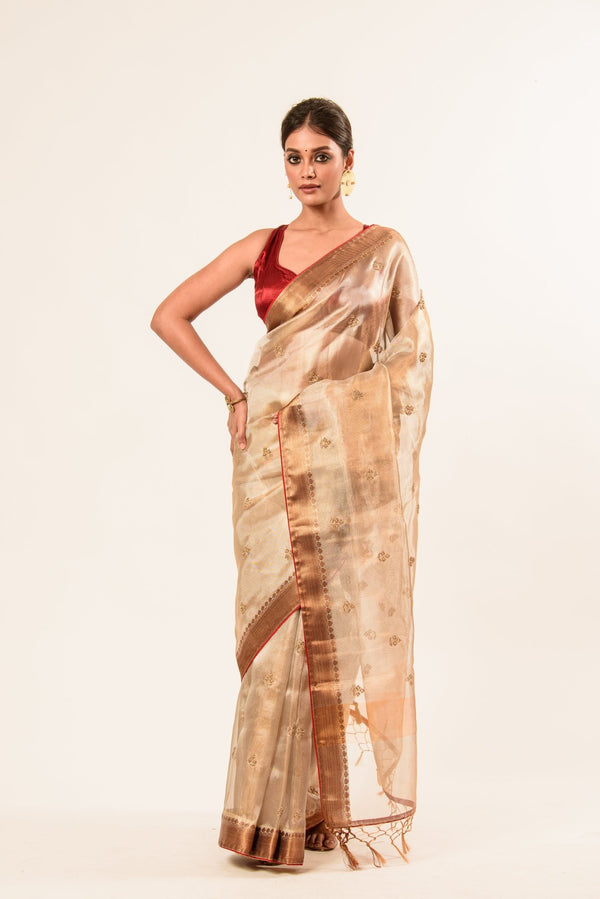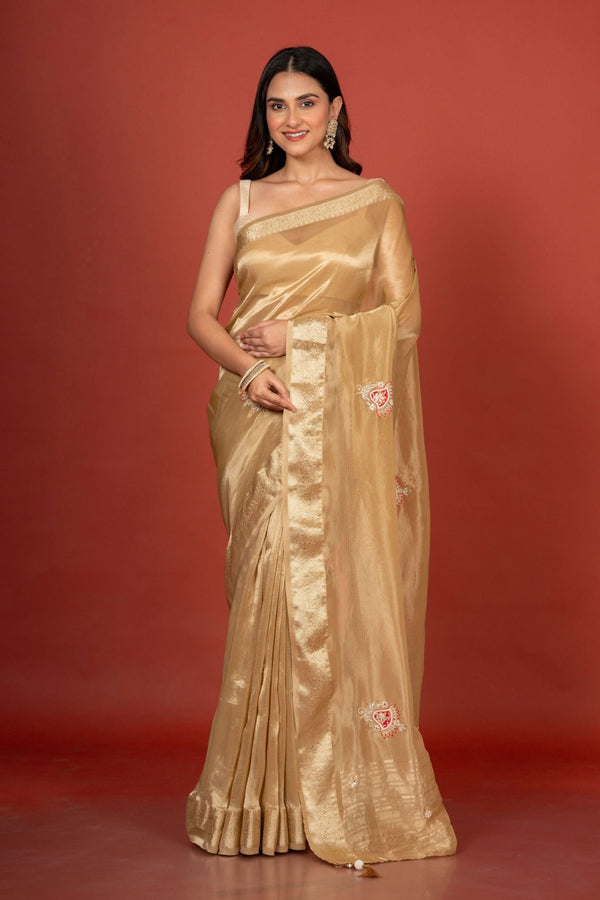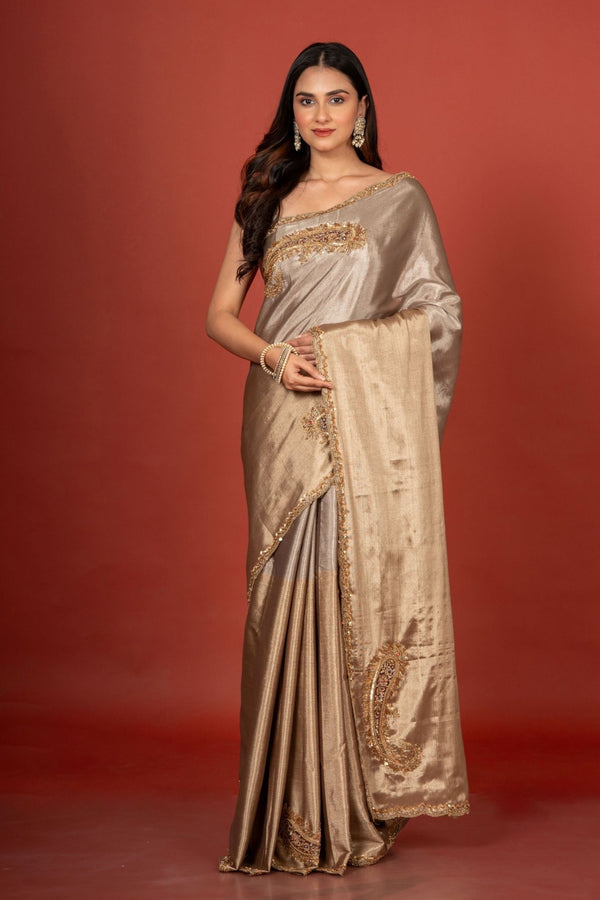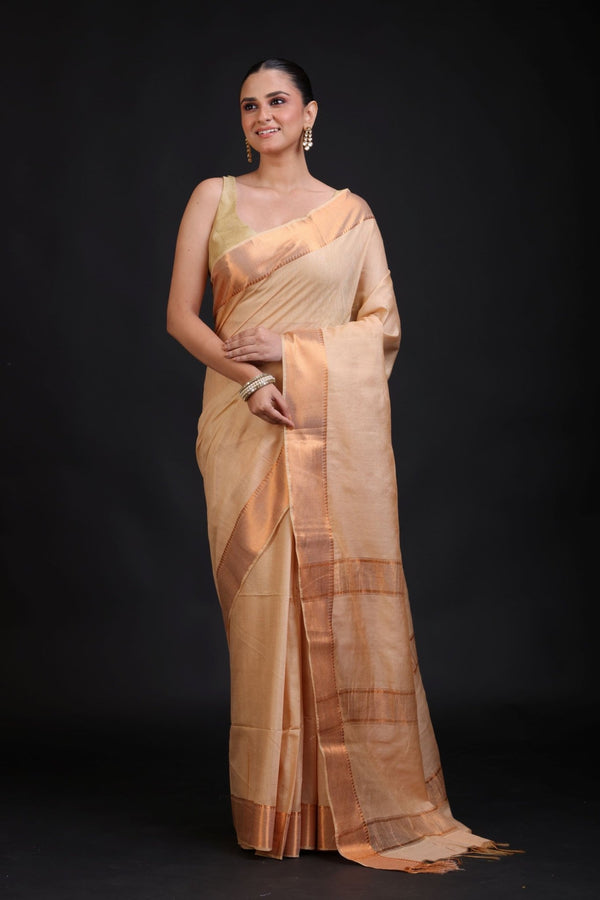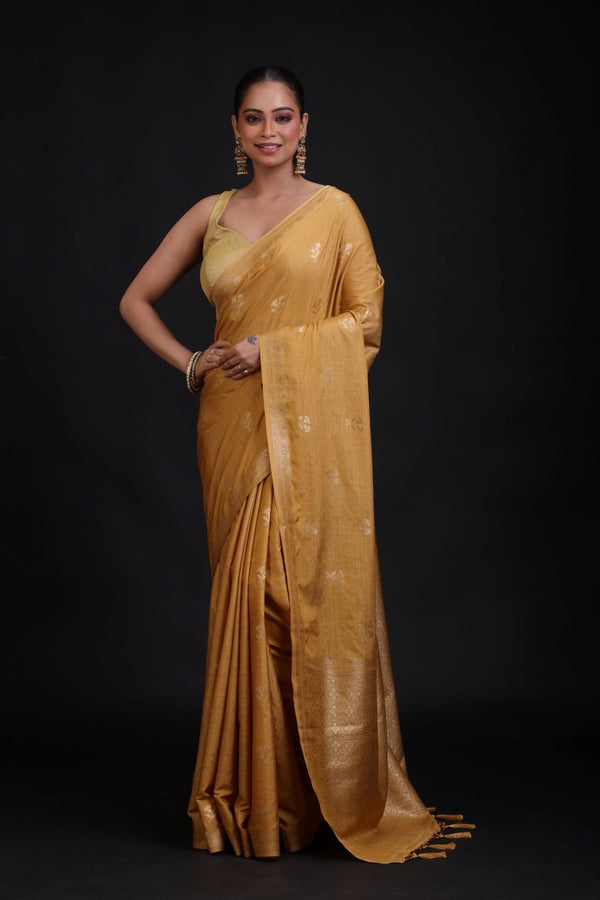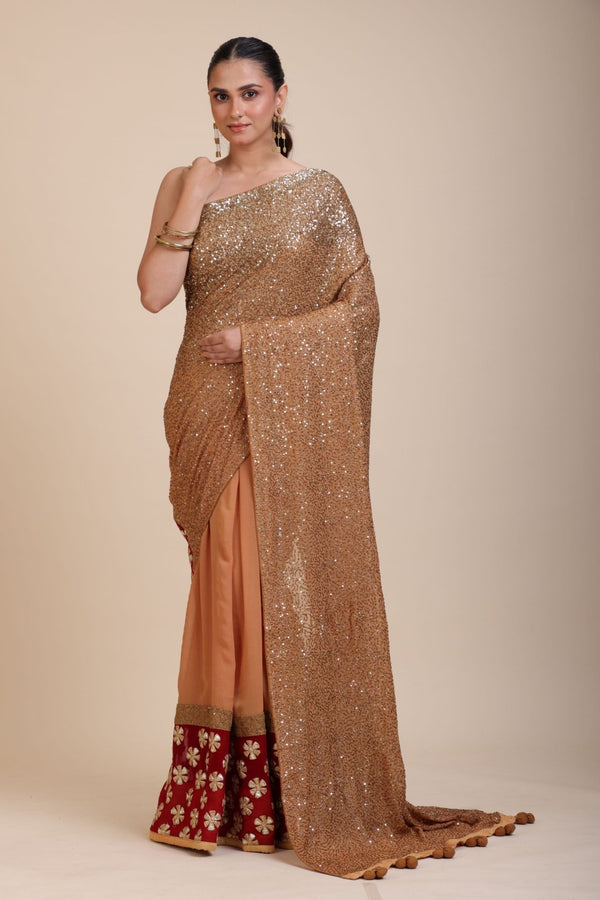




A bridal saree is more than just a wedding outfit. It becomes part of your photographs, your memories and, in many families, an heirloom that is passed down for years. If you are looking for a saree that feels traditional, rich and bridal, a golden saree is one of the most timeless choices you can make. But once you start exploring gold sarees, another question often comes up: Should you choose a Kanjivaram or a Banarasi saree for your wedding? Both are known for silk, zari and exceptional craftsmanship, but they create very different bridal looks. A Kanjivaram can give you a structured, traditional South Indian bridal appearance, while a Banarasi can offer intricate brocade detailing and a softer drape.
So, which one is right for you?
This guide compares Kanjivaram vs Banarasi sarees specifically from a bride's point of view. We will look at their appearance, fabric, weave, weight, zari, drape, styling, ceremony suitability and what you should consider before choosing your golden wedding saree.
Why Choose a Golden Saree for Your Wedding?
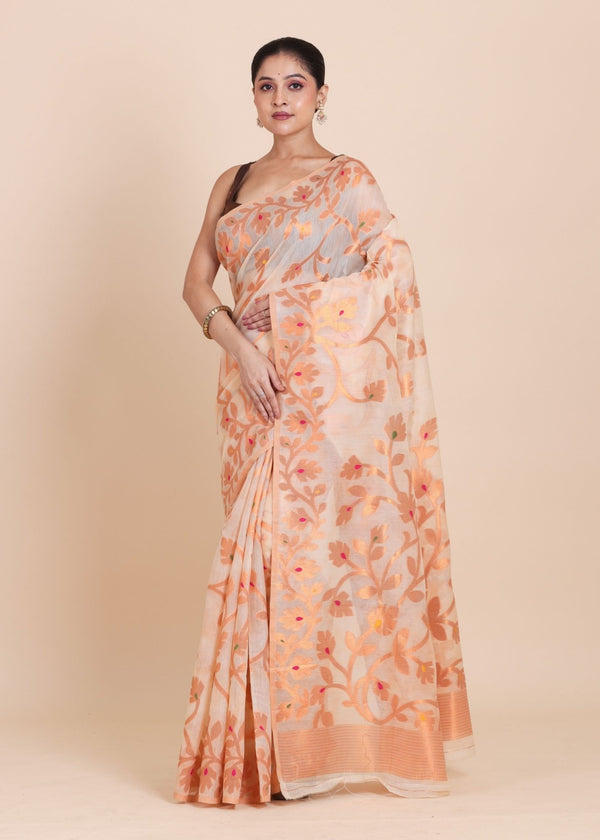
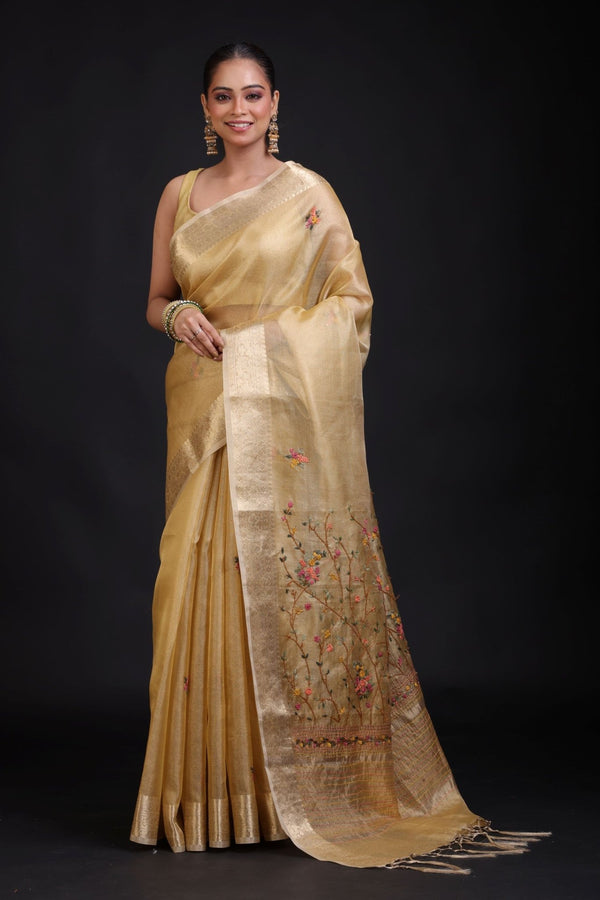
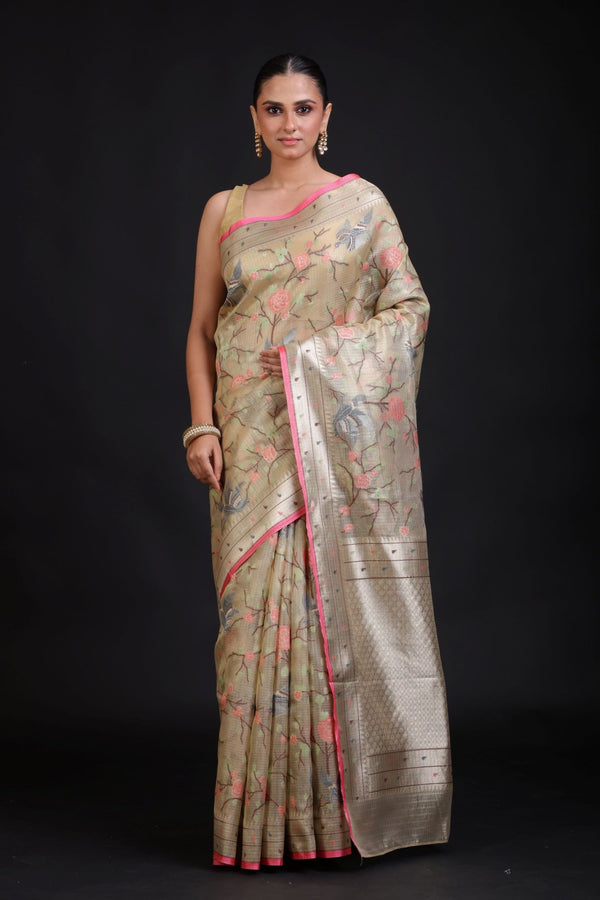
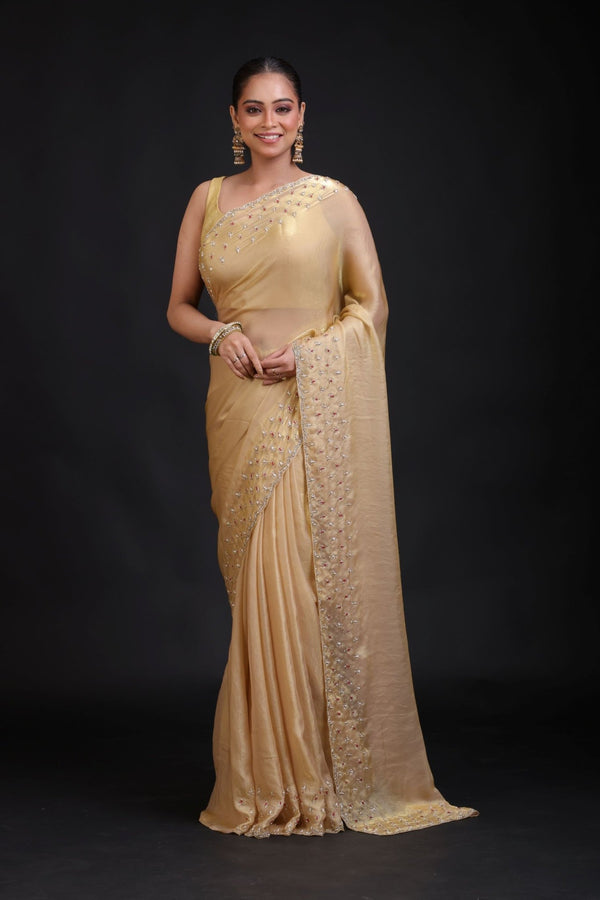
Gold has always had a special place in Indian celebrations. It represents prosperity, celebration and richness, which makes it a natural choice for bridalwear. A golden saree can also work beautifully with traditional jewellery, embroidered blouses and classic bridal accessories. The beauty of a gold saree is its versatility. You do not necessarily have to choose a bright yellow-gold shade. Depending on your personal style, you can explore antique gold, muted gold, champagne gold, beige-gold, ivory-gold and gold with contrasting colours. For a traditional bridal appearance, a rich gold silk saree with zari can create a grand look. If you prefer something lighter and more contemporary, a softer golden saree with delicate detailing can work beautifully for a wedding reception or engagement. If you are exploring different options, you can also browse Anvi Couture's golden saree collection to see how different shades, fabrics and designs can create different looks.
Kanjivaram vs Banarasi: What Is the Difference?
Before choosing between them, it helps to understand what makes these two saree traditions different. Kanjivaram sarees originate from Kanchipuram in Tamil Nadu and are especially known for their rich silk, bold borders, traditional motifs and structured appearance. Banarasi sarees originate from Varanasi and are known for their intricate brocade patterns, zari work and detailed motifs.
Both can make beautiful bridal sarees, but the overall visual effect is different.
| Feature | Kanjivaram Saree | Banarasi Saree |
|---|---|---|
| Origin | Kanchipuram, Tamil Nadu | Varanasi, Uttar Pradesh |
| Overall look | Structured and traditional | Rich, intricate and detailed |
| Signature feature | Bold borders and traditional motifs | Brocade and intricate zari patterns |
| Drape | More structured | Generally softer and more fluid |
| Bridal appeal | Strong traditional bridal look | Regal and detailed bridal look |
| Best suited for | Main ceremony, traditional weddings | Wedding, reception and festive occasions |
| Styling | Temple jewellery, traditional blouse, flowers | Gold jewellery, embroidered blouse, statement accessories |
| Design focus | Borders, pallu and motifs | All-over or detailed woven patterns |
The important point is that neither saree is universally better. The right choice depends on the kind of bride you want to be on your wedding day.
Golden Kanjivaram Saree: A Traditional Bridal Favourite
A golden Kanjivaram saree is particularly suited to brides who love traditional Indian bridalwear. Its rich silk texture, prominent zari and strong borders can create a striking wedding-day appearance. The saree often has a substantial presence because of its silk structure and detailed weaving. This makes it particularly attractive for brides who want their main wedding saree to look grand in photographs. Traditional motifs can include temple-inspired patterns, paisleys, florals and other heritage-inspired designs. A gold body combined with red, green, maroon or other deep shades can also create a classic bridal colour combination.
Why Choose a Golden Kanjivaram?
Choose a golden Kanjivaram if you want:
- A strongly traditional bridal appearance
- A structured saree with prominent borders
- A classic South Indian wedding aesthetic
- A saree that works beautifully with temple jewellery
- A statement saree for the main wedding ceremony
- A traditional heirloom-style piece
A Kanjivaram is also a strong choice when you want the saree itself to be the centre of your bridal outfit rather than relying heavily on additional embellishment. Recent bridal guides continue to highlight golden Kanjivaram sarees for main wedding ceremonies, particularly styles featuring rich zari, temple borders and traditional contrasts.
Golden Banarasi Saree: Intricate and Regal
A golden Banarasi saree takes a different approach to bridal luxury. Instead of relying primarily on a strong contrast border, Banarasi weaving is celebrated for its intricate brocade and zari patterns. You may find floral motifs, butis, paisleys and elaborate woven designs spread across the saree. This can give the fabric a beautifully detailed appearance, especially when the light catches the zari. A golden Banarasi is a wonderful option if you want your saree to look richly detailed without necessarily having the very structured appearance of a Kanjivaram.
Why Choose a Golden Banarasi?
A golden Banarasi can be a good choice if you want:
- Intricate woven patterns
- A detailed and luxurious appearance
- A softer drape
- A saree suitable for weddings and receptions
- A traditional look with a slightly different visual character
- More versatility after the wedding
Banarasi sarees can also work beautifully beyond the wedding ceremony. Depending on the weave and design, the same saree can become part of your festive wardrobe for years.
Kanjivaram or Banarasi: Which One Is Better for Your Wedding?
There is no single answer because your wedding outfit should match your personal style, ceremony and comfort. Here is a simple way to decide.
Choose Kanjivaram If You Want a Classic Bridal Look
If you picture yourself wearing a traditional bridal saree with a broad border, statement gold jewellery, flowers in your hair and a structured drape, Kanjivaram may be the better choice. It works especially well for brides who want their wedding outfit to have a strong connection with South Indian bridal traditions.
Choose Banarasi If You Love Detailed Weaving
If you are attracted to intricate zari patterns and a richly decorated saree body, Banarasi may be more suitable. A golden Banarasi can also be a great option if you want your saree to feel bridal but still have styling possibilities for future celebrations.
Choose Kanjivaram for a Traditional Muhurtham Look
For a traditional South Indian wedding ceremony, a golden Kanjivaram with a rich border can create a very classic appearance. The structured fabric also helps the pleats and pallu maintain their shape, which can be useful during long ceremonies.
Choose Banarasi for a Wedding Reception
If your reception style is slightly more glamorous or contemporary, a golden Banarasi can be a beautiful choice. You can pair it with a contemporary blouse, statement earrings or a more modern hairstyle to create a bridal look that feels traditional without being overly conventional.
Golden Saree Colours: Which Shade Should a Bride Choose?
“Gold” does not mean only one colour. The right shade can completely change the appearance of your bridal saree.
Bright Gold
Bright gold creates a traditional, festive appearance. It works particularly well with classic red, green and maroon bridal accents.

Antique Gold
Antique gold has a softer, deeper appearance. It is a good choice if you love traditional jewellery and want your saree to have a heritage-inspired feel.

Champagne Gold
Champagne gold is lighter and more contemporary. It can work beautifully for brides who want a sophisticated reception look.
Blush Gold
Blush gold combines warm golden tones with subtle pink or peach undertones. It is a lovely option for brides who prefer softer colours.
Gold with Red Border
Gold and red remain one of the most recognisable bridal combinations. A red border or red blouse can add depth to a golden saree.
Gold with Green Border
A green blouse or green border can give a golden saree a rich jewel-toned appearance. Deep emerald and bottle green work particularly well with traditional gold zari.
Gold with Maroon Border
Maroon adds warmth and depth to gold. It is especially suitable for brides who want a rich, slightly dramatic bridal colour combination. If you are considering other bridal colour options as well, explore Anvi Couture's red saree collection and green saree collection for more traditional wedding combinations.
How to Choose the Right Golden Saree for Your Skin Tone
You do not have to follow strict colour rules when choosing a golden saree. The lighting at your wedding venue, your jewellery and your blouse colour can all change how the saree looks against your skin. Warm golden shades usually pair naturally with warm and neutral undertones. Antique gold can be particularly flattering if you prefer a muted finish. If you have a cooler undertone, look for champagne gold, pale gold or gold combined with cooler colours such as deep blue or purple. The easiest approach is to compare the saree under the type of lighting you expect at your wedding. A shade that looks beautiful under bright showroom lights can appear quite different under warm indoor lighting.
How Heavy Should Your Bridal Golden Saree Be?
A heavier saree is not automatically a better saree. This is an important point for brides because wedding ceremonies can last several hours. You may be sitting, standing, walking, greeting guests and posing for photographs throughout the day. When choosing between Kanjivaram and Banarasi, think about how long you will actually wear the saree. For the main ceremony, you may prefer a richer and more traditional weave. For the reception, a lighter saree may allow you to move more comfortably.
Think about:
- The length of your ceremony
- How much walking you will do
- Whether you will change outfits
- The type of blouse you are wearing
- Your comfort with a heavier saree
- Whether you want to reuse the saree after the wedding
A saree should look beautiful, but you should also be able to enjoy your wedding while wearing it.
How to Style a Golden Kanjivaram Saree
A golden Kanjivaram already has a strong traditional character, so classic styling works beautifully. Pair it with a blouse in red, green, maroon or another rich contrasting shade. If your saree has heavy zari, you can choose an embroidered blouse that complements the weave rather than competing with it. Traditional jewellery such as temple-inspired necklaces, jhumkas, bangles and a waist belt can complete the look. For hair, a traditional bun decorated with fresh flowers is a natural choice. You can also add traditional bridal hair accessories if they complement your jewellery. If you are searching for blouse inspiration, explore Anvi Couture's full sleeve blouse collection or designer blouse collection for styles that can be paired with a rich bridal saree.
How to Style a Golden Banarasi Saree
A golden Banarasi gives you more room to experiment with the overall styling. If the saree has dense brocade, a relatively clean blouse can keep the outfit balanced. On the other hand, a simpler Banarasi can be paired with an embroidered blouse for a more elaborate bridal appearance. Gold jewellery is an obvious choice, but you can also introduce colour through gemstones, earrings or a statement necklace. For a contemporary reception look, consider a blouse with a modern neckline, structured sleeves or subtle embellishment. The key is balance. If the saree is already heavily detailed, you do not need every other element of the outfit to be equally elaborate.
What Blouse Should You Wear With a Golden Saree?
The blouse can completely change the personality of a golden saree. A red blouse can make it look traditionally bridal. A green blouse can create a rich contrast, while maroon can give the outfit a deeper and more luxurious appearance. For a softer look, consider ivory, beige, champagne or blush tones. You can also experiment with blouse silhouettes. High-neck blouses, elbow-length sleeves, full sleeves, boat necks and traditional round-neck designs can all work with a bridal saree. For more inspiration, you can explore Anvi Couture's blouse collection and find designs that complement your chosen saree.
How to Check the Quality of a Golden Silk Saree
This is one area brides should not overlook. A beautiful golden appearance does not automatically tell you about the quality or authenticity of the saree. When shopping for a silk saree, ask about:
- The silk: Find out whether the saree uses pure silk, a silk blend or another fabric.
- The zari: Ask what type of zari is used and whether the saree has certification where applicable.
- The weave: Look closely at the reverse side of the saree. Woven motifs and detailed construction can tell you more than a product photograph.
- The border: In traditional Kanjivaram sarees, the way the border and body are constructed is an important part of the weave.
- The certification: Where applicable, look for recognised certification such as Silk Mark and relevant GI information. Recent reporting has also highlighted the problem of imitation Banarasi sarees and recommends checking certification, weave quality and construction rather than relying only on appearance or price.
If you are purchasing online, ask the seller for clear images and detailed information about the fabric, zari, measurements and care requirements before making your decision.
Golden Saree for Wedding: Should You Buy One Saree or Two?
This depends on your wedding schedule and budget. Some brides prefer one statement saree for the main ceremony and wear it throughout the important rituals. Others choose different sarees for the wedding and reception.
A practical combination could be:
- Main ceremony: A rich golden Kanjivaram with a traditional blouse and jewellery.
- Reception: A lighter golden Banarasi with a more contemporary blouse and accessories.
This gives you two distinct bridal looks while keeping gold as the connecting colour.
If you have several wedding functions, you can also reserve the heavier saree for the main ceremony and choose lighter sarees for the engagement, puja or smaller celebrations.
Kanjivaram vs Banarasi: Quick Decision Guide
Still confused?
Use this simple checklist.
| If you want... | Consider... |
|---|---|
| A traditional South Indian bridal look | Golden Kanjivaram |
| Bold borders and structured styling | Golden Kanjivaram |
| A statement main-ceremony saree | Kanjivaram |
| Intricate all-over woven detailing | Golden Banarasi |
| A softer, more fluid appearance | Banarasi |
| A versatile wedding and festive saree | Banarasi |
| Temple jewellery and traditional styling | Kanjivaram |
| A glamorous reception look | Banarasi |
| A strong heirloom-style bridal saree | Either, depending on the weave |
| A modern interpretation of traditional silk | Either, depending on design |