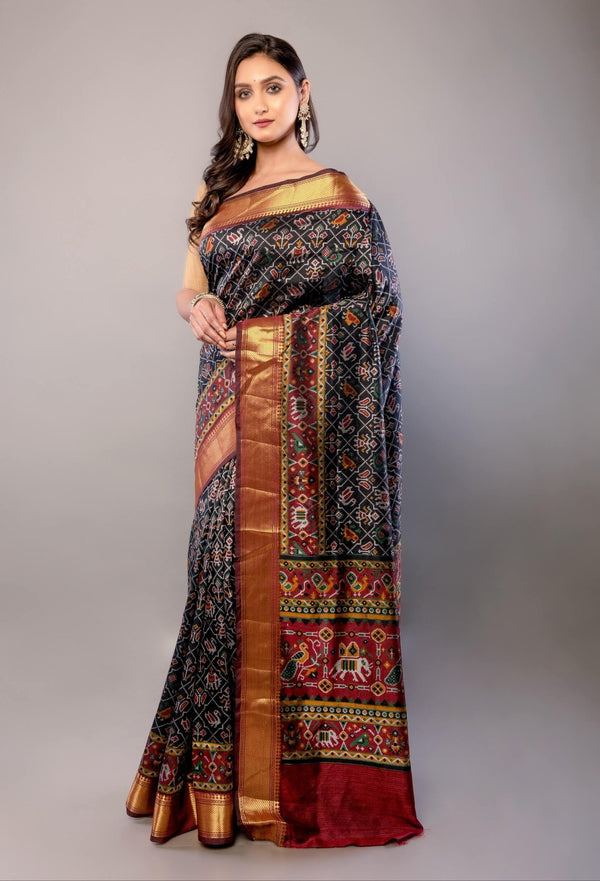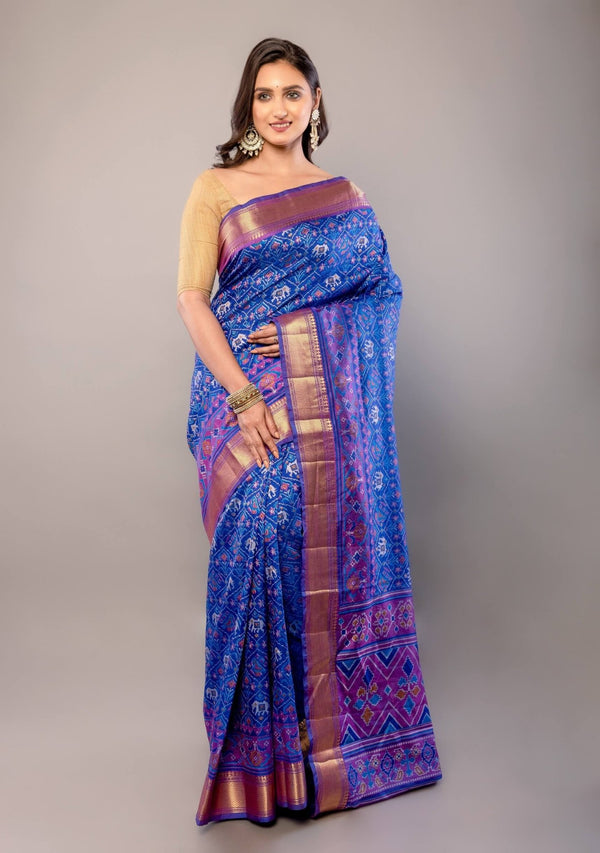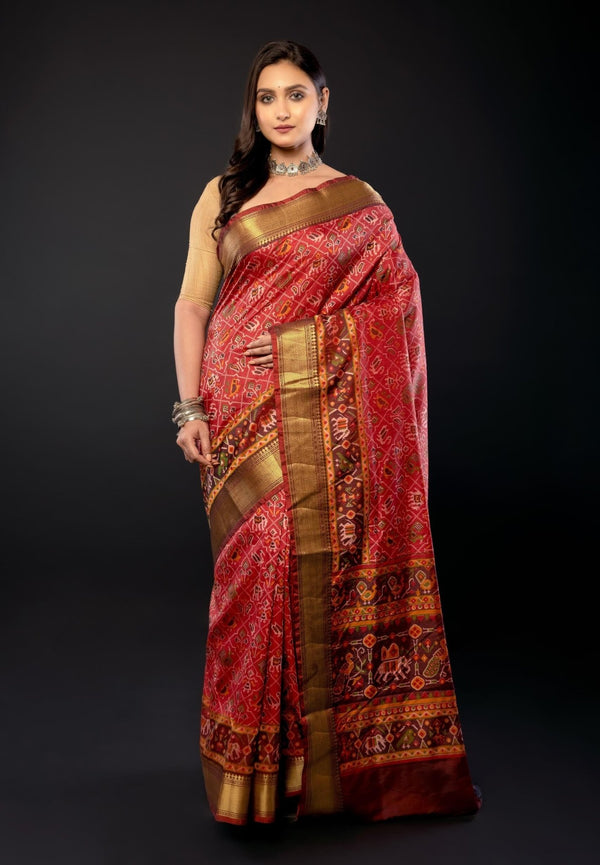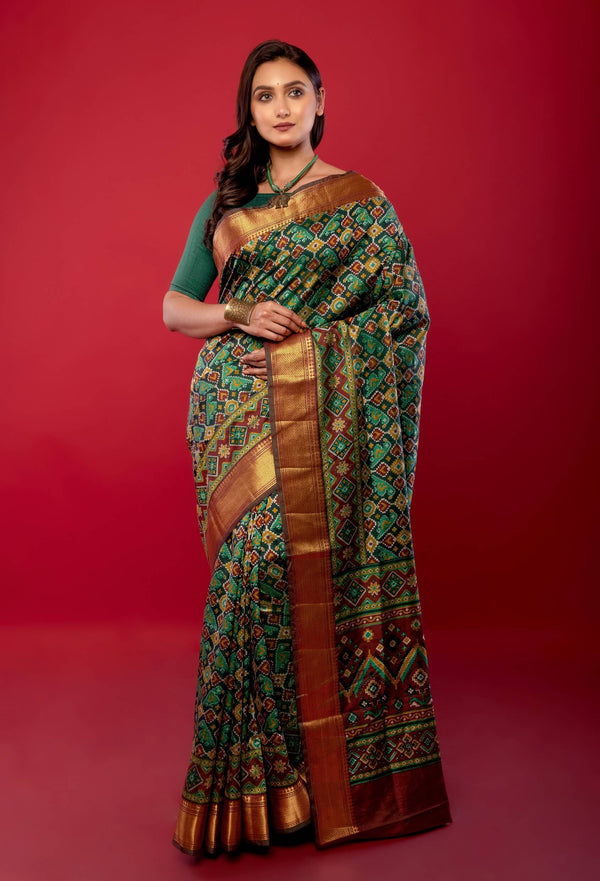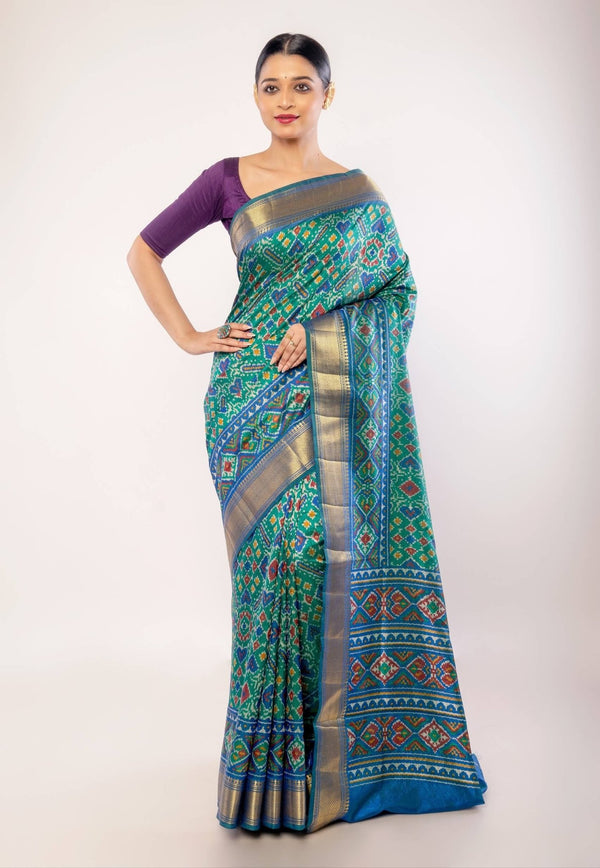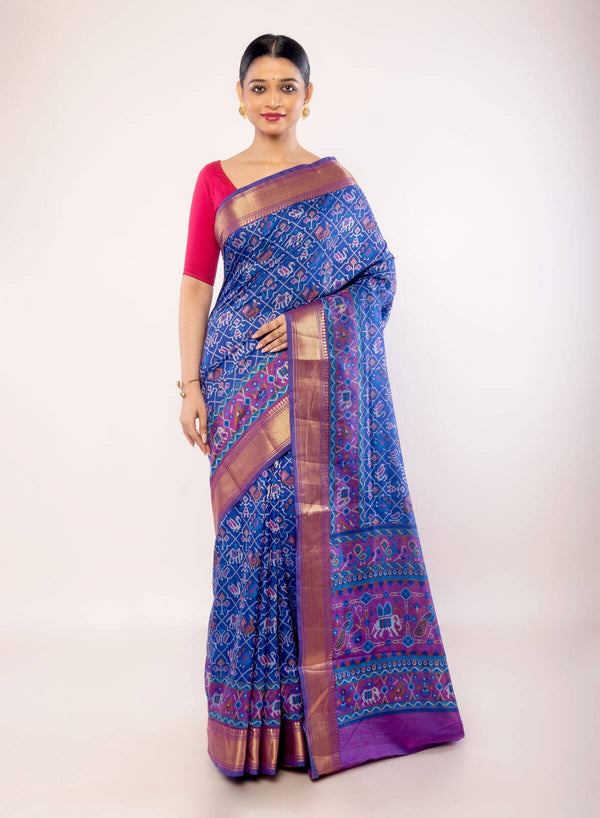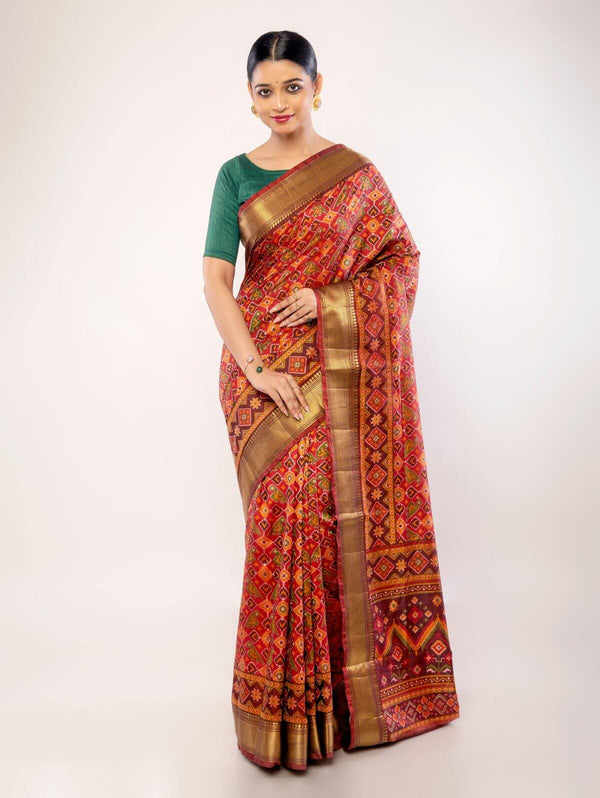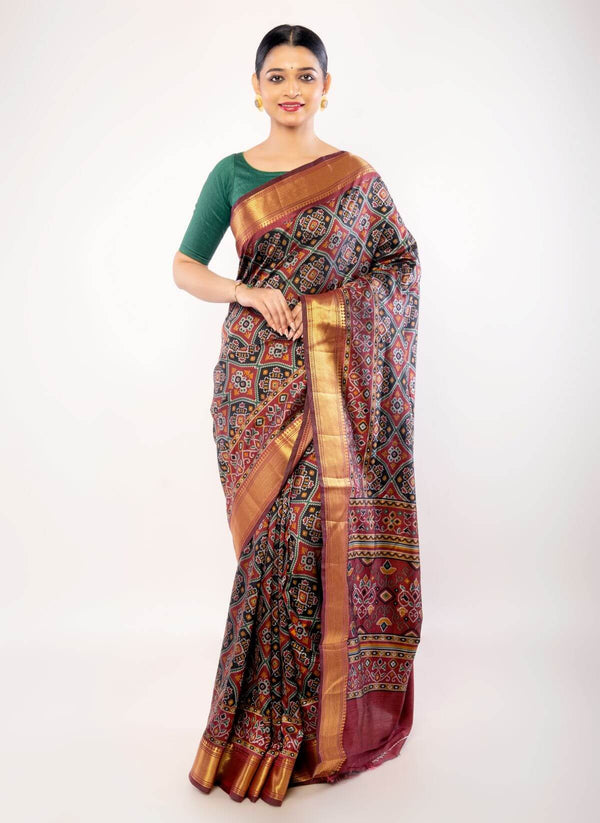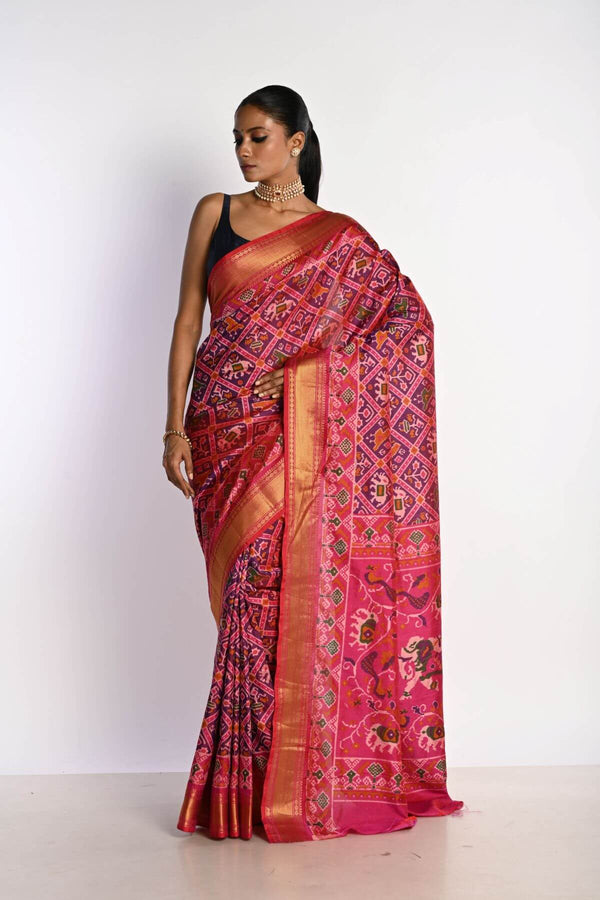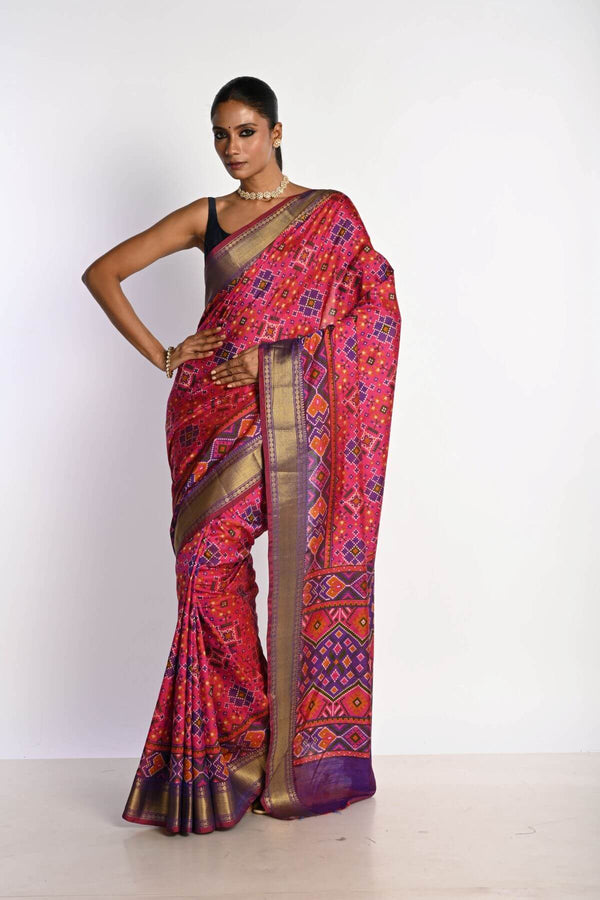




A Patola saree is one of India's most recognisable handloom textiles, known for its vibrant colours, intricate motifs and highly skilled weaving. Traditionally associated with Gujarat, Patola sarees have a special place in Indian textile heritage and are often worn for weddings, festivals and other important occasions. But choosing a Patola saree can be confusing, especially if you are buying one for the first time. What is a Patola saree? Is Patola the same as Patan Patola? What is the difference between Patan and Rajkot Patola? Why are some Patola sarees so expensive? And how can you tell whether a saree is genuinely handwoven? This guide answers these questions in simple terms and explains everything you should know before choosing a Patola saree.
What Is a Patola Saree?
A Patola saree is a traditional saree associated with Gujarat and is best known for its ikat weaving technique. Patan in North Gujarat is particularly famous for its traditional double ikat Patola sarees, generally woven using silk. What makes a traditional Patan Patola special is that the design is created through the yarn itself rather than simply printed onto finished fabric. The yarns are carefully tied and resist-dyed according to the planned pattern before they are woven.
Both the warp and weft are prepared in a double ikat Patola. During weaving, the artisan carefully aligns these yarns so that the colours come together to create the intended motif. This process requires considerable skill and precision, which is why genuine Patola sarees are valued as premium handloom textiles. If you enjoy traditional Indian textiles, the broader world of handloom sarees offers many other weaving traditions with their own distinctive techniques and regional histories.
What Makes Patola Sarees Special?
The appeal of a Patola saree comes from a combination of craftsmanship, colour, silk and intricate design. Unlike a printed saree, the design is planned before the fabric is woven. The artisan has to carefully prepare and align the dyed yarns to create the final pattern.Traditional Patan double ikat Patola is also known for its reversible appearance, with the design visible on both sides of the fabric. This craftsmanship is one of the main reasons Patola sarees are considered valuable handloom pieces rather than ordinary printed sarees.
Patola Saree at a Glance
| Feature | Details |
|---|---|
| Traditional region | Gujarat |
| Famous weaving centre | Patan |
| Traditional fabric | Silk |
| Main technique | Ikat |
| Patan Patola | Double ikat |
| Design method | Resist-dyed yarns woven into patterns |
| Common motifs | Geometric patterns, flowers, birds and animals |
| Popular occasions | Weddings, festivals and celebrations |

What Is Ikat Weaving?
Ikat is a textile weaving technique in which yarns are resist-dyed before they are woven.
Selected sections of the yarn are tied or protected so that the dye does not reach those areas. The yarn can then be dyed in different colours. When the prepared yarns are woven, these coloured sections form the design.
There are two basic types:
Single ikat: Only one set of yarns, either warp or weft, is resist-dyed.
Double ikat: Both warp and weft yarns are resist-dyed and then carefully aligned during weaving.
Patan Patola is particularly famous for the more complex double ikat technique.
This distinction is important when shopping because a saree described simply as "Patola" may not necessarily be a traditional double ikat Patan Patola.

Patan Patola vs Rajkot Patola: What Is the Difference?
Patan Patola and Rajkot Patola are often mentioned together, but they are associated with different weaving traditions. Patan is especially famous for double ikat Patola, while Rajkot is strongly associated with single ikat Patola weaving.
| Feature | Patan Patola | Rajkot Patola |
|---|---|---|
| Common technique | Double ikat | Single ikat |
| Yarn preparation | Warp and weft are resist-dyed | Generally one set of yarns is resist-dyed |
| Craft complexity | Very high | High |
| Pattern | Highly precise and traditionally reversible | Characteristic ikat appearance |
| Traditional centre | Patan, Gujarat | Rajkot, Gujarat |
| Price | Usually higher for genuine double ikat pieces | Generally more accessible |
Neither should simply be labelled "better". They represent different textile traditions and techniques. The important thing is to understand what you are buying and what type of weaving has been used.

Why Are Patola Sarees So Expensive?
One of the most common questions about Patola is its price. The cost of a Patola saree is influenced by several factors, including the weaving technique, silk quality, design complexity, artisan skill and time required to create the saree. A traditional double ikat Patola requires the warp and weft to be separately prepared and dyed before weaving. The artisan must then align them accurately to form the design. This is a much more involved process than printing a pattern onto an already woven saree.
What Affects Patola Saree Price?
| Factor | Why It Matters |
|---|---|
| Weaving technique | Double ikat requires a highly complex process |
| Silk quality | Affects texture, drape and durability |
| Design complexity | Intricate motifs require greater precision |
| Artisan skill | Specialised craftsmanship adds value |
| Time involved | Complex pieces can require extensive work |
| Additional detailing | Zari or other embellishments can increase cost |
| Authenticity | Genuine handwoven pieces generally command a premium |
There is therefore no single fixed Patola saree price. Two sarees can look similar but have very different prices because their weaving technique, craftsmanship and materials are different.

How to Identify an Original Patola Saree?
If you are purchasing a premium Patola saree, understanding authenticity is important. There is no single visual test that can prove authenticity in every case. Instead, look at several details and ask the seller clear questions.
Check the Weaving Technique
First ask whether the saree is printed, single ikat or double ikat. If you are specifically looking for Patan Patola, ask whether it is genuinely woven using the traditional double ikat technique.
Look at Both Sides
A traditional double ikat Patola has a highly reversible design because the pattern is created through the warp and weft yarns. Looking at both sides can therefore give you useful information. However, this should not be treated as the only authenticity test.
Examine the Pattern
Ikat designs have a distinctive appearance because the pattern is created through dyed yarns. Look closely at the colour transitions and pattern alignment. Small variations can occur in handwoven textiles and are not automatically signs of poor quality.
Ask About the Origin
If a saree is being sold as Patan Patola, ask where it was woven and whether the seller can provide information about its origin. For expensive handloom purchases, seller transparency is important.
Check Documentation
Depending on the saree and seller, ask whether relevant authenticity, GI or fabric documentation is available. Patan Patola has registered Geographical Indication status, so buyers should understand exactly what is being represented as Patan Patola.
Be Careful With Very Low Prices
Price alone cannot prove whether a saree is genuine. However, an unusually low price for a highly intricate double ikat Patan Patola should encourage you to ask more questions. Before purchasing, compare the technique, fabric, craftsmanship and seller information, not just the product photograph.
Popular Patola Saree Motifs and Designs
Patola sarees are known for vibrant colours and distinctive traditional motifs. Depending on the design, you may see birds, animals, flowers and geometric patterns.
Parrot Motifs
Parrot motifs are popular in traditional Indian textiles and can give a Patola saree a lively appearance.
Elephant Motifs
Elephant motifs are often associated with strength, prosperity and royalty in Indian art and textiles. They can create a rich traditional look.
Floral Designs
Floral motifs bring a softer element to the structured geometry of Patola. They work well for women who prefer traditional designs with a slightly softer appearance.
Geometric Patterns
Diamonds, grids and repeated geometric forms are an important part of the visual language of ikat textiles. They give Patola sarees their distinctive structured look.

Which Colours Are Best for a Patola Saree?
Patola sarees are traditionally known for vibrant colour combinations.
Popular combinations include:
- Red and green
- Pink and green
- Red and yellow
- Orange and red
- Purple and pink
- Blue and green
- Black and red
- Yellow and green
For weddings, rich red, green and maroon combinations can create a traditional appearance. Pink, purple and blue combinations can be a good choice when you want something colourful but more contemporary. If you already own several traditional sarees, exploring different designer saree styles can also help you compare how traditional motifs are adapted for contemporary wardrobes.

What Blouse Goes With a Patola Saree?
Since Patola sarees often feature detailed patterns, the blouse does not always need heavy embroidery. A well-fitted blouse in one of the saree's colours can create a balanced outfit.
Good options include:
- Silk blouse
- Brocade blouse
- Contrast blouse
- Sleeveless blouse
- Boat-neck blouse
- High-neck blouse
- Elbow-sleeve blouse
For example, a red Patola saree can be paired with a red, green, maroon or gold blouse depending on the colours in the saree. For a heavily patterned Patola, a relatively clean blouse can help keep the overall look balanced. Different blouse necklines and sleeve styles can also change the overall character of the outfit without taking attention away from the saree.
How to Style a Patola Saree for a Wedding
Patola is naturally suited to wedding dressing because of its rich colours and traditional craftsmanship. For a classic look, pair the saree with a silk or brocade blouse, gold jewellery, bangles and a traditional hairstyle. A bun decorated with flowers can add to the ethnic appeal. For a modern wedding guest look, you can take a different approach. Choose a contemporary blouse, statement earrings and fewer layers of jewellery.If you prefer traditional wedding textiles, silk sarees for special occasions offer another way to create a rich, occasion-ready look.
How to Choose a Patola Saree?
Before purchasing, check these key points:
| What to Check | Why It Matters |
|---|---|
| Fabric | Confirm whether it is silk or another material |
| Weaving technique | Know whether it is single ikat or double ikat |
| Origin | Ask where the saree was woven |
| Design | Choose motifs and colours suited to your style |
| Craftsmanship | Examine the pattern and weaving carefully |
| Price | Compare with sarees using a similar technique |
| Documentation | Ask about authenticity or relevant certification |
| Care | Understand how the saree should be cleaned and stored |
| Return policy | Particularly important when purchasing online |
The most important question is simple: What exactly am I paying for? A transparent seller should be able to explain the fabric, weaving technique, origin and care requirements clearly.