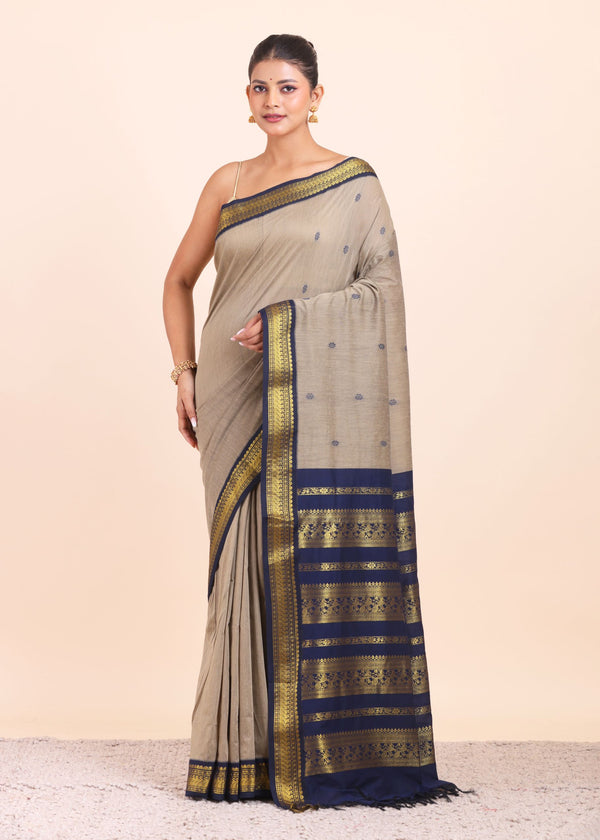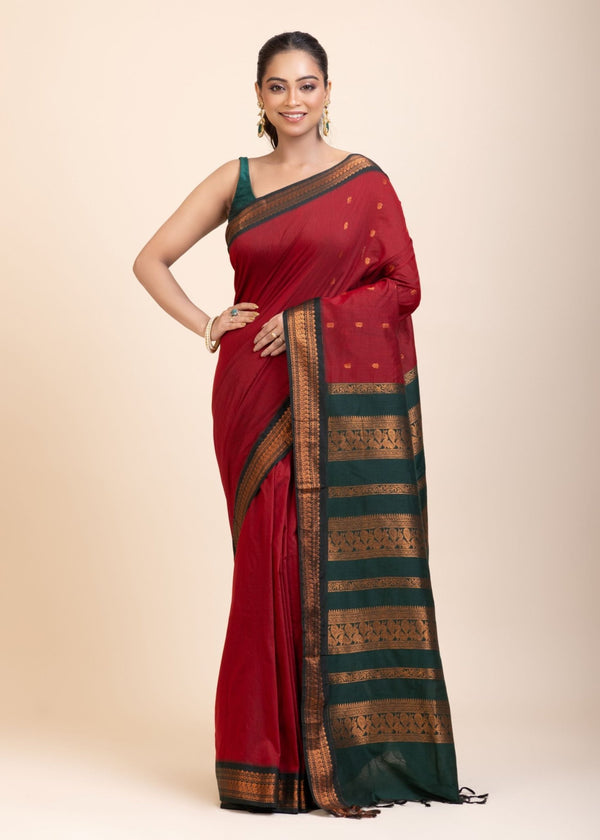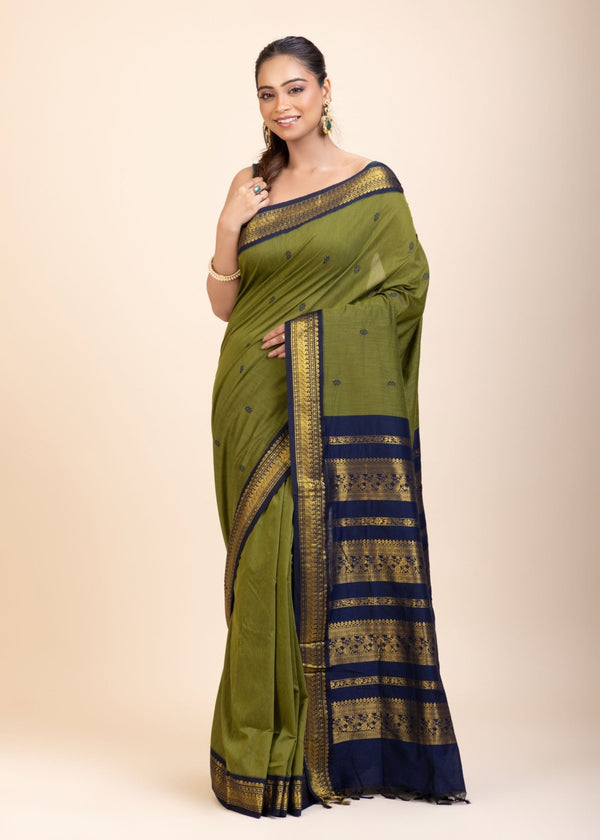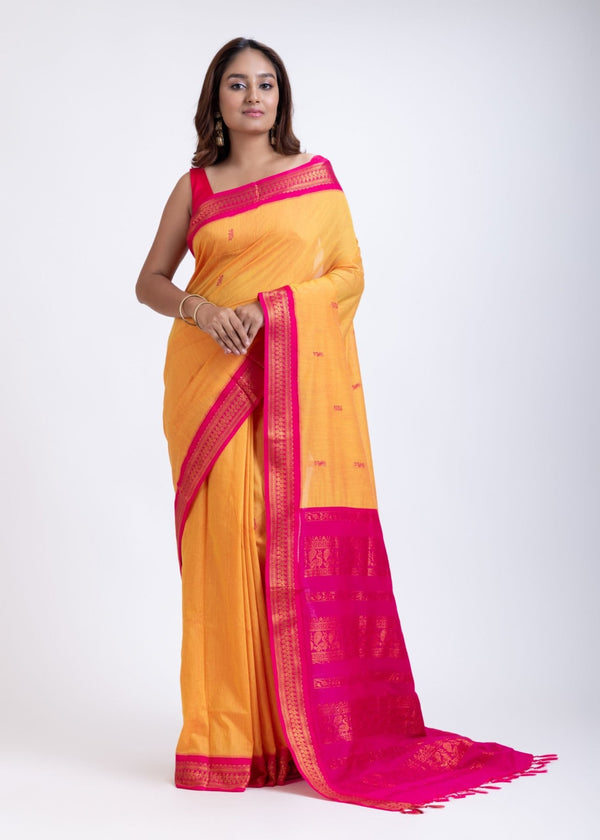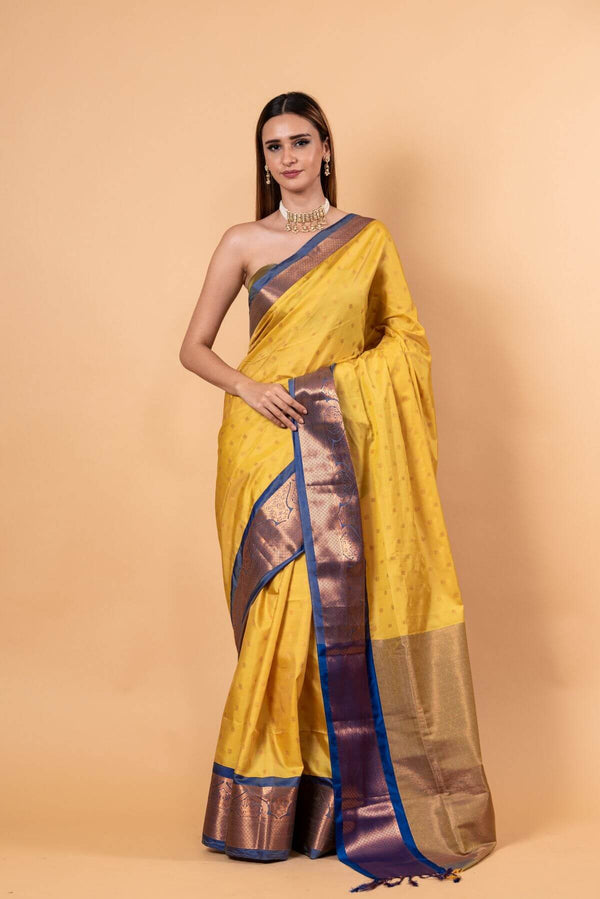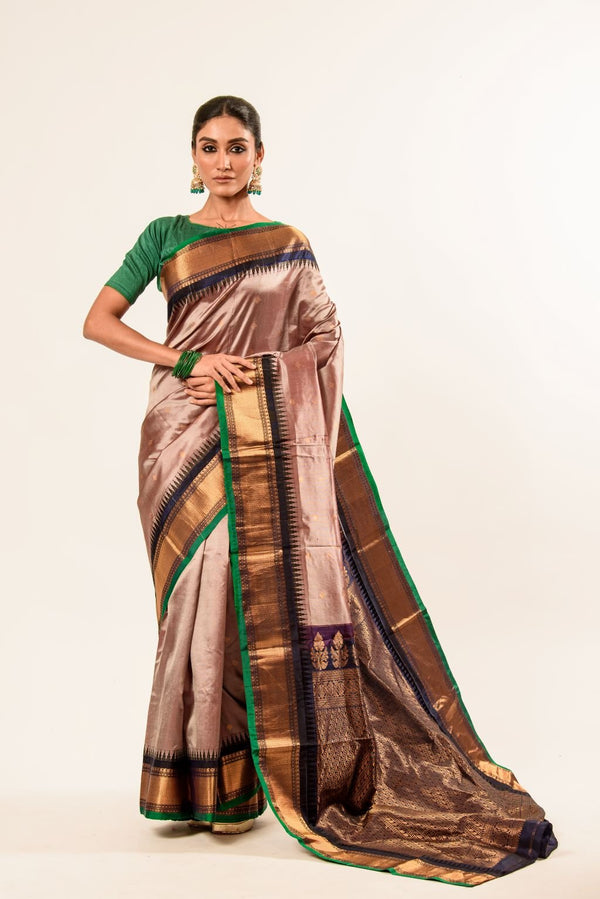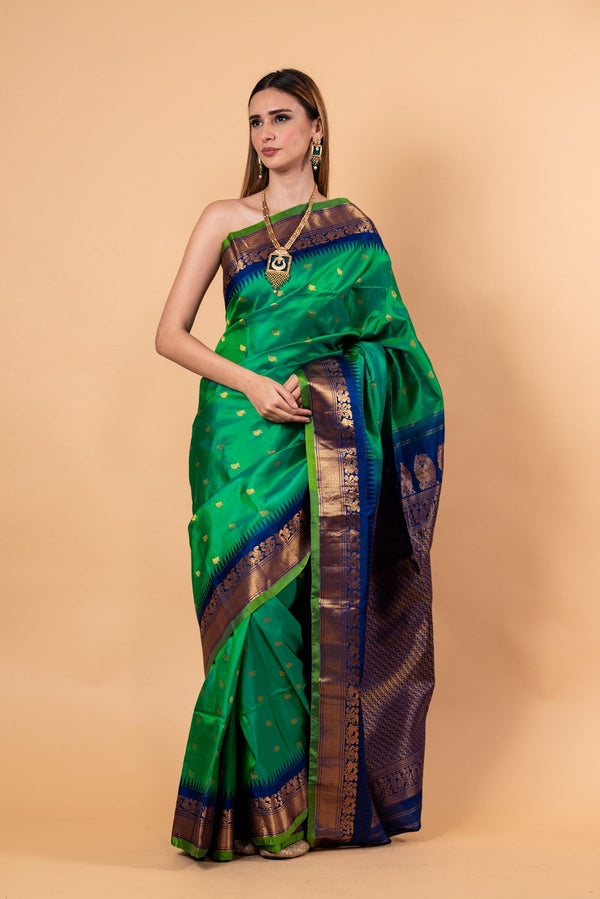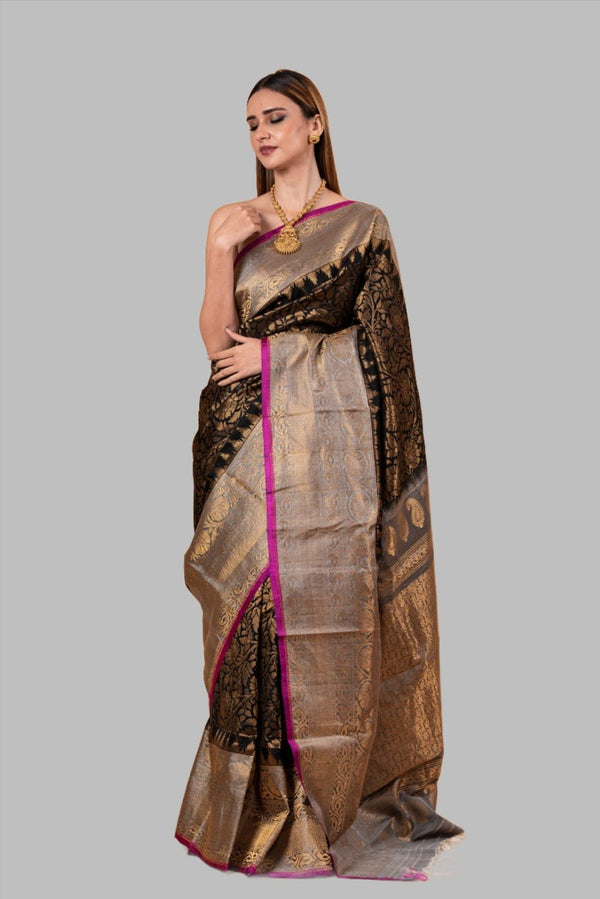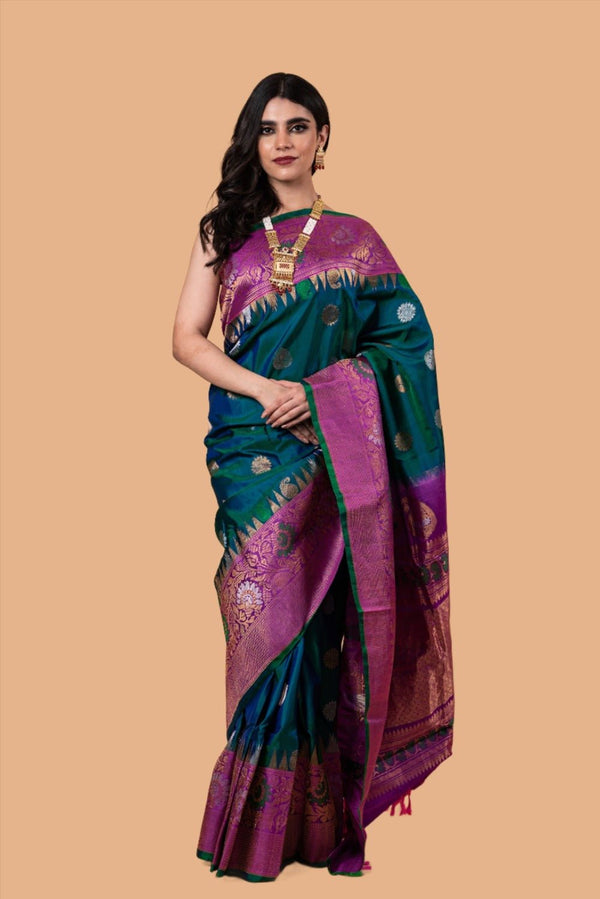




Have you ever found a beautiful Gadwal saree online and wondered whether it is genuinely handwoven or just a machine-made copy? You are not alone. Many sarees look similar in photographs, but their weaving, fabric quality and craftsmanship can be very different.
The good news is that you do not need to be a textile expert to make a better buying decision. By checking six important details, you can learn to recognise the signs of an original Gadwal saree before spending your money.
In this guide, we will explain what to look for, which labels to ask for, and how to spot common warning signs. These simple checks can help you shop with greater confidence, whether you are buying from a saree shop or an online store.
What Makes a Gadwal Saree Special?
Gadwal sarees come from the Gadwal weaving cluster in Telangana. The craft is believed to be around 200 years old and is known for combining different fabrics with skilled handloom weaving.
The most important feature is how the three parts of the saree are joined: the body, the border and the pallu. In a traditional Gadwal saree, the border and pallu are interlocked with the body during weaving rather than simply stitched on afterwards.
Gadwal sarees received Geographical Indication (GI) registration, which protects the name for qualifying sarees made in the registered area using the recognised method. The application was filed in 2008, and registration was issued in 2010.
You may hear terms such as kuttu, kupadam and tippadam when discussing these weaving techniques. However, an interlocked border alone does not prove that a saree comes from Gadwal. Other weaving centres also use similar techniques.
Here are six checks that can help you make a more informed choice.
1. Check How the Border Joins the Body
The border is one of the first places to examine. In an original Gadwal saree, the border has its own silk weft, which interlocks with the body at the point where the two colours meet.
How to check: Turn the saree over and examine the border closely in daylight. You should see a fine, slightly zigzag or toothed line where the body and border meet. Run your fingernail gently along the join. You may feel a slight ridge, but it should not look like an ordinary stitched seam.
Watch out for: Body-coloured threads showing through the border, visible stitching, folded fabric underneath or a border that appears printed or glued on.
These signs may suggest that the border was attached after the body was woven rather than interlocked on the loom.

2. Look for the Pallu Joint
This is an especially important check because the traditional pallu joint is a distinctive feature of Gadwal weaving.
The pallu is the decorative end of the saree. In the traditional method, the body's warp threads are joined to the pallu's silk warp threads one pair at a time. The weaver twists the threads together, using a small amount of natural gum.
How to check: Find the line where the body ends and the pallu begins. Look closely at the reverse side, or use your phone's camera zoom. You should see a distinct change in the warp threads along the join, sometimes with tiny twisted connections and a slightly firmer band.
Watch out for: A stitched seam across the width, a separate pallu panel sewn onto the body, or body threads continuing straight into the pallu without the traditional join.
A handwoven saree may still lack this feature, but it would not follow the traditional Gadwal construction described in the GI specification. Always ask the seller directly about the pallu joint.

3. Confirm the Fabric Used
Not every original Gadwal saree is made entirely of silk. There are three recognised varieties, and knowing the difference helps you avoid paying for a fabric you are not actually getting.
- Cotton Gadwal: Cotton body with a silk border and silk pallu.
- Silk-cotton, or sico Gadwal: A body combining cotton and silk, with a silk border and pallu.
- Silk or tussar Gadwal: A silk-based body with a silk border and pallu.
The right fabric depends on the variety being sold. Check whether the description matches the actual saree.
A loose thread from a cut end or blouse piece can sometimes help identify the fibre. Natural silk generally burns slowly, smells like burnt hair and leaves dark, brittle ash. Cotton burns more like paper and leaves soft grey ash. Polyester tends to melt and form a hard bead.
Never damage the saree to test it. Ask the seller for a loose thread, and have the test performed safely if necessary. Also remember that a burn test cannot reliably distinguish cotton from viscose. If a seller claims pure silk, ask for a Silk Mark label as supporting evidence.

4. Examine the Zari Work
The zari adds shine and richness to a Gadwal saree, especially along the border and pallu.
Traditional zari described in the Gadwal GI specification uses fine copper wire coated with silver and finished with a gold coating, twisted around a silk thread. This type is often called tested zari. It is not the same as pure gold.
How to check: Examine a loose zari end, if available. Traditional metallic zari has a metal wrapping around a fibre core. A reddish or copper tone beneath the gold-coloured surface can be normal for tested zari.
Watch out for: Flat, ribbon-like metallic plastic without a fibre core, an unnaturally uniform plastic shine, or material that feels stiff and crackles easily.
Ask whether the saree uses tested zari, pure silver or synthetic zari. The seller should explain the material clearly so you understand what you are paying for.

5. Check the Weave, Size and Weight
Handloom weaving often has small, natural variations. The weave may not look perfectly identical across every inch, and a tiny weaving knot is not automatically a defect.
Here are the measurements specified for Gadwal sarees:
- Length: Approximately 5 to 6.5 metres.
- Width: Approximately 45 to 50 inches.
- Minimum weight: 350 grams.
- Pallu: Approximately 20 to 40 inches.
- Border: Approximately 3.5 to 10 inches.
A saree that is much lighter or narrower than these specifications deserves further investigation.
You can also examine the edges. A closed selvedge is consistent with shuttle handloom weaving, while a fringe of cut weft threads may suggest shuttleless powerloom production. Neither sign proves authenticity on its own.
Gadwal designs often feature flowers, leaves, plants, swans and peacocks. The border and pallu usually carry more zari than the body.

6. Ask for the Right Labels and Documents
Labels are useful, but each one confirms something different.
- Handloom Mark: Indicates handwoven production rather than powerloom or mill-made production. It does not independently prove the fibre or Gadwal origin.
- India Handloom Brand: Certifies specified handloom quality standards after testing. Its absence alone does not mean a saree is fake.
- Silk Mark: Supports the claim that the silk portion is natural silk. It does not prove handloom production or Gadwal origin.
Where an India Handloom Brand registration number is provided, check it through the scheme's official website. Ask for an invoice identifying the saree as a Gadwal handloom saree, including its variety and fibres.
You can also ask who wove it, which village it came from, and whether a weavers' cooperative or master weaver was involved.

Buying a Gadwal Saree Online? Ask These Questions
Photographs cannot tell you everything, so request close-up images or a short daylight video of both joints, showing the front and reverse sides.
Before placing an order, ask for the saree's length, width and weight, photographs of its labels, and a written return policy covering cases where the product does not match its description.
A genuine handwoven Gadwal can cost more because of its silk, metallic zari and the hours of skilled work involved. Price depends on the fabric, border width, pallu size and zari work. A very low price for a saree advertised as pure silk deserves closer inspection, but a high price is not proof of authenticity either.
Be careful with descriptions such as “Gadwal style,” “Gadwal inspired” or “Gadwal pattern.” These may describe a design inspired by the craft rather than a saree woven in Gadwal.
Shop for Your Gadwal Saree with Confidence
An original Gadwal saree is more than its colours, motifs or shine. Its real value lies in the weaving skill, the interlocked joints and the work behind every detail.
Before you buy, remember the six checks: border joint, pallu joint, fabric, zari, weave and measurements, and supporting labels and documents. No single test guarantees authenticity, but checking these details together can help you ask better questions and avoid common imitations.
When shopping with Anvi Couture, explore the Gadwal collection and ask for clear product details about fabric, weaving, dimensions and available authenticity documentation before making your choice.