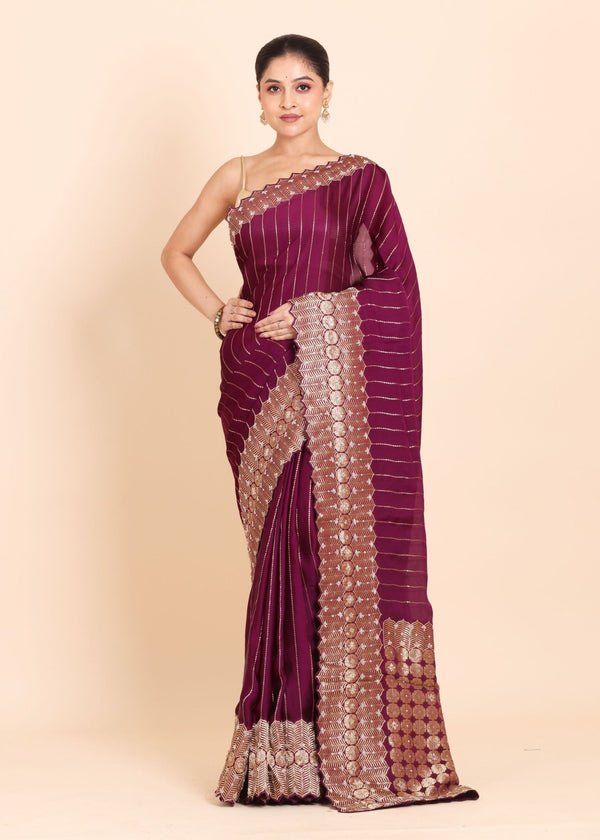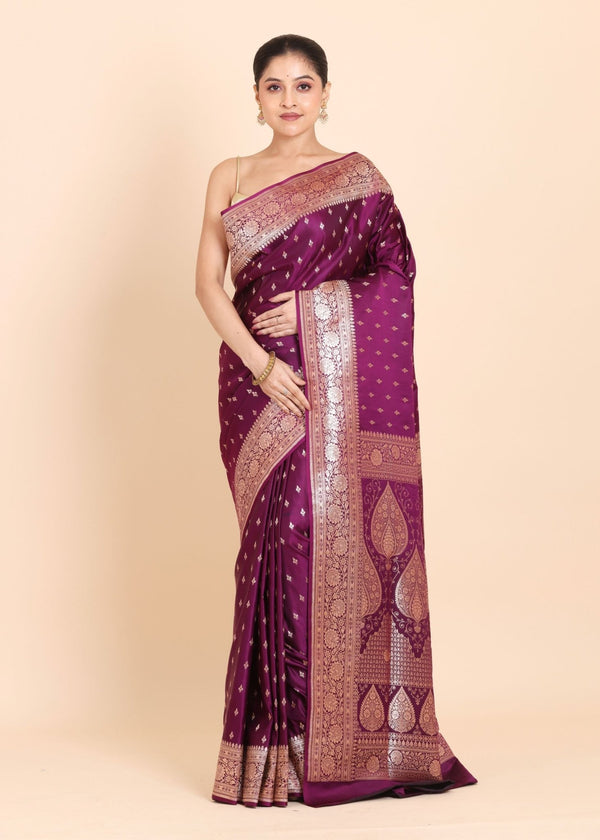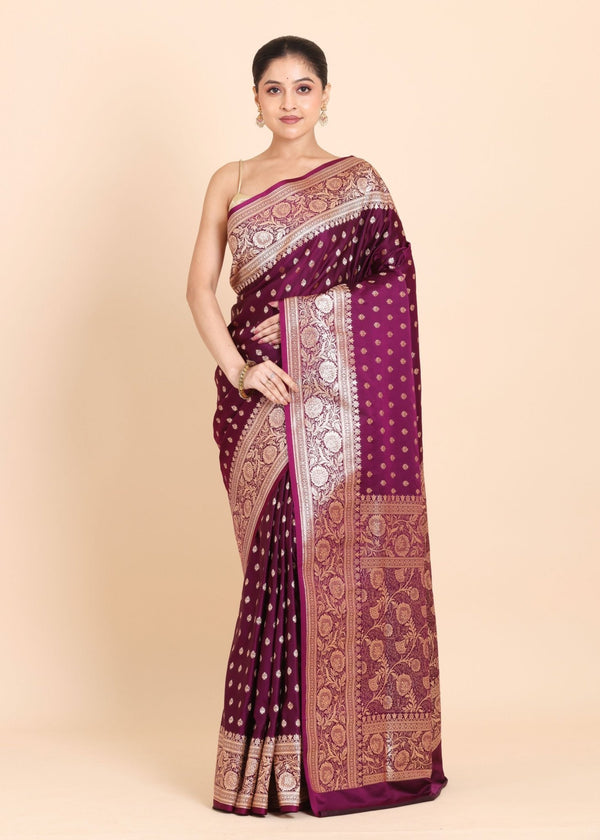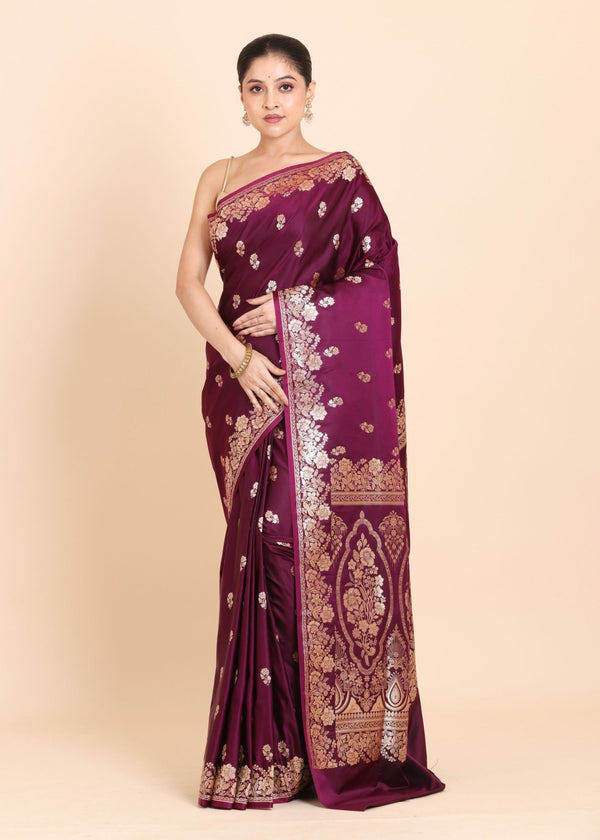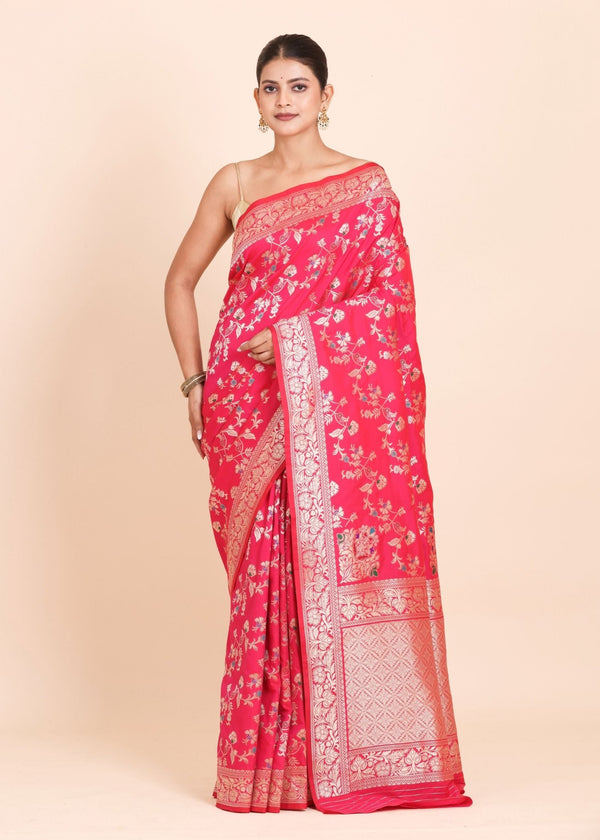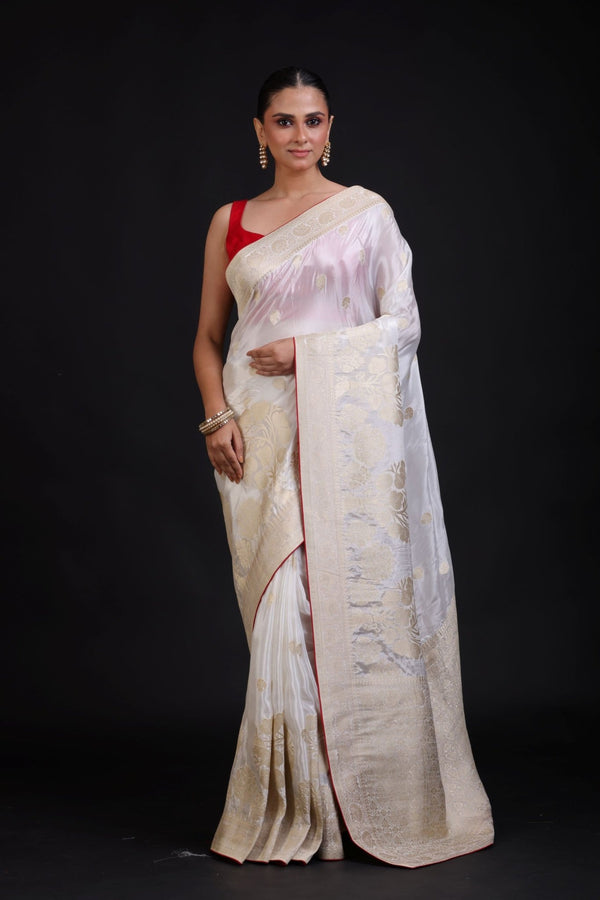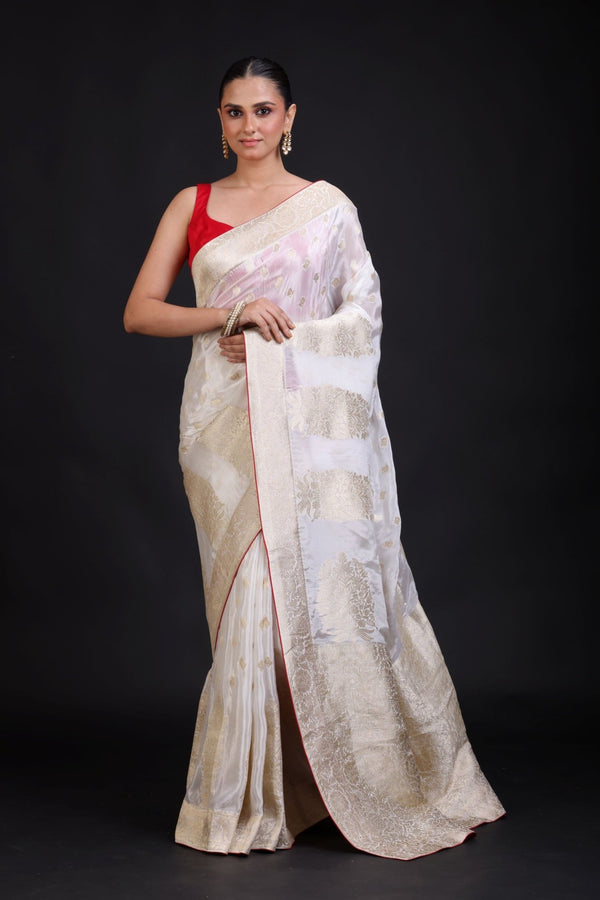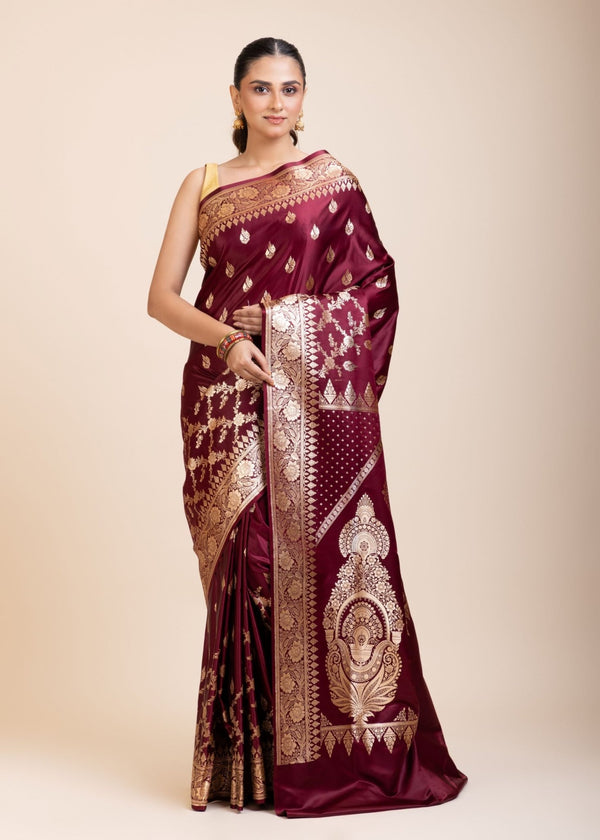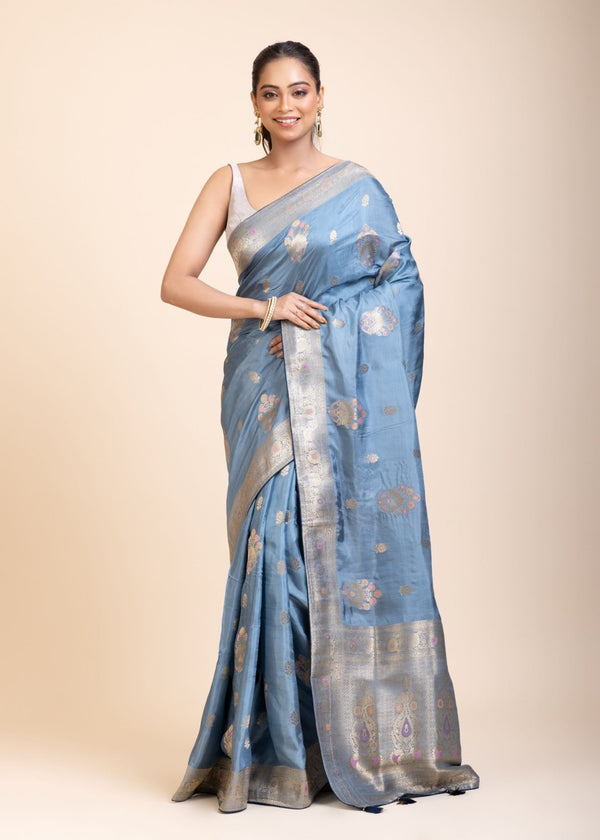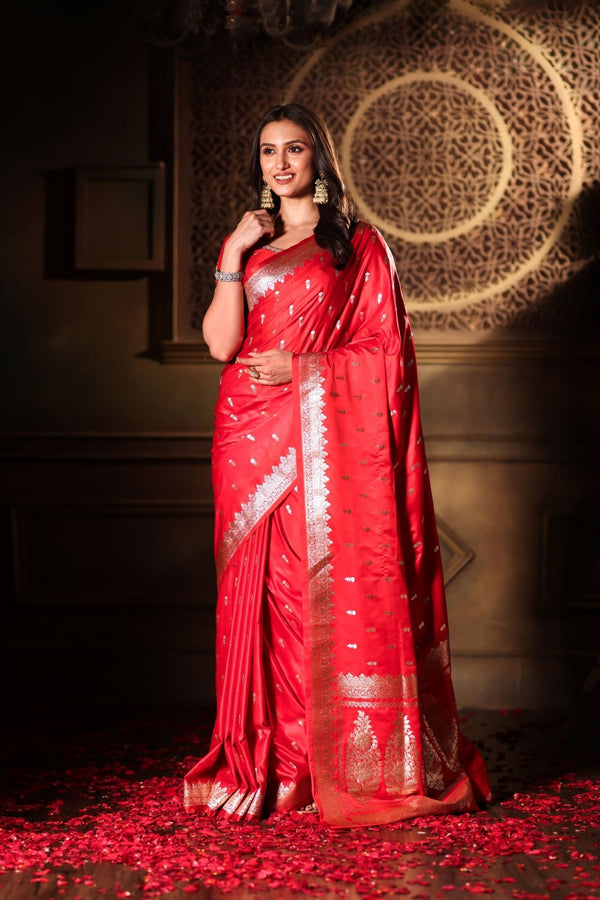




Banarasi sarees are known for their silk, zari work and intricate designs, but choosing one can be confusing because names such as Kadwa, Jangla, Butidar, Tanchoi and Rangkat describe different aspects of Banarasi craftsmanship. Some terms refer to weaving techniques, while others describe motifs, colour effects or the way patterns are arranged across the saree. Understanding this difference makes it easier to appreciate the craftsmanship and choose a saree that genuinely suits your style, occasion and budget.Banaras, now officially known as Varanasi, has a long-standing handloom tradition in which skilled weavers create detailed patterns by carefully combining warp and weft threads. The beauty of a Banarasi saree therefore comes not only from its rich appearance but also from the time, technique and precision required to produce its motifs and borders.
What Makes a Banarasi Saree Special?
A Banarasi Saree is recognised for the way its silk ground is combined with decorative weaving, often using zari to create floral, paisley, geometric and other traditional motifs. The amount of zari, density of the design, type of weaving technique and quality of the yarn can all change the appearance, weight and price of the finished saree.The weaving method is particularly important because two sarees can both be called Banarasi while looking and feeling quite different. A densely patterned Kadwa saree, for example, has a different character from a lightweight tissue saree, while an all-over Jangla pattern creates a different visual effect from small Butidar motifs.
For that reason, the following list should be understood as a guide to Banarasi weaving techniques, design traditions and styles, rather than twelve completely separate fabrics.
1. Kadwa (Kadhwa) Banarasi Saree
Kadwa, also written as Kadhwa or Kadhua, is one of the traditional techniques associated with detailed Banarasi weaving. The design is woven into the fabric with individual supplementary weft work rather than simply floating long threads across the back of the saree, allowing the motifs to be formed with considerable precision.Because the motifs are worked individually, intricate floral, paisley and other traditional patterns can be created with a refined finish. The technique is labour-intensive, so finely woven Kadwa sarees can command a higher price when they involve complex designs, high-quality silk and substantial zari work.Best for: Bridal wear, weddings and collectors who appreciate detailed handloom craftsmanship.

2. Tissue Banarasi Saree
Tissue Banarasi sarees are recognised for their luminous appearance, which comes from the combination of a lighter, often translucent-looking silk structure with metallic zari or other finely woven threads. Rather than relying only on heavy embroidery, the fabric itself creates much of the saree's visual richness.The lighter appearance makes tissue styles particularly attractive when you want the traditional elegance of Banarasi weaving without the visual heaviness of a densely patterned bridal saree. Gold and silver-toned tissue sarees are especially popular for festive occasions, receptions and evening celebrations.Best for: Festive celebrations, receptions and occasions where you want a lighter, luminous look.

3. Cutwork Banarasi Saree
Cutwork Banarasi sarees are associated with patterns in which extra threads are removed or trimmed from the reverse side after weaving, leaving the intended design clearly defined on the fabric. This technique can create intricate floral and jaal patterns while giving the saree a distinctive finish.The final appearance depends on the density and complexity of the woven pattern, so cutwork sarees can range from relatively subtle designs to richly detailed pieces. They are a good choice when you want elaborate Banarasi patterning without necessarily choosing the dense construction associated with some heavier styles.Best for: Weddings, festive occasions and traditional looks with detailed woven patterns

4. Jangla Banarasi Saree
Jangla Banarasi sarees are known for their elaborate all-over patterns, particularly floral and foliate designs that spread across much of the saree rather than appearing only as small individual motifs. The continuous pattern gives the fabric a richly decorated appearance and allows the craftsmanship of the weave to remain visible throughout the drape.Traditional Jangla designs can include flowers, leaves, vines and other nature-inspired elements, creating a strong connection with the decorative vocabulary of Banarasi textiles. Because the design covers a large part of the saree, Jangla is particularly effective when you want the saree itself to be the main focus of your outfit.Best for: Weddings, traditional celebrations and statement saree looks.

5. Tanchoi Banarasi Saree
Tanchoi weaving is recognised for its intricate use of coloured threads to create detailed patterns on the fabric, often producing a rich, almost tapestry-like appearance. Floral and paisley-inspired designs are common, and the interplay of colours can make the motifs appear more dimensional than a simple single-colour weave.A Tanchoi-inspired Banarasi saree can therefore be a good alternative to a heavily zari-focused design when you want richness through colour and weaving. The effect is particularly beautiful in jewel tones and deeper shades, although contemporary versions are available in softer and brighter colour combinations as well.Best for: Festive occasions, receptions and anyone who prefers woven colour and pattern over very heavy zari.
6. Khaddi Banarasi Saree
Khaddi Banarasi sarees are valued for their distinctive handloom texture and relatively lighter, more comfortable character compared with some heavily woven Banarasi styles. The term can refer to a particular handloom fabric construction, so buyers should check the actual fibre composition and weaving details rather than assuming that every saree described as Khaddi is made from cotton.The combination of a textured handloom surface with Banarasi-inspired motifs gives these sarees a more understated appearance. They can work particularly well when you want traditional weaving but prefer something that feels less formal than a heavily embellished bridal saree.Best for: Daytime celebrations, festive dressing and understated traditional looks.

7. Shikargah Banarasi Saree
Shikargah is one of the most visually distinctive Banarasi design traditions because it uses hunting scenes, animals, birds, foliage and other elements from nature as part of an elaborate composition. The name itself is associated with hunting-scene imagery, although contemporary interpretations may use the traditional visual language in more stylised ways.Peacocks, elephants, deer and other figures can appear among vines and foliage, turning the saree into something closer to a woven narrative. Because these motifs require careful planning and detailed weaving, a well-executed Shikargah saree can be particularly appealing to someone who values storytelling and traditional textile art.Best for: Heritage-inspired weddings, cultural celebrations and textile enthusiasts.

8. Banarasi Saree with Jhallar Border
The jhallar is a decorative border treatment that creates a fringe-like or ornamental effect, usually appearing near the edge of the saree or as part of the border composition. It adds another layer of detail to the traditional Banarasi border and can make the transition between the main body and the pallu more visually interesting.Jhallar designs may incorporate floral, geometric or other decorative motifs, depending on the saree. Because the detail is concentrated around the border, this style can be a good option if you want a traditional Banarasi appearance while keeping the main body comparatively simple.Best for: Weddings, festive occasions and traditional sarees where the border is an important design feature.

9. Butidar Banarasi Saree
Unlike an all-over Jangla design, a Butidar Banarasi saree is recognised by its repeated small motifs, traditionally called buttis or butas depending on their size and form. These motifs can be woven across the body of the saree, placed more sparsely, or combined with a decorated border and pallu.The spacing of the motifs gives Butidar sarees a more balanced appearance, making them easier to style when you want the fabric to look rich without having a large pattern covering the entire surface. Gold or silver zari butti designs on contrasting silk grounds are particularly traditional, while contemporary versions can use coloured threads for a softer effect.Best for: Weddings, festive wear and elegant traditional outfits that are less visually dense than Jangla styles.

10. Jamdani Banarasi Saree
Banarasi Jamdani styles bring together the decorative vocabulary of Banaras with the supplementary-weft tradition associated with Jamdani weaving. Instead of simply printing a motif onto the fabric, the pattern is built into the textile during weaving, allowing small floral, geometric or other motifs to appear as part of the fabric structure.This technique requires precision because individual motifs are created within the weave rather than added afterward as ordinary surface embroidery. The resulting saree can have a delicate and refined appearance, particularly when the motifs are distributed across a lightweight silk ground.Best for: Festive occasions, intimate weddings and anyone who prefers intricate craftsmanship with a lighter visual effect.

11. Rangkat Banarasi Saree
Rangkat sarees are particularly recognisable for their multi-coloured appearance, which is created through the use of different coloured yarns and carefully planned transitions in the woven design. Rather than relying on a single dominant colour, the saree can display contrasting or gradually changing shades that create a distinctive depth. The colour combinations can range from traditional jewel tones to more contemporary palettes, including striking black color saree combinations that give the traditional Banarasi weave a bold and sophisticated appeal. Zari motifs can add another layer of richness, while contrasting shades can make the overall design more expressive. Because the colour arrangement is part of the textile design itself, Rangkat can be an excellent choice when you want something more expressive than a conventional single-colour Banarasi saree.Best for: Festive celebrations, wedding functions and colourful traditional styling.
12. Banarasi Brocade Saree
Brocade describes a decorative woven textile in which additional threads are used to create raised or contrasting patterns within the fabric. Banarasi brocade sarees are particularly known for combining rich silk grounds with intricate floral, paisley, geometric or jaal motifs, often enhanced with zari.The word "brocade" therefore describes a method of creating decorative woven patterns rather than a single colour or one fixed Banarasi design. Depending on the weave, silk and zari used, a brocade saree can look understated or exceptionally elaborate, making it important to examine the actual construction rather than choosing solely by the name.Best for: Bridal wear, wedding ceremonies, receptions and formal festive occasions.
How Are These Banarasi Sarees Different?
The easiest way to understand Banarasi styles is to look at what creates the visual effect. Kadwa focuses on intricate individual motif weaving, Jangla is recognised for its continuous all-over patterning, Butidar uses repeated smaller motifs, Shikargah tells a story through nature and animal imagery, while Rangkat creates its identity through colour.Fabric appearance matters too. Tissue styles can look lighter and more luminous, whereas densely patterned silk and zari sarees generally create a richer and more formal impression. This means there is no single "best" Banarasi saree—the right choice depends on the craftsmanship you appreciate, the occasion and the kind of drape you want.
|
Banarasi style |
Distinctive feature |
Overall appearance |
Suitable for |
|
Kadwa/Kadhwa |
Individual supplementary-weft motifs |
Intricate and refined |
Bridal and wedding wear |
|
Tissue |
Luminous, lighter-looking fabric |
Sheer-looking and elegant |
Festive and evening wear |
|
Cutwork |
Detailed woven pattern with trimmed floats |
Intricate but balanced |
Weddings and celebrations |
|
Jangla |
Continuous floral/foliate pattern |
Rich and elaborate |
Weddings and traditional events |
|
Tanchoi |
Coloured woven patterning |
Detailed and multicoloured |
Festive and reception wear |
|
Khaddi |
Distinctive handloom texture |
Textured and understated |
Daytime and festive wear |
|
Shikargah |
Animal, bird and nature motifs |
Artistic and heritage-inspired |
Special celebrations |
|
Jhallar |
Ornamental border treatment |
Traditional and decorative |
Weddings and ceremonies |
|
Butidar |
Repeated butti motifs |
Balanced and elegant |
Festive and wedding wear |
|
Jamdani |
Supplementary-weft motifs |
Delicate and detailed |
Festive and intimate occasions |
|
Rangkat |
Multicolour woven effect |
Vibrant and distinctive |
Festive celebrations |
|
Brocade |
Raised decorative woven patterns |
Rich and luxurious |
Bridal and formal occasions
|
How to Choose the Right Banarasi Saree
Choosing a Banarasi saree becomes much easier when you start with the occasion and the level of detail you actually want, rather than choosing only by colour. A heavily patterned saree may be perfect for a wedding ceremony but feel excessive for a daytime family gathering, while a lighter design can be easier to wear for longer periods.For a bridal or major wedding ceremony, look at richly woven Kadwa, Jangla or brocade styles when you want substantial detail and a traditional appearance. For a reception or evening celebration, tissue, Tanchoi or a sophisticated Rangkat can provide richness without relying entirely on heavy zari.If you prefer a more balanced everyday-to-festive look, Butidar styles are worth considering because their repeated motifs give the saree character without covering the entire body with a dense pattern. And if your priority is heritage craftsmanship, Shikargah or intricately woven Jamdani styles offer something more distinctive than a conventional floral design.
What Should You Check Before Buying a Banarasi Saree?
The name alone should never be the only reason you buy a Banarasi saree. Start by asking about the fabric, weaving method, zari, origin and product documentation, particularly when the saree is being sold as a handwoven or traditionally crafted piece.
Pay attention to the following:
-
Ask whether the saree is handwoven or powerloom. These are different production methods, and the seller should describe the product accurately.
-
Check the fibre composition. "Banarasi" describes a weaving tradition and design category; it does not automatically mean every saree has the same silk composition.
-
Look at the zari carefully. The type and quality of metallic thread can affect both appearance and price.
-
Examine the motifs on the reverse side. The construction can provide useful clues about how the pattern has been woven.
-
Ask about the weaving technique. If a seller uses terms such as Kadwa, Jangla or Jamdani saree, they should be able to explain what the term means.
-
Check relevant authenticity or quality marks where applicable. Documentation is more useful than vague claims such as "100% original" or "pure Banarasi."
-
Consider the weight and drape. A beautiful saree is not necessarily the right saree if you find it too heavy or structured for the occasion.
-
Buy from a seller who can explain the product. A knowledgeable seller should be able to answer questions about the fabric, weaving, zari and construction rather than relying only on marketing language.
Why Banarasi Sarees Remain Special
The enduring appeal of a Banarasi saree comes from the fact that its beauty is built into the textile itself. The silk, zari, motifs and weaving technique work together to create a garment that can carry cultural meaning while still fitting contemporary wardrobes.For a buyer, understanding the difference between a weaving technique and a design style is especially valuable. Once you know what makes Kadwa different from Butidar, why Jangla looks more continuous, or how Rangkat gets its multicoloured character, you can make a more informed decision instead of choosing a saree simply because it looks rich in a photograph.At Anvi Couture, this distinction is important when selecting traditional sarees because the appeal of a Banarasi should come from craftsmanship, material and construction—not just the number of zari motifs on the fabric. A thoughtfully selected saree should look beautiful when worn, feel appropriate for the occasion and give you confidence that you understand what you are buying.