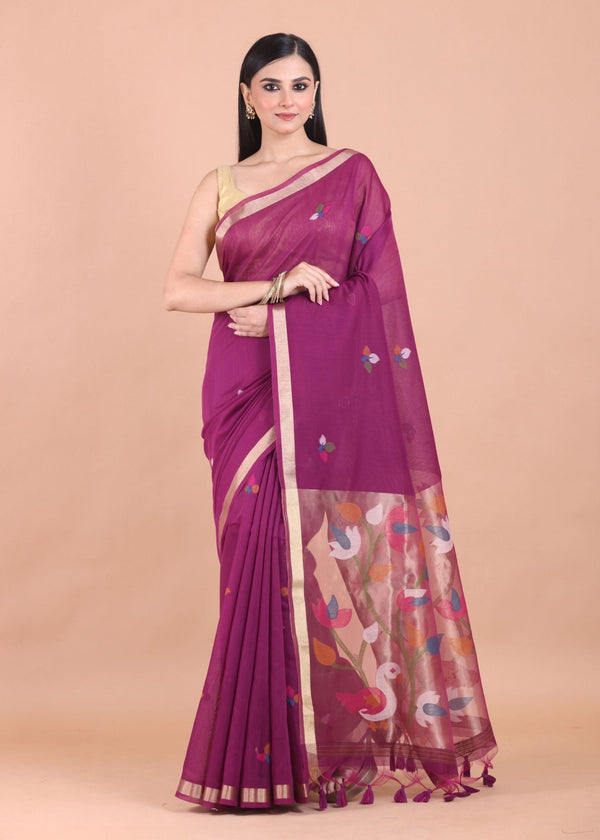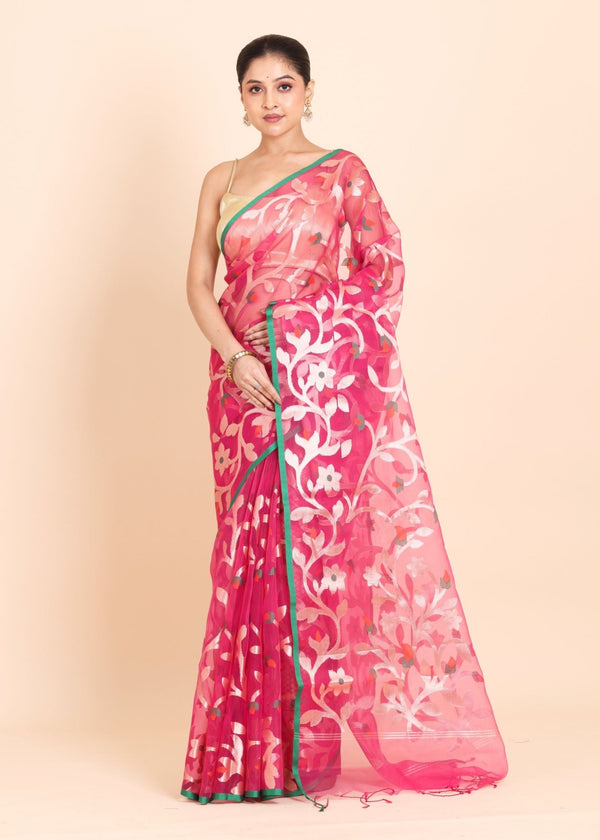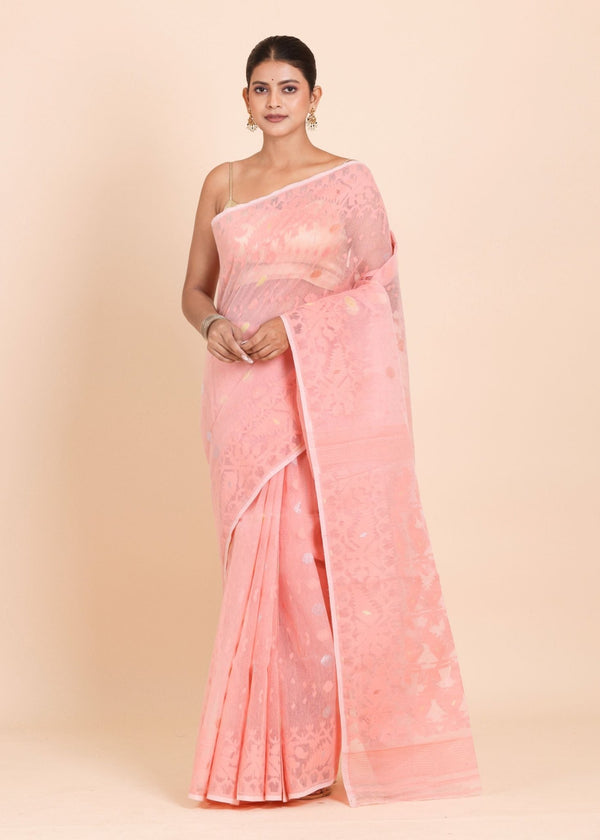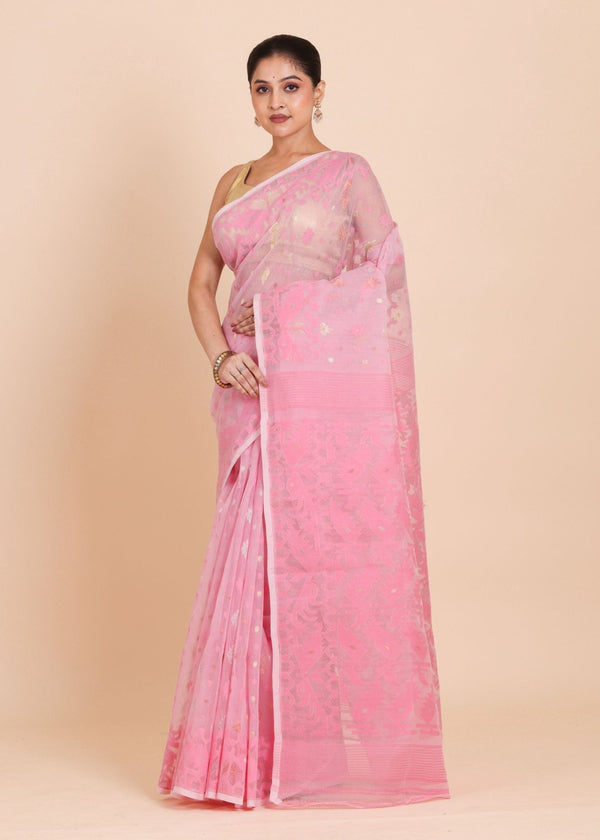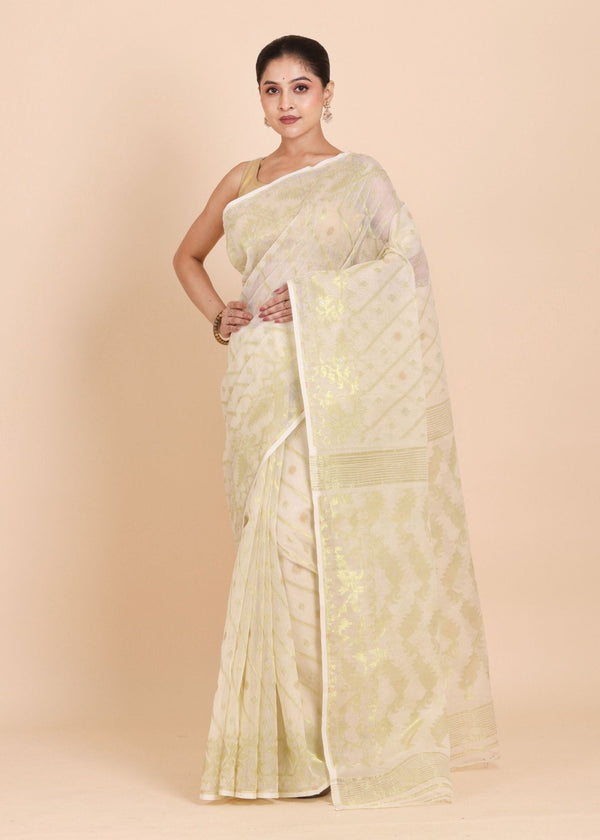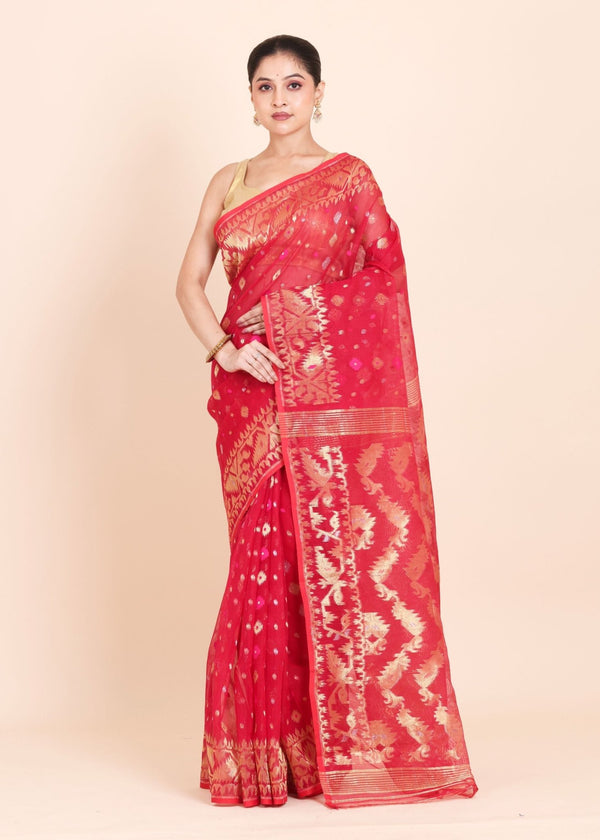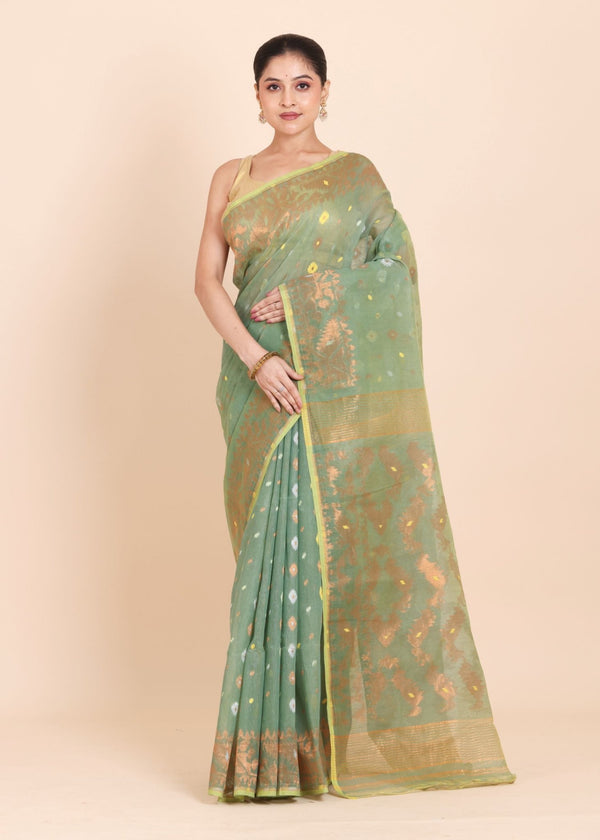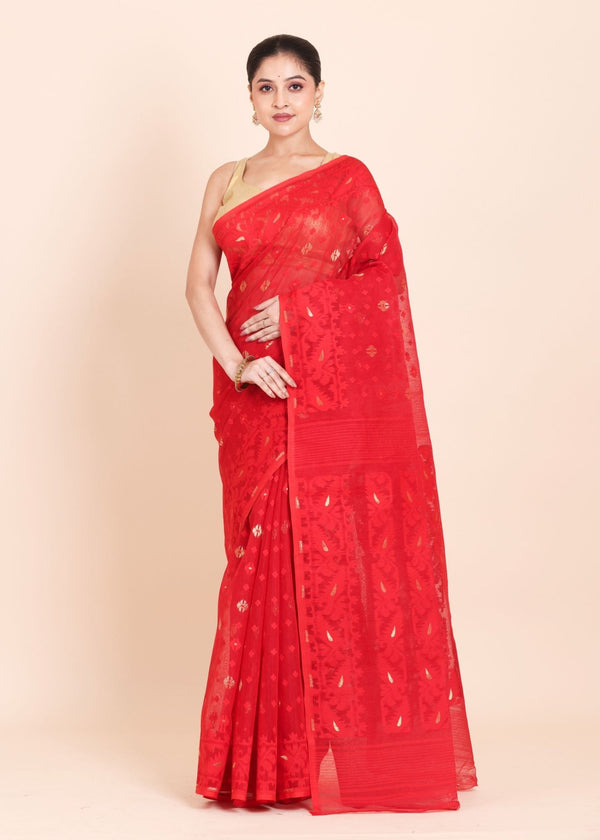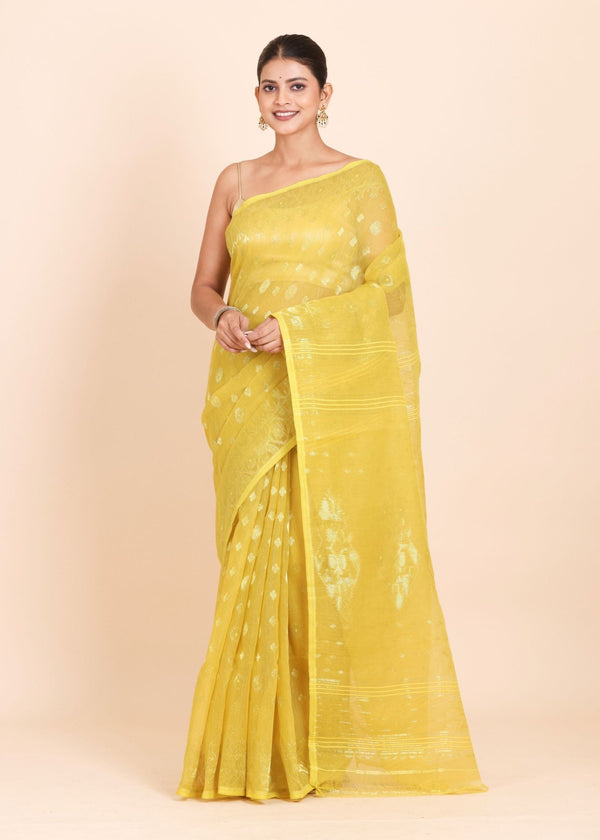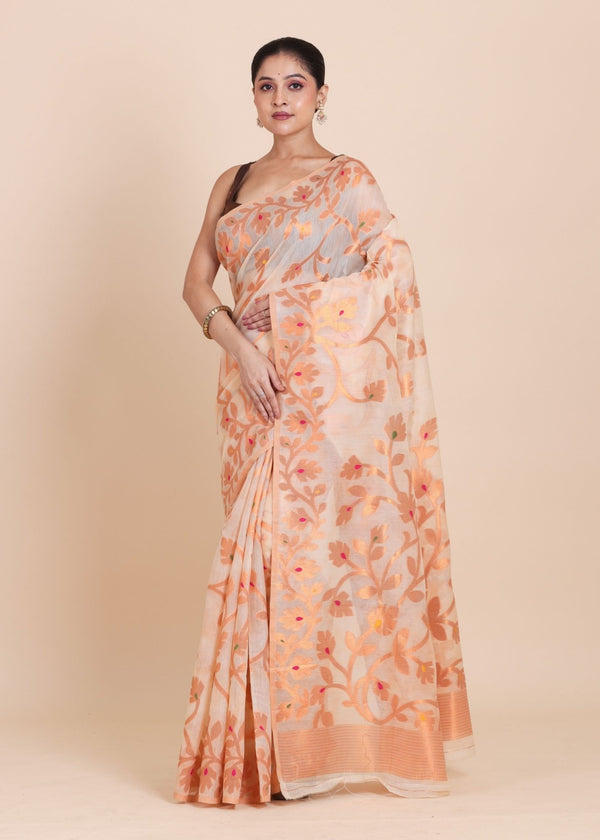




Jamdani sarees are woven mainly in traditional handloom centres of West Bengal, especially around Nadia and Purba Bardhaman. Places such as Santipur, Phulia, Dhaniakhali and Katwa are also connected with Bengal’s rich weaving tradition. What makes these sarees special is the way skilled weavers create motifs directly on the loom using extra weft threads. Floral patterns, small geometric designs and traditional butis are carefully woven into the fabric instead of being printed on it. The weaving process takes time and patience, and the final saree often reflects the individual skill of the weaver. This is why two Jamdani sarees may have similar patterns but still feel different in texture, detail and finish. For buyers, knowing the weaving region can make it easier to understand the craftsmanship and value behind a handwoven Bengal Jamdani.
History of Jamdani Sarees: From Mughal-Era Craft to Modern Bengal
The history of the Jamdani saree is closely connected with the rich weaving tradition of Bengal. The craft became especially famous during the Mughal period, when fine muslin textiles from Bengal were valued by royal families and wealthy patrons. Unlike a printed saree, a traditional Jamdani gets its patterns from extra weft threads that are carefully inserted into the fabric by hand, allowing weavers to create delicate floral, geometric and traditional motifs. The craft later faced challenges during the colonial period as demand for handmade textiles declined and cheaper mill-made fabrics became more common. Even so, Bengal's weaving communities continued to preserve the technique and pass it from one generation to the next. Today, Jamdani remains an important part of Bengal's handloom heritage, with weaving communities in places such as Nadia, Phulia and Santipur continuing the tradition. Its cultural importance was further recognised when traditional Jamdani weaving was inscribed on UNESCO's Representative List of the Intangible Cultural Heritage of Humanity in 2013. This long journey is what makes a Jamdani more than just a lightweight cotton saree—it represents generations of skill, patience and Bengal's textile heritage.

Which Regions Are Known for Jamdani Sarees Today?
West Bengal has several important handloom centres associated with Jamdani and related weaving traditions. Nadia, Phulia and Santipur are particularly well known for Bengal's fine cotton handloom sarees, while Kalna and other parts of Purba Bardhaman also have Jamdani weaving communities. Dhaniakhali is another important Bengal handloom centre. Each region has developed its own weaving traditions, designs and preferences over time, so the look and feel of a Jamdani can vary depending on its weaving community and craftsmanship.
Why Is Jamdani More Expensive Than Ordinary Cotton Sarees?
A Jamdani can cost more than an ordinary cotton saree because of the time, skill and detailed handwork involved in making it. The motifs are created directly on the loom using supplementary weft threads, rather than being printed after the fabric is made. Finer yarn, detailed patterns and more complex designs can also increase the weaving time. When you buy a handwoven Jamdani, you are paying not only for the fabric but also for the craftsmanship and hours of work behind it.
How Long Does It Take to Weave a Jamdani Saree?
The time required to weave a Jamdani depends on its fabric, design and level of detail. A saree with simple motifs may take less time, while a finely detailed Jamdani can require many weeks or even months of careful weaving. The weaver has to create the decorative patterns thread by thread while working on the loom. This slow process is one reason every handwoven Jamdani has its own character and why detailed pieces are valued as works of textile craftsmanship.
Which Jamdani Motifs Are Traditional?
Traditional Jamdani designs often draw inspiration from nature and geometric forms. Floral butis, leaves, vines, paisley-inspired shapes and small geometric patterns are commonly seen across different designs. Some sarees feature repeated motifs spread across the body, while others have more elaborate work on the pallu and border. Motif styles can vary between weaving communities and individual weavers. This variety is one reason Jamdani continues to feel traditional while still offering plenty of choices for contemporary saree lovers.
Celebrating Bengal’s Rich Jamdani Tradition
Jamdani sarees are more than lightweight cotton sarees—they represent Bengal’s long-standing weaving heritage and the skill of artisans who create each motif by hand. From the traditional weaving centres of Nadia, Phulia and Santipur to other Bengal handloom communities, the craft continues to evolve while preserving its distinctive techniques. The time, patience and craftsmanship involved also explain why handwoven Jamdani can cost more than ordinary cotton sarees. Whether you choose a simple Jamdani for everyday wear or a detailed design for a special occasion, understanding its weaving process, motifs and origin helps you appreciate the saree beyond its appearance. For buyers, choosing a genuinely handwoven Jamdani means not only investing in a beautiful saree but also supporting the craftsmanship and textile traditions behind it.