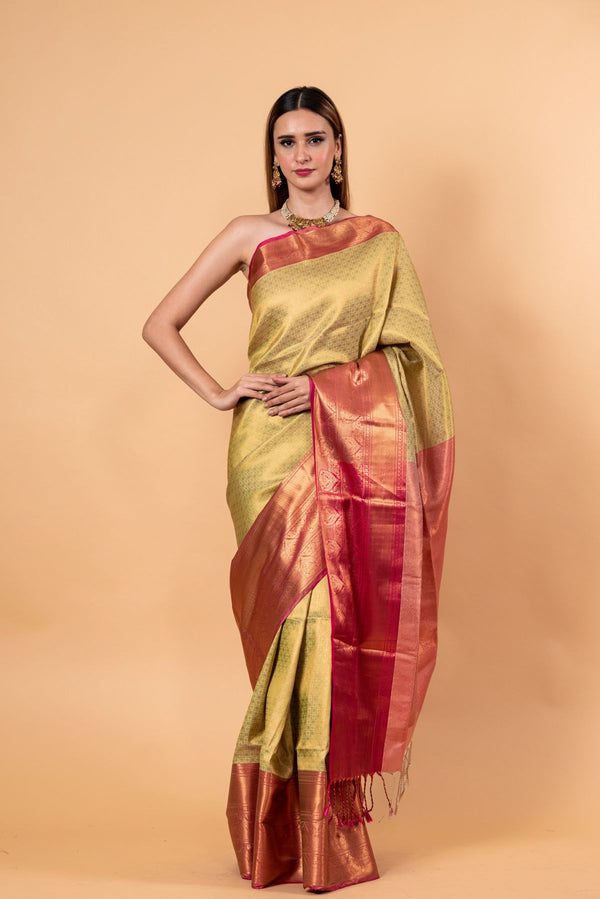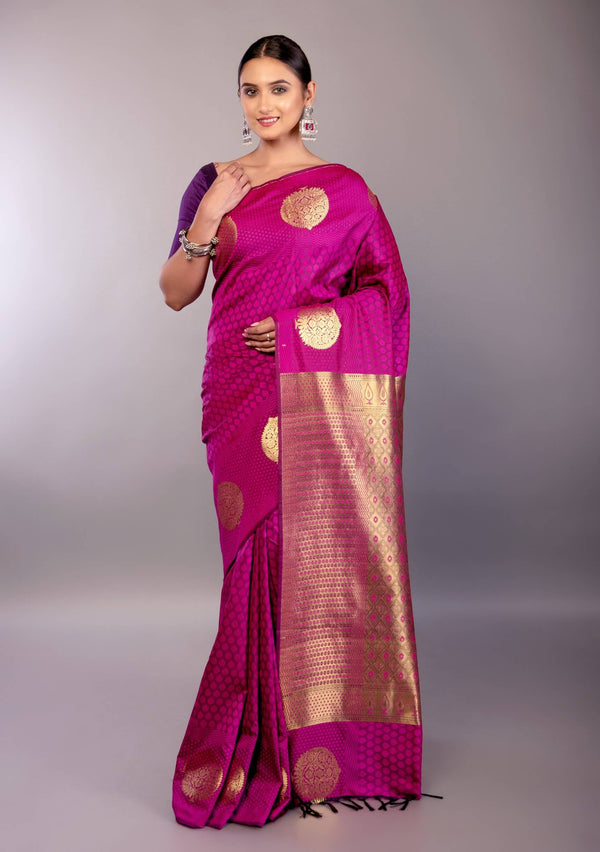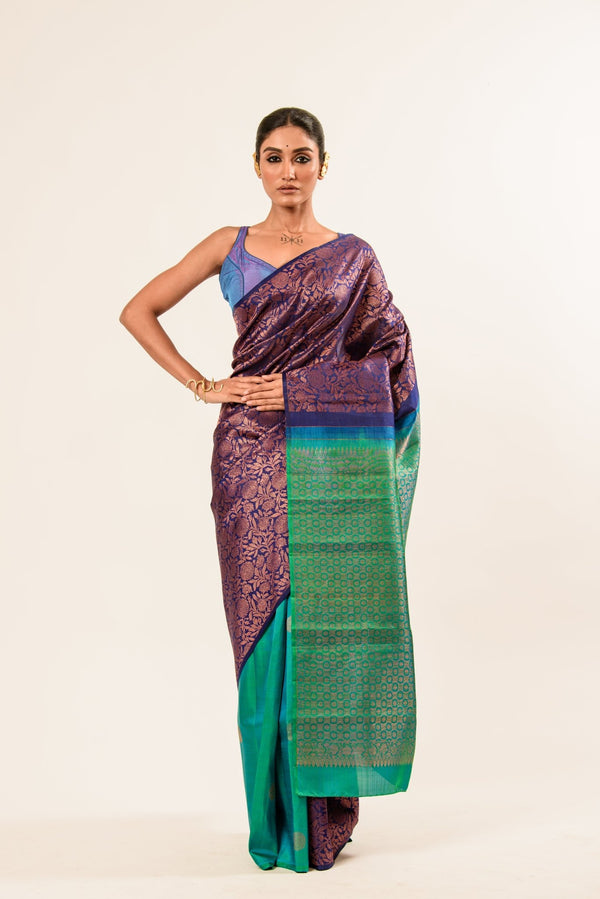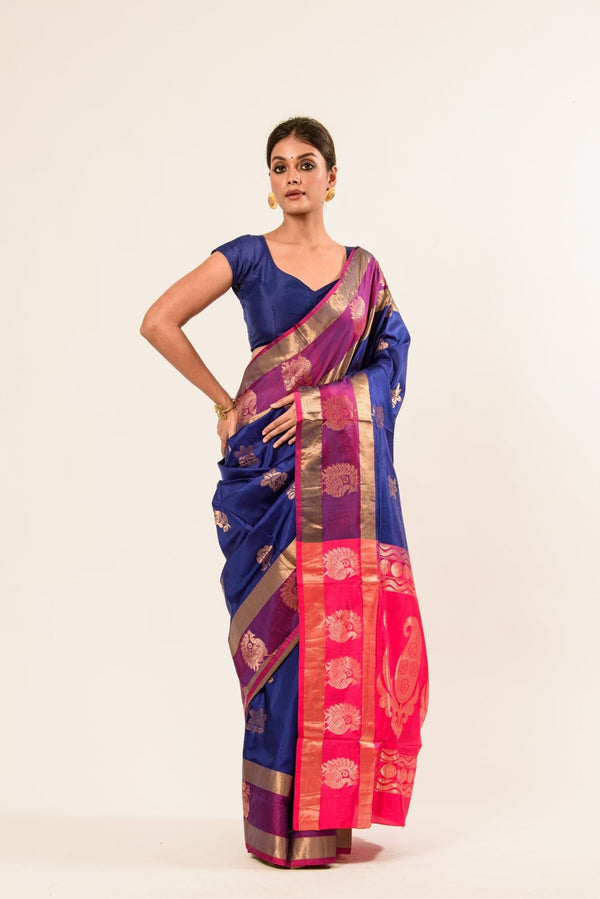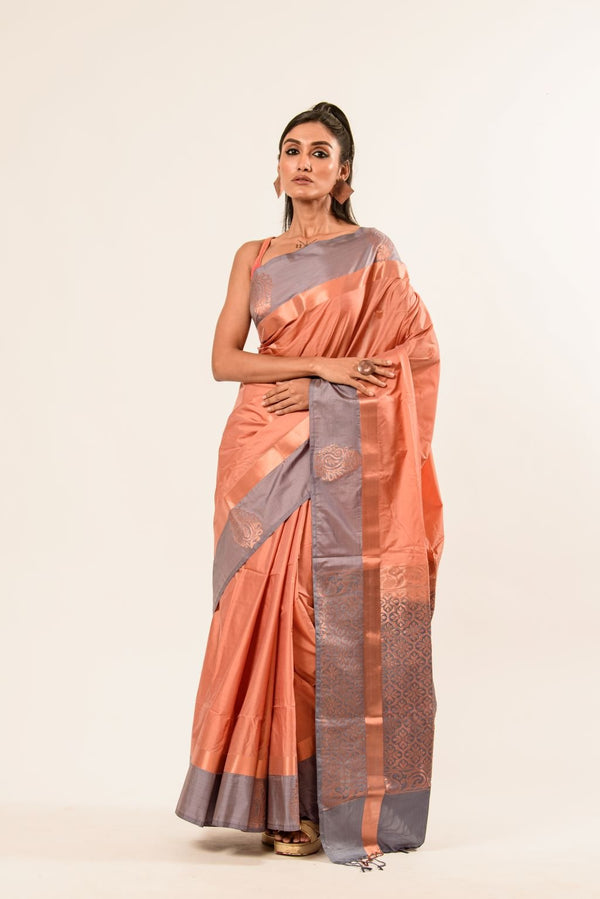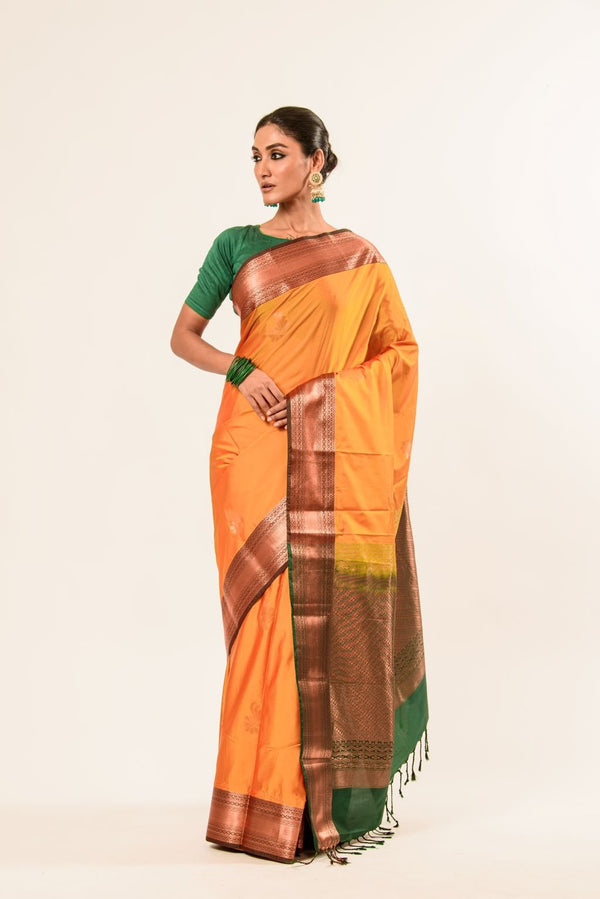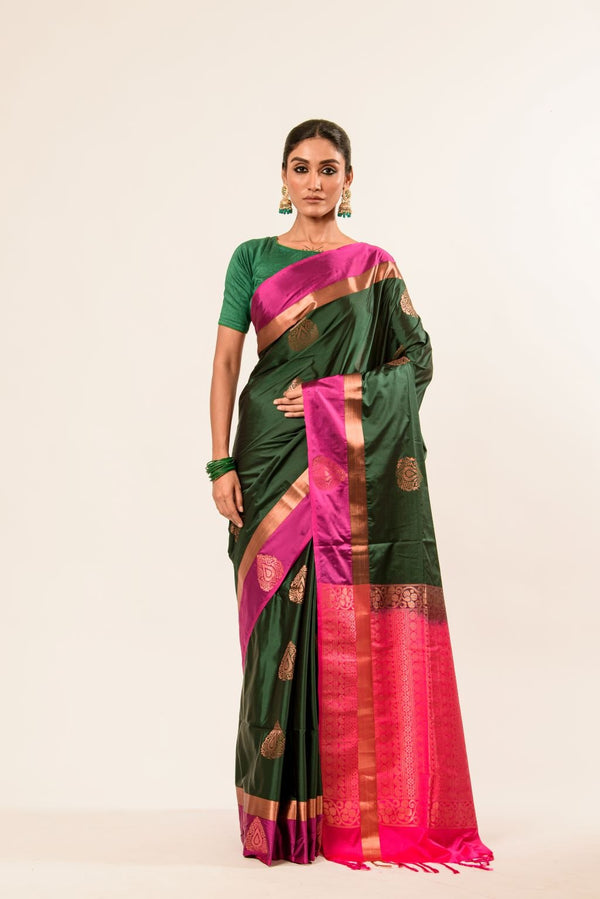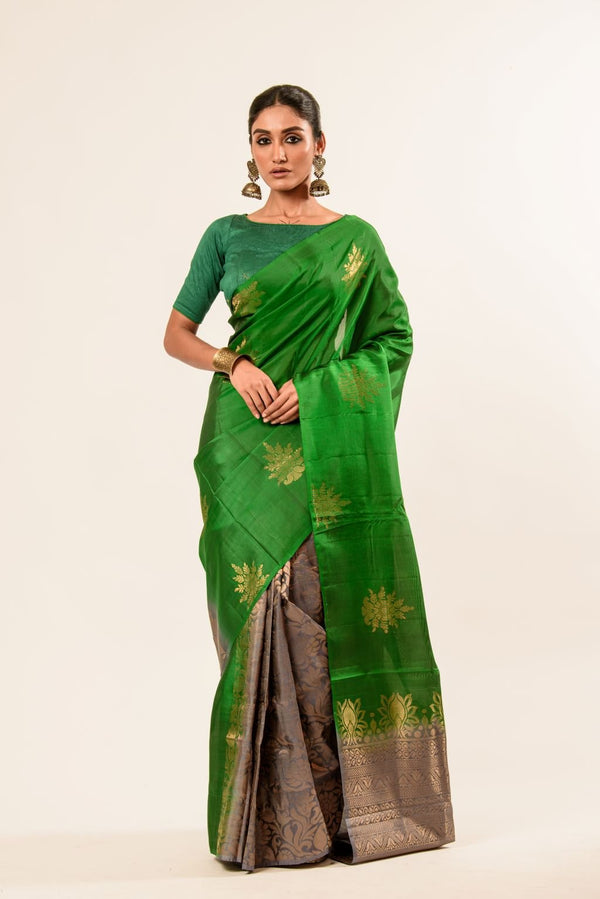




Buying a Kanjivaram silk saree is not simply about choosing a beautiful colour, a broad zari border or a high price tag. If you want an authentic traditional sarees, you need to look at several details together, including silk composition, weaving method, certification, zari, construction, seller information and price. No single visual feature can prove authenticity, especially when buying online, where photographs may make different types of sarees look very similar.
1. What Makes a Kanjivaram Silk Saree Original?
A traditional Kanjivaram saree is associated with the silk-weaving tradition of Kanchipuram in Tamil Nadu, rather than being defined only by its colour, motif or zari appearance. Kancheepuram Silk has a registered Geographical Indication (GI), while traditional sarees from the region are known for lustrous silk, distinctive borders, richly developed pallus and weaving techniques such as korvai, petni and adai. For a buyer, the important distinction is that pure silk, handloom production and Kanjivaram tradition are related but not identical claims. A saree can be made from genuine silk without being handwoven, while a saree can imitate the visual appearance of Kanjivaram without being a traditionally woven Kancheepuram silk saree. Therefore, authenticity should be evaluated through the material, construction, weaving tradition and documentation rather than through appearance alone.
The main things to verify are:
- Silk composition: Confirm whether the saree is 100% natural silk, a silk blend or another material.
- Weaving method: Find out whether the saree is handwoven or powerloom.
- Silk Mark: Check whether applicable certification supports the natural-silk claim.
- Handloom information: Look for credible information about handwoven production.
- GI identity: Understand the connection between Kancheepuram Silk and its geographical origin.
- Zari composition: Ask what type of zari has actually been used.
- Construction: Examine the border, pallu, motifs and reverse side.
- Seller documentation: Check product specifications, invoice and applicable return terms.

2. Check the Silk Mark, Handloom Information and GI Separately
Certification can help you make a more informed purchase, but each certification or identification system tells you something different. Silk Mark relates to natural silk, while Handloom Mark information relates to handwoven products, and the GI registration identifies the geographical and product tradition associated with Kancheepuram Silk. This distinction matters because a buyer can otherwise assume that one certificate proves everything about a saree. The article's source material specifically notes that Silk Mark should not be treated as certification of every feature of the saree, particularly zari purity.
A simple way to understand the difference
| Information | What it helps you understand |
|---|---|
| Silk Mark | Natural silk claim |
| Handloom Mark | Handwoven identification |
| GI registration | Geographical identity and associated product tradition |
| Zari details | Metallic yarn and its composition |
| Invoice | Purchase record and seller accountability |
| Product specifications | Material, dimensions and construction details |
When buying online, do not rely on a product title such as “pure Kanjivaram silk saree” as proof by itself. Ask the seller for clear certification information, fabric details and close-up photographs, particularly when the saree represents a significant purchase.

3. Examine the Silk, Weave, Border and Pallu
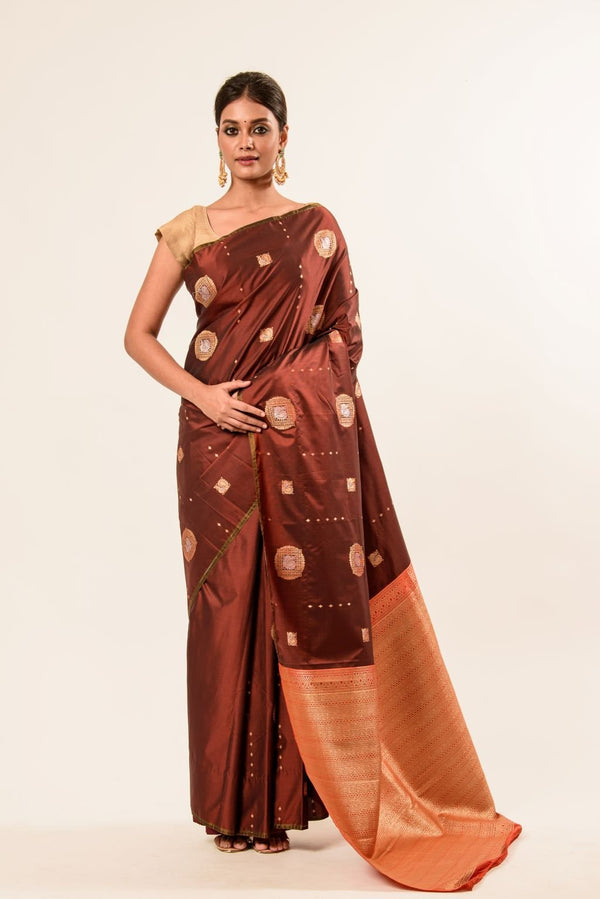
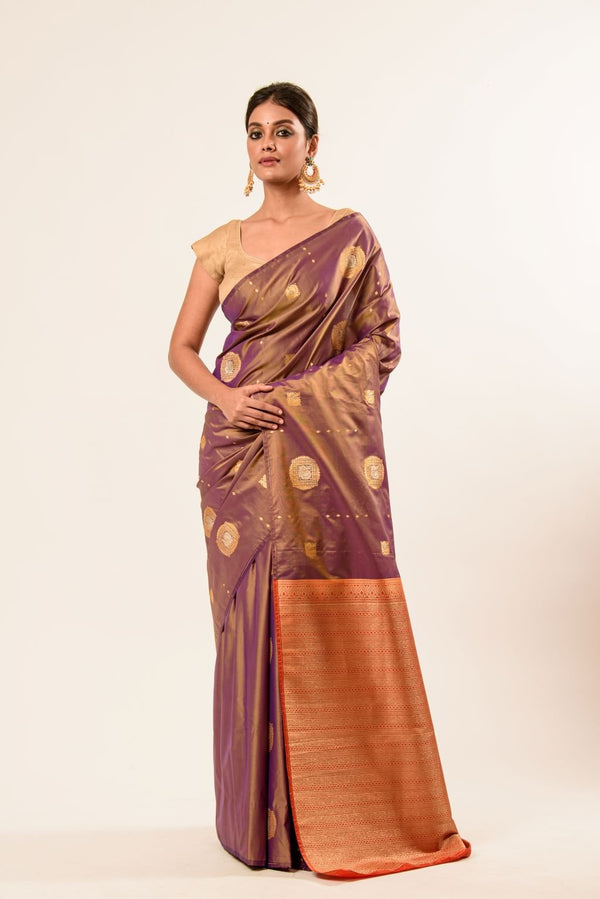
The appearance and hand feel of silk can provide useful clues, but neither shine nor weight can conclusively establish authenticity. A good Kanjivaram silk saree, including a richly coloured golden silk saree, generally has a distinctive lustre, structured drape and substantial feel, but these characteristics can change according to the silk, weave density, zari coverage and design. The border and pallu deserve particular attention because traditional Kancheepuram sarees are strongly associated with contrasting borders and richly developed pallus. Look closely at the motif definition, weaving consistency, finishing, transitions between the body and border, and the evenness of the zari work; when shopping online, photographs of the reverse side can also reveal details that are difficult to see in a full-length product photograph.
What to inspect closely
- Body-to-border construction
- Border width and finishing
- Pallu construction
- Motif definition
- Weave consistency
- Reverse-side finishing
- Zari density and neatness
- Overall drape and fabric structure
A particularly useful term to understand is korvai. Korvai is an important Kancheepuram weaving technique associated with the joining of contrasting body and border sections during weaving, which helps create the characteristic definition seen in many traditional sarees.

4. Do Not Assume That Zari, Weight or Price Proves Authenticity
Zari contributes significantly to the visual character and price of a Kanjivaram saree, but a golden appearance does not automatically mean that the saree contains pure precious-metal zari. Zari can differ in construction and quality, so buyers should ask the seller to explain what type of zari has been used instead of interpreting colour or shine as proof of composition. Price should be considered in the same way. A traditional handloom saree with higher-quality silk, complex weaving, substantial zari, dense motifs and extensive craftsmanship can cost considerably more than a lighter or simpler Kanjivaram-style saree, but price alone cannot establish authenticity.
Indicative price framework
| Approximate price | What you may encounter |
|---|---|
| ₹5,000–₹10,000 | Lighter styles, simpler designs and some blend or lower-zari constructions |
| ₹10,000–₹25,000 | More substantial silk options with richer detailing |
| ₹25,000–₹50,000 | Premium handloom sarees with more elaborate borders and motifs |
| ₹50,000+ | High-end bridal, heirloom and heavily worked pieces |
| ₹1 lakh+ | Exceptional pieces with substantial zari and intricate craftsmanship |
These ranges should be treated as indicative market guidance rather than authenticity thresholds. Retail prices can change according to silk quality, zari composition, weaving technique, design, labour, seller and season, so a buyer should always examine what is actually included in the price.

5. How to Buy an Original Kanjivaram Saree Online
Online shopping requires more careful verification because you cannot physically touch the silk, inspect the reverse side or examine the zari before placing the order. A reliable seller should therefore provide enough product information for you to understand exactly what you are purchasing rather than expecting you to judge authenticity from one edited photograph.
Before placing an order, check the following information:
- Fabric: Is the saree 100% natural silk, pure mulberry silk, a blend or another material?
- Production: Is it handwoven or powerloom?
- Weaving: Are traditional techniques such as korvai mentioned where relevant?
- Zari: Is the composition clearly explained?
- Dimensions: Are saree length, width and blouse-piece details provided?
- Certification: Are relevant Silk Mark or Handloom Mark details available?
- Images: Can you see the actual border, pallu, weave and reverse side?
- Documentation: Will you receive an invoice?
- Returns: Is the applicable return policy clearly stated?
If the saree is expensive, ask for additional photographs before payment. A seller who can clearly explain the silk, weave, zari and construction gives the buyer a stronger basis for making an informed decision.
Common mistakes to avoid
- Assuming a high price guarantees authenticity
- Assuming a heavy saree is automatically better
- Treating a golden zari appearance as proof of precious-metal zari
- Assuming every Kanjivaram saree is handwoven
- Treating Silk Mark as certification of the entire saree
- Buying without checking fabric composition
- Relying only on edited product photographs
- Purchasing without an invoice or clear seller information

6. How Anvi Couture Selects Kanjivaram Sarees
At Anvi Couture, choosing a Kanjivaram saree is approached as a textile-selection decision rather than simply a design decision. The selection considers the character of the silk, weave, proportion between the body and border, pallu, zari treatment, colour palette, finishing and overall drape so that the saree works for the customer beyond its appearance in a photograph. This approach is particularly relevant for customers choosing a saree for a wedding, festive celebration, family occasion or personal collection because different buyers may want very different combinations of weight, zari, colour and traditional detail. The aim is to offer pieces that respect the Kanjivaram weaving tradition while also considering contemporary preferences and practical use.
Our selection focuses on:
Silk quality → Weave → Border → Pallu → Zari → Colour → Finishing → Drape
The most important principle is simple: do not judge a Kanjivaram saree by one feature alone. A knowledgeable purchase considers the material, weaving method, construction, certification, documentation and price together, allowing the buyer to understand not only whether the saree looks beautiful but also what makes the textile valuable.

Quick Kanjivaram Saree Buying Checklist
Before paying for a saree, ask yourself:
- Is the fabric composition clearly stated?
- Is the silk claim properly supported?
- Is Silk Mark information available where applicable?
- Is the handloom status clearly explained?
- Is the Kancheepuram/GI connection credible?
- Is the zari composition disclosed?
- Are the border and pallu shown clearly?
- Are close-up and reverse-side photographs available?
- Is the weaving technique explained?
- Will the seller provide an invoice?
- Is the return policy clearly stated?
- Does the price make sense for the material and craftsmanship?
If the answers are clear, you are in a much stronger position to choose a Kanjivaram saree with confidence rather than relying on appearance, price or a product title alone.