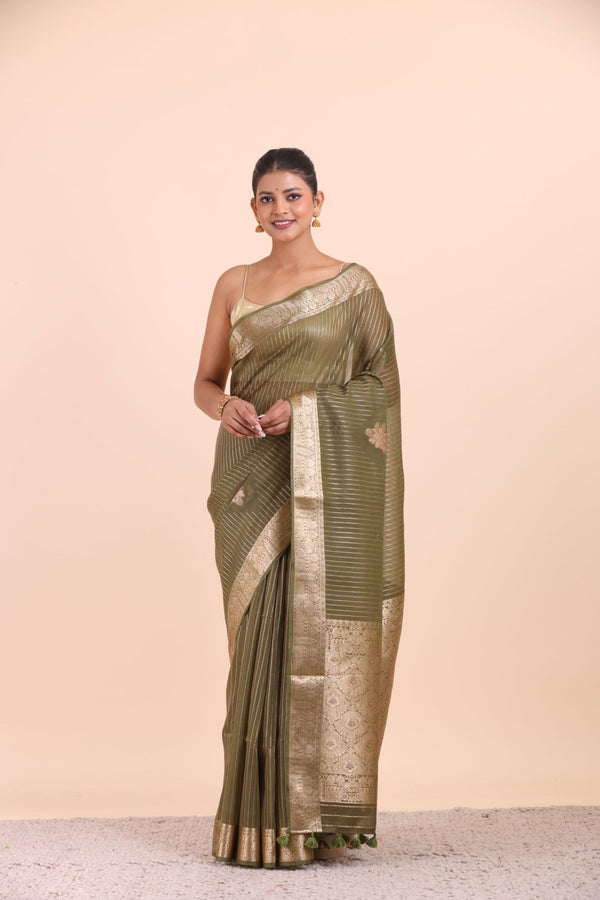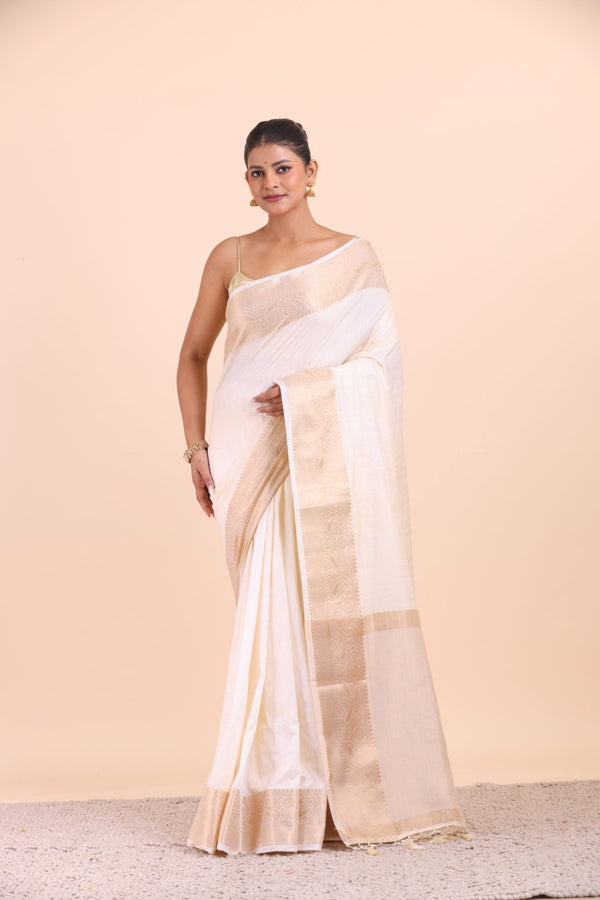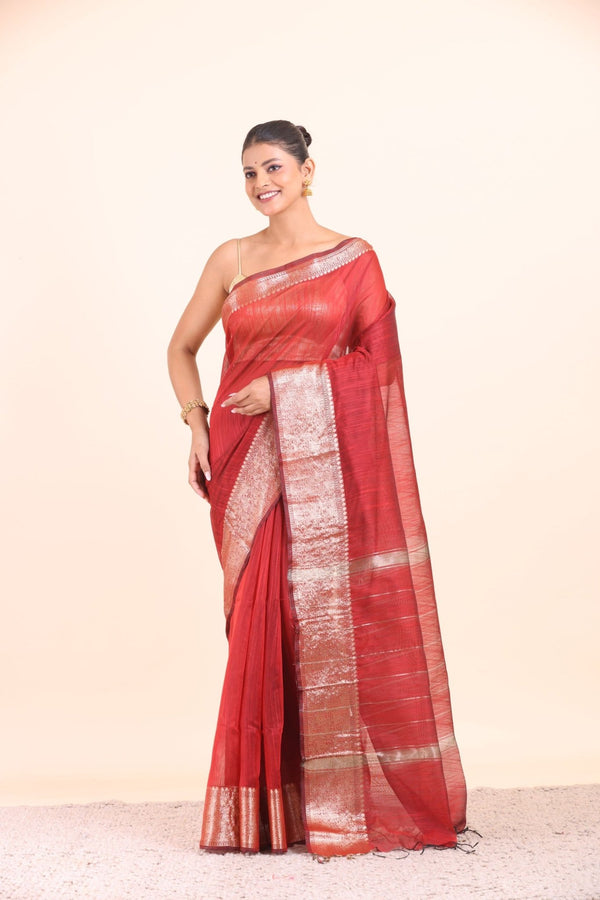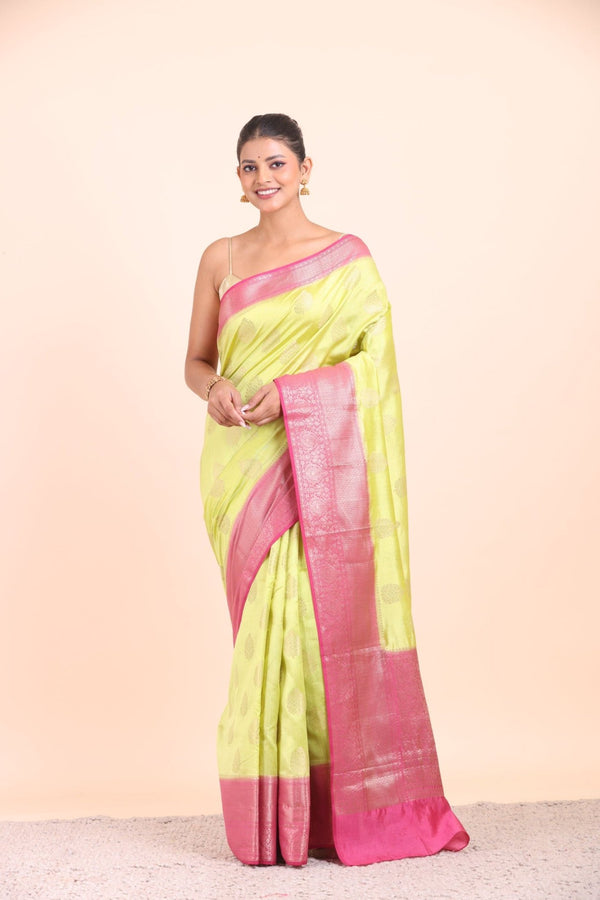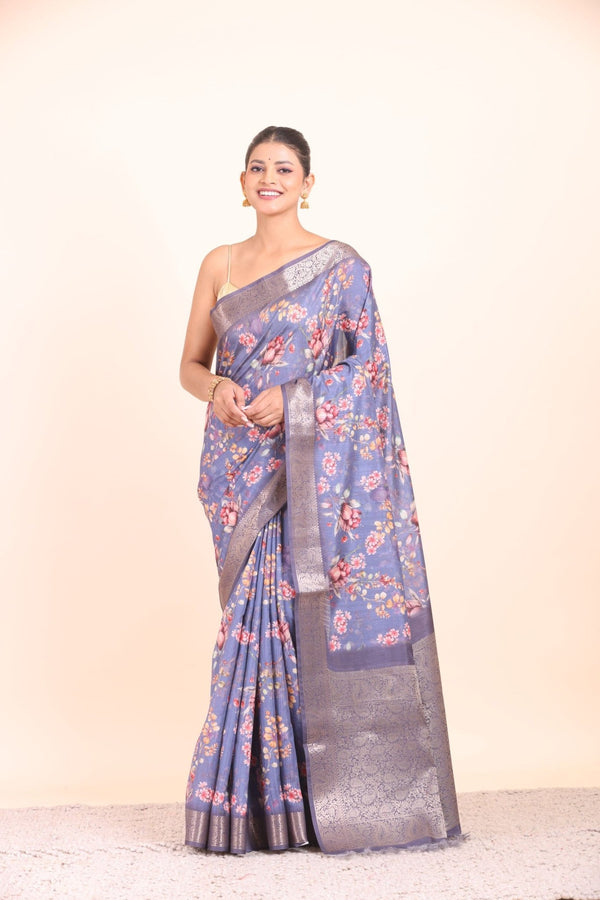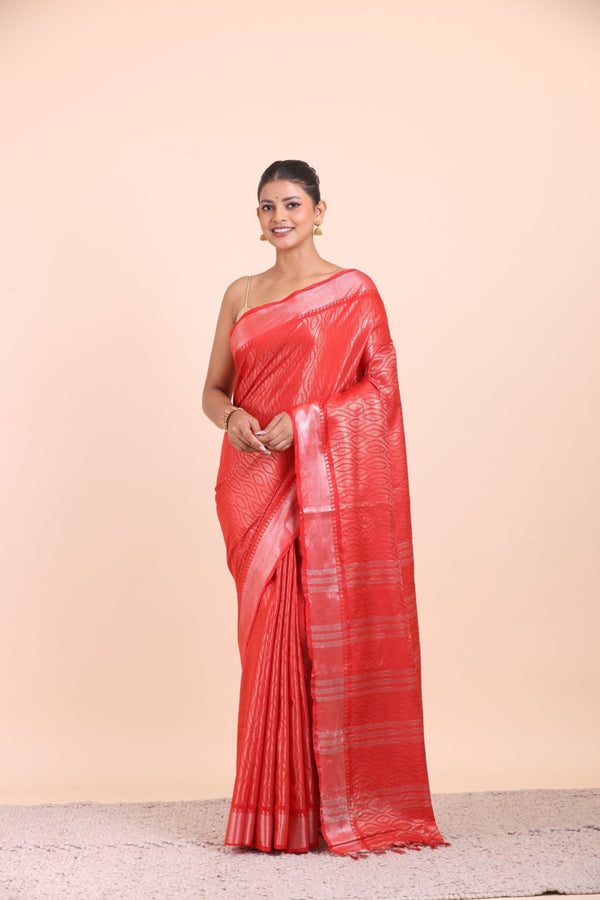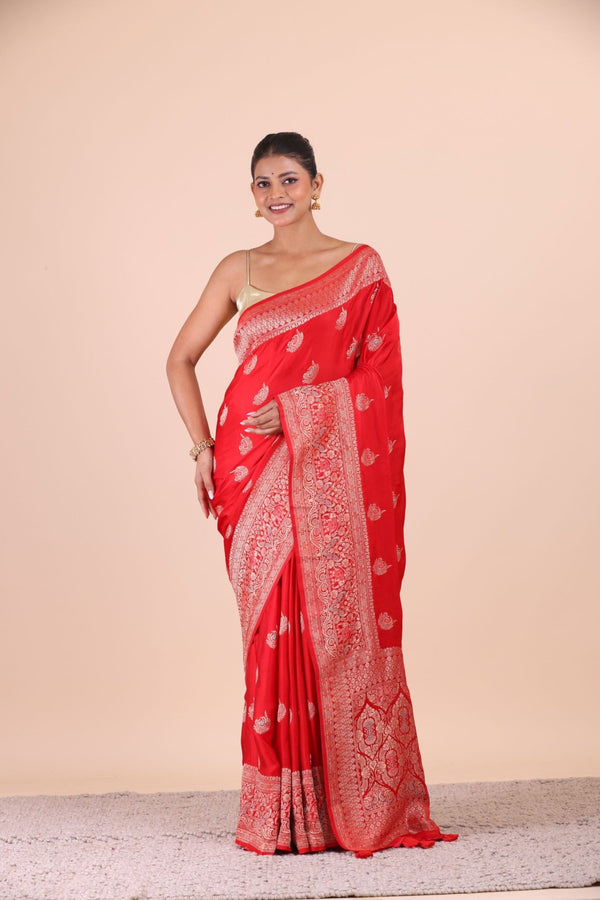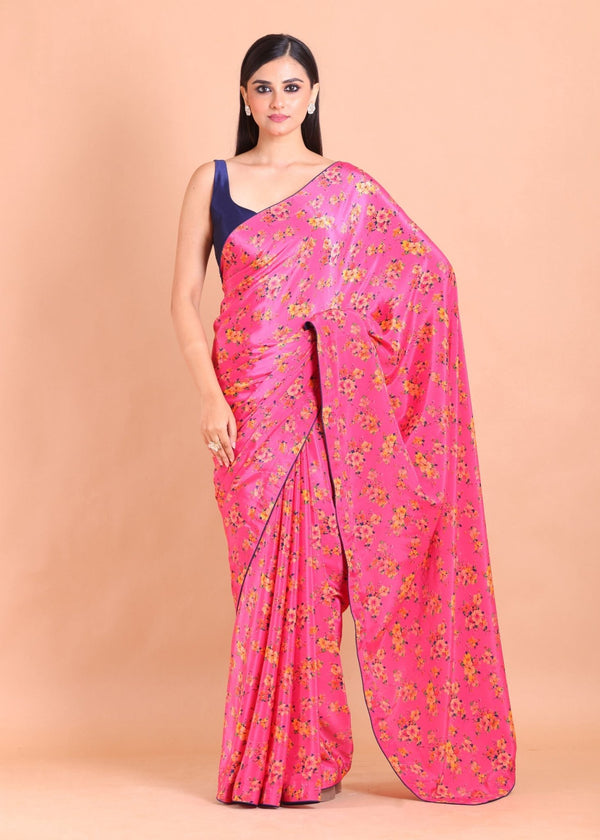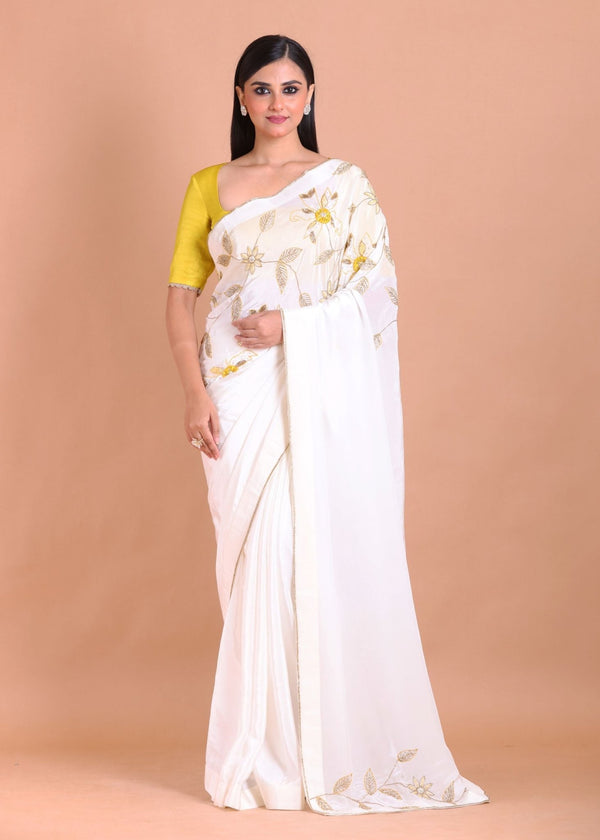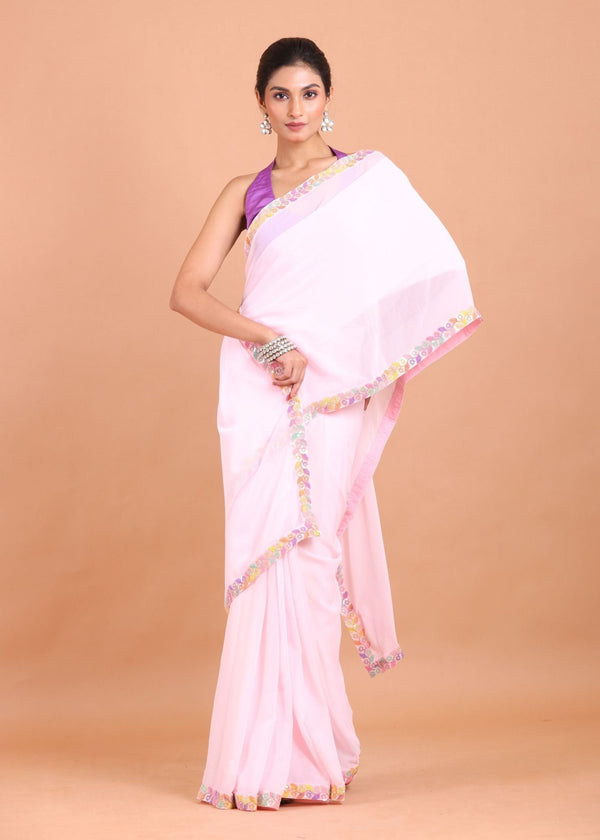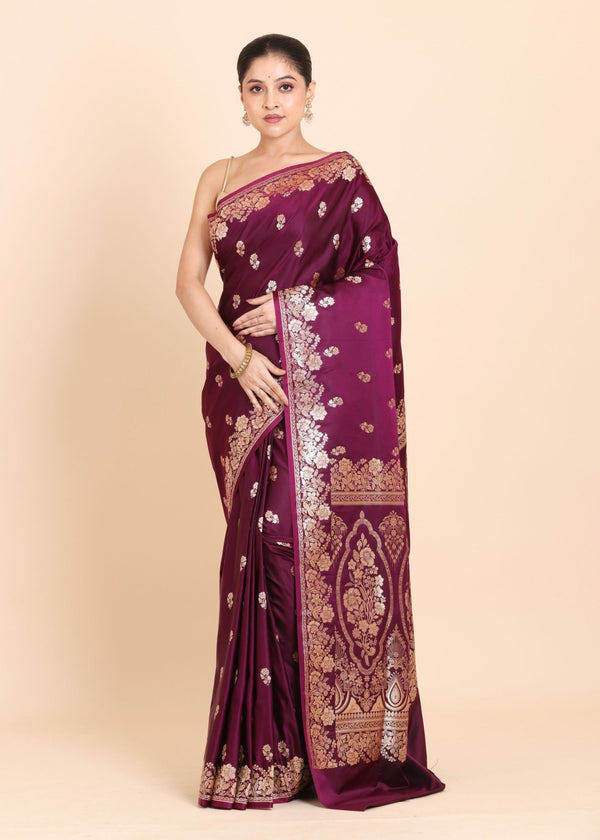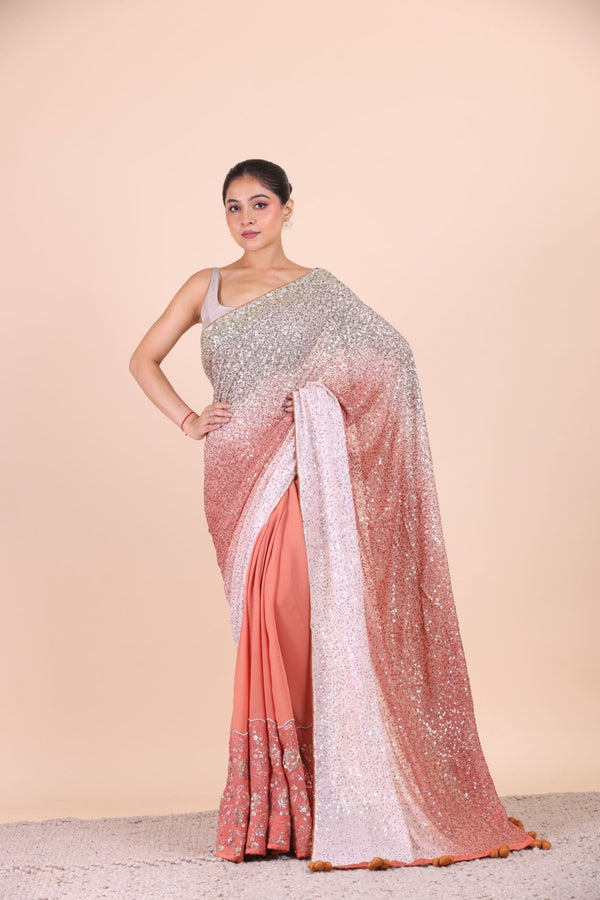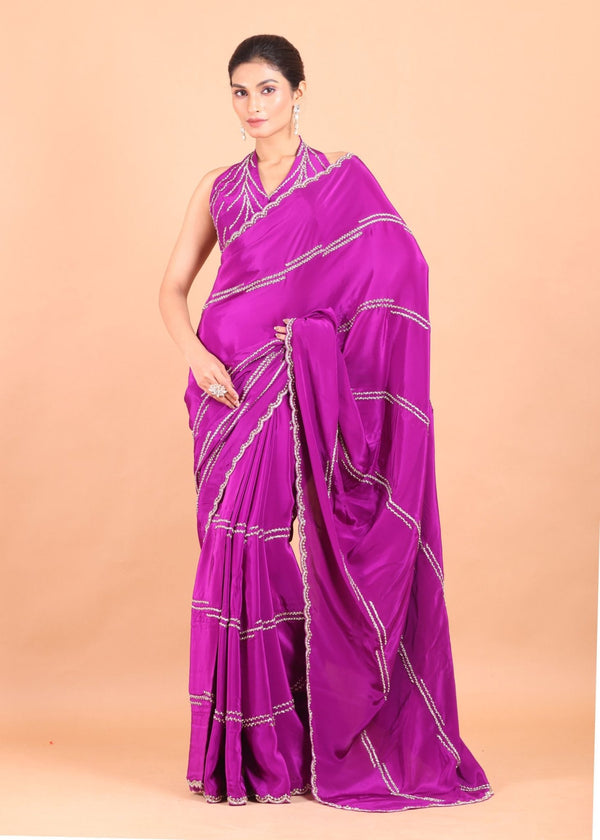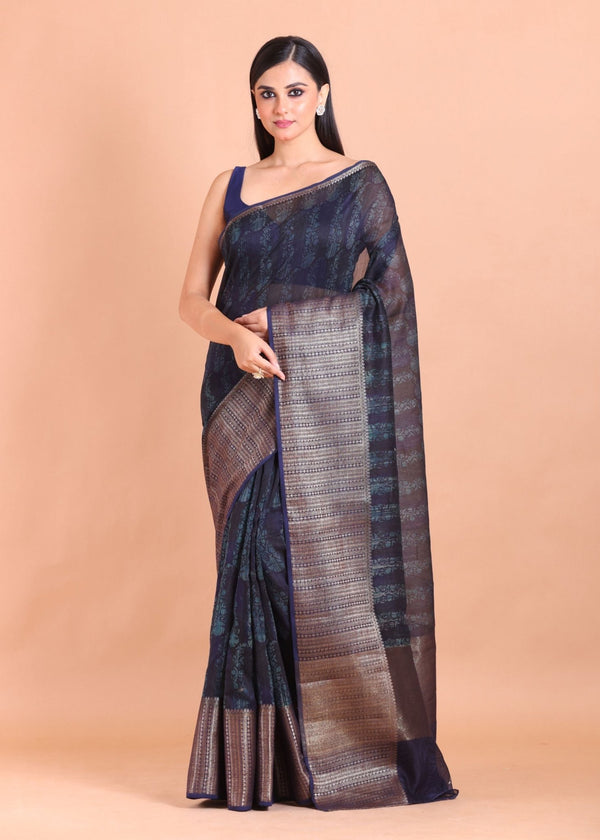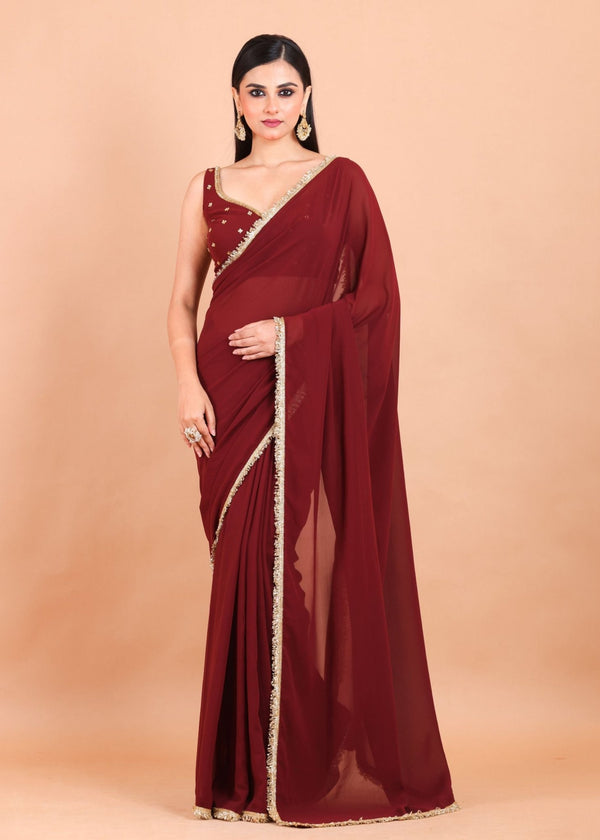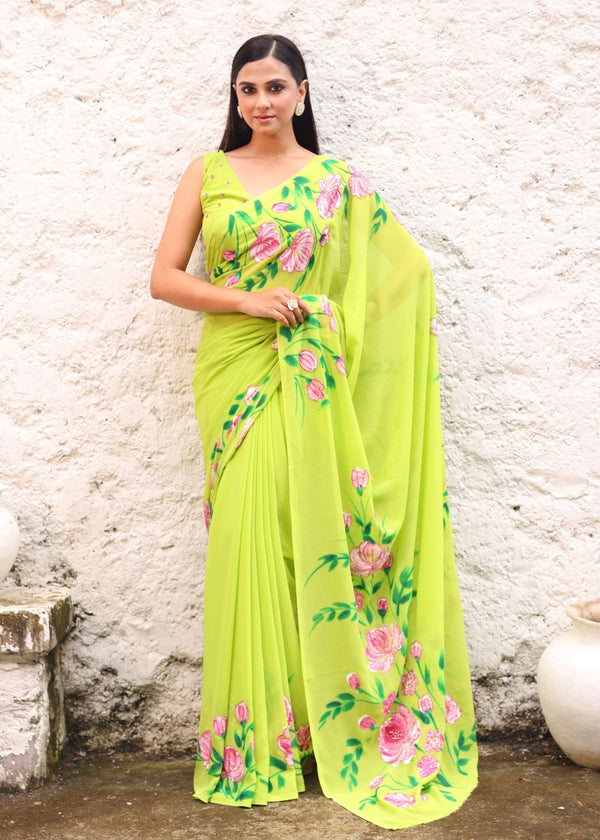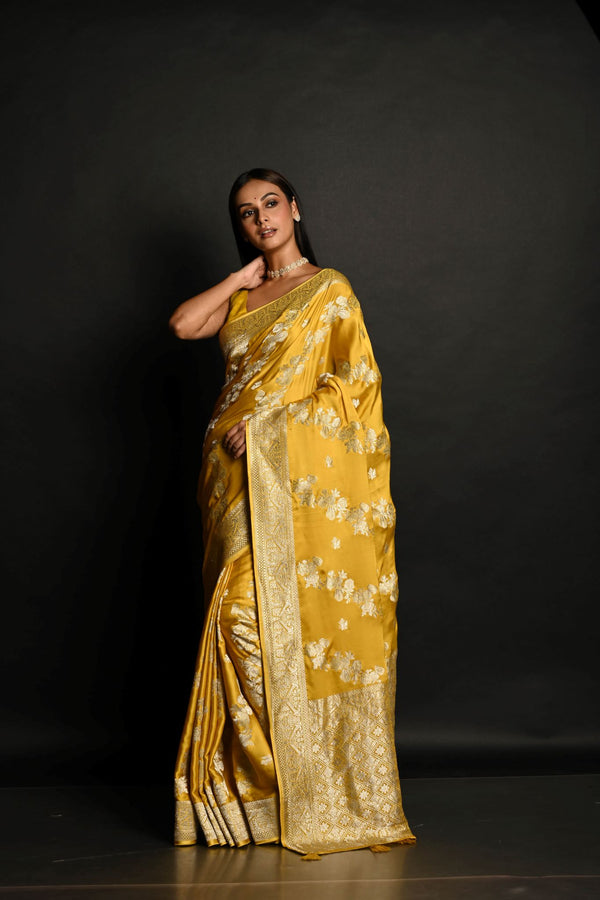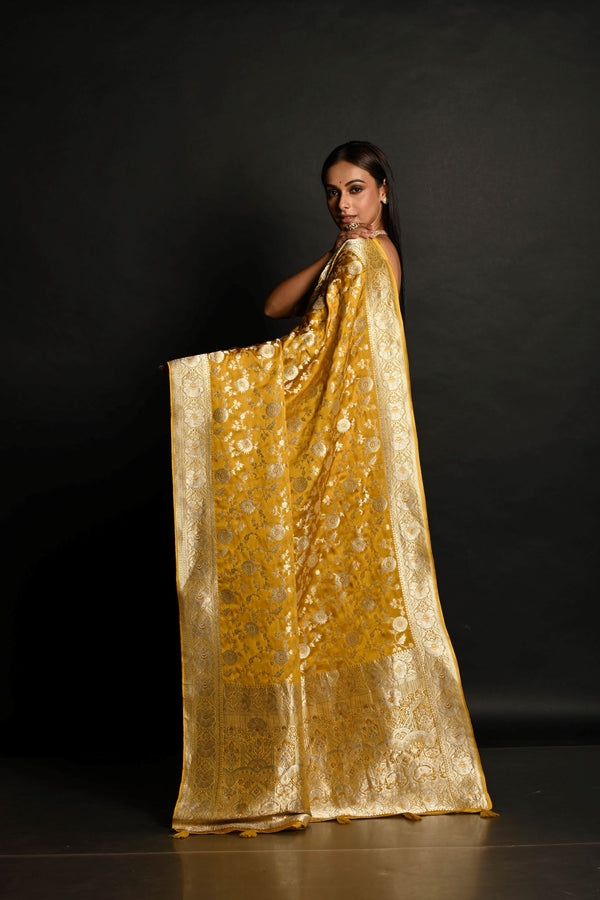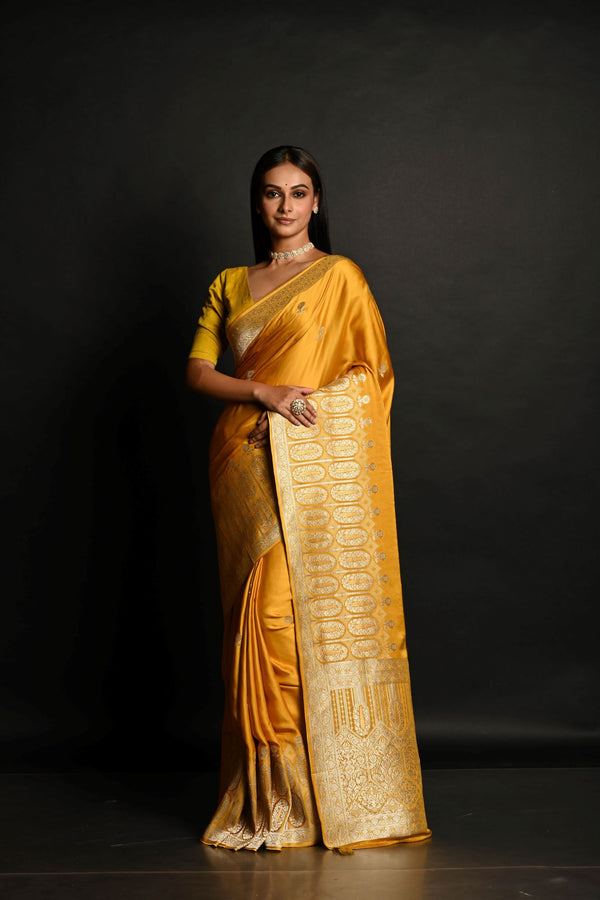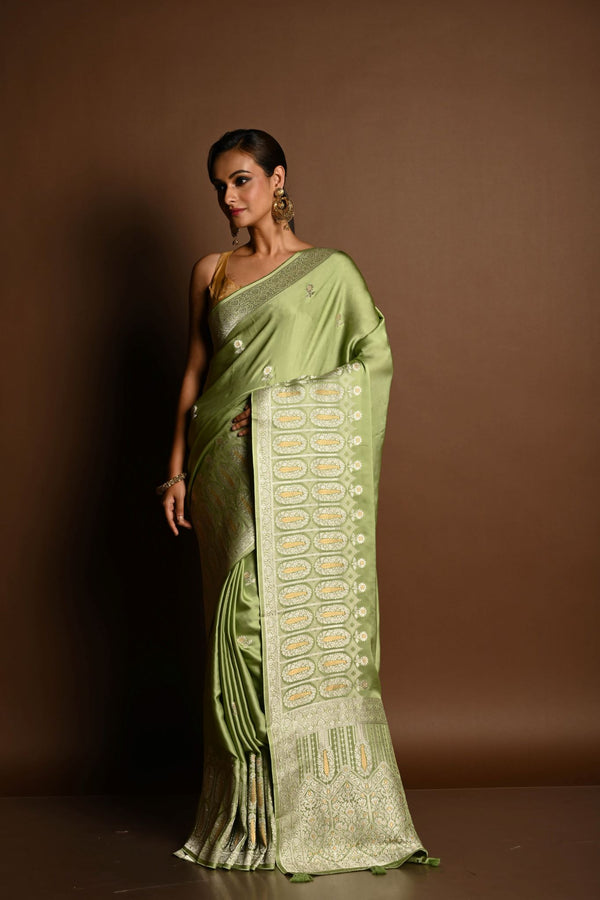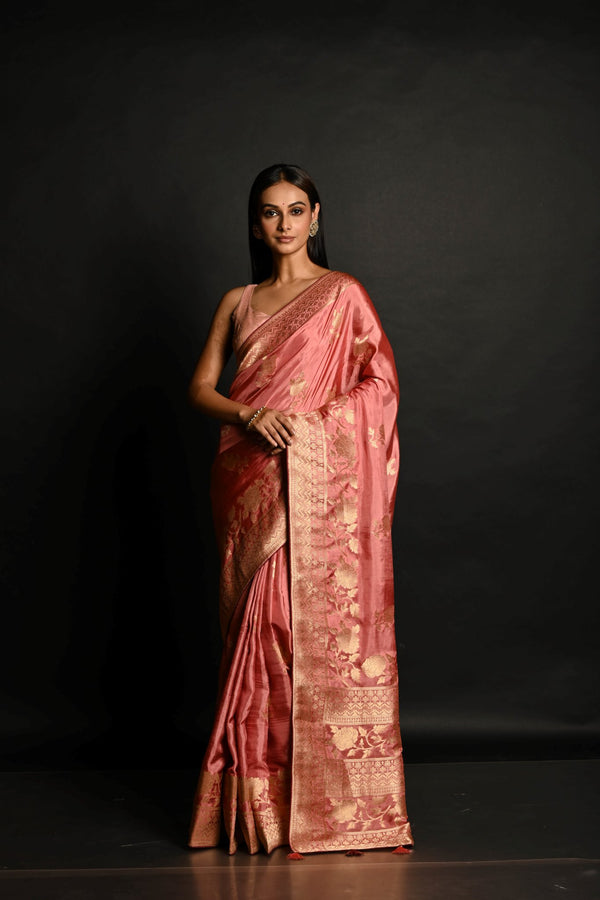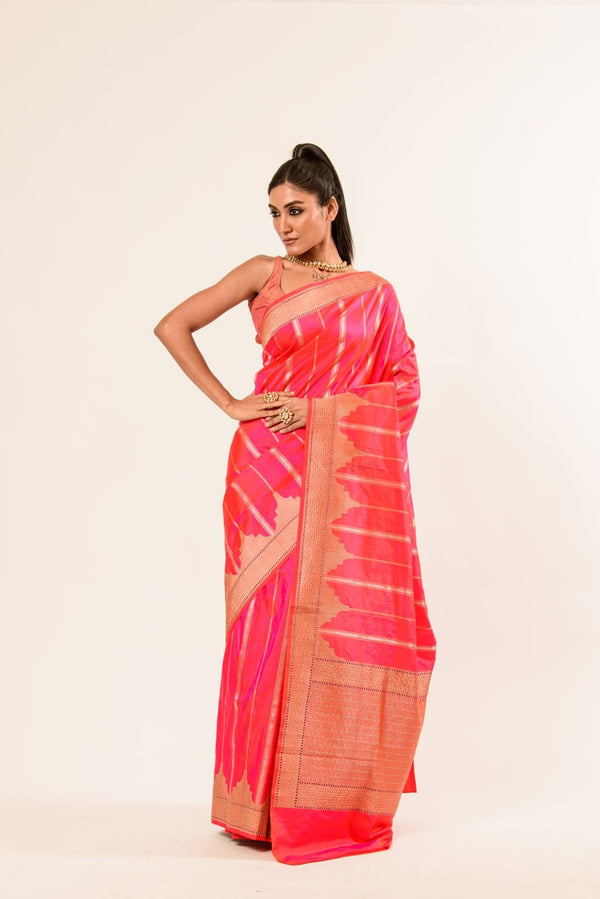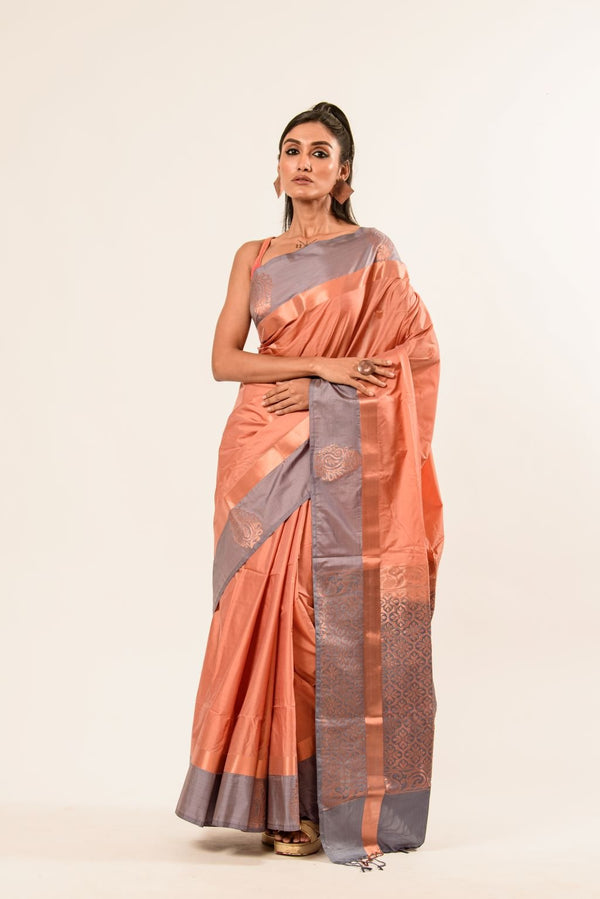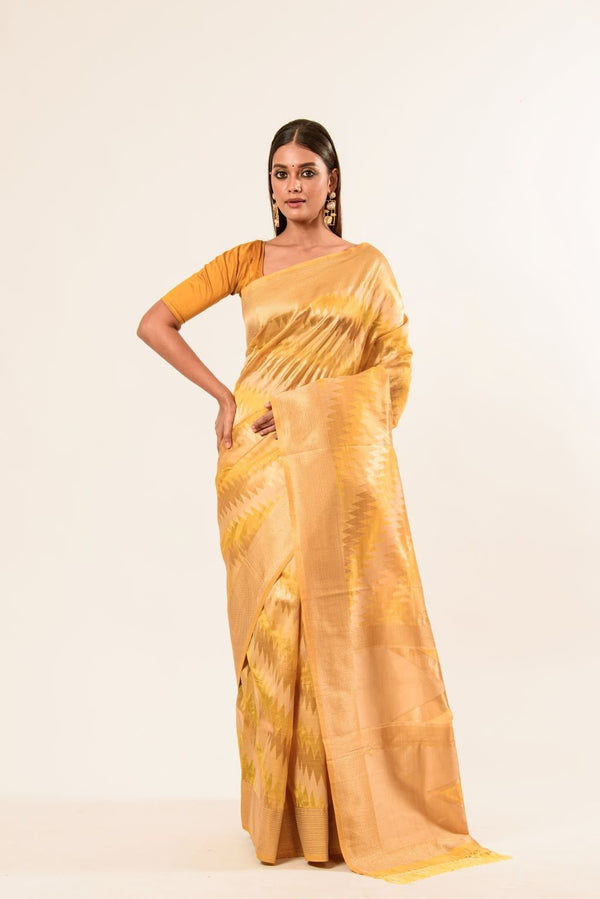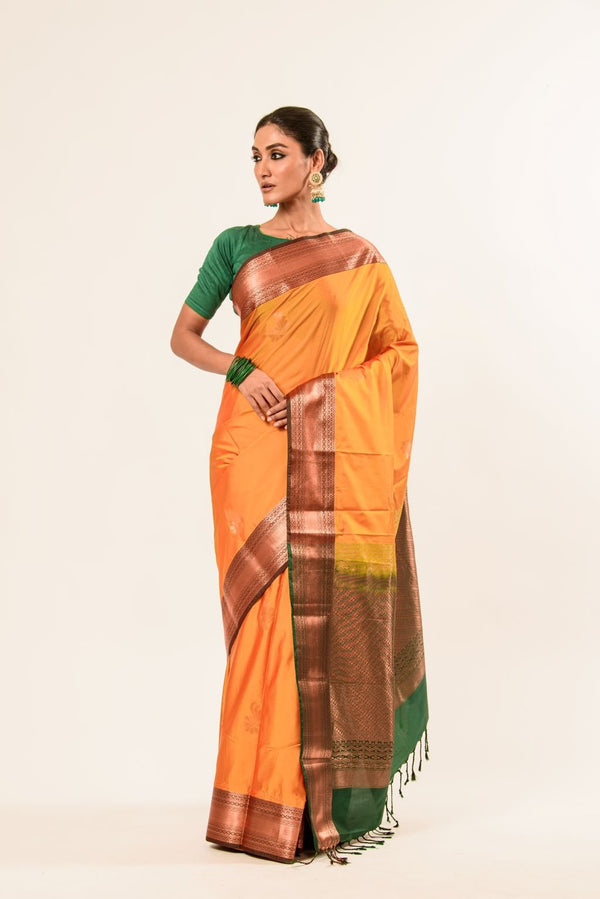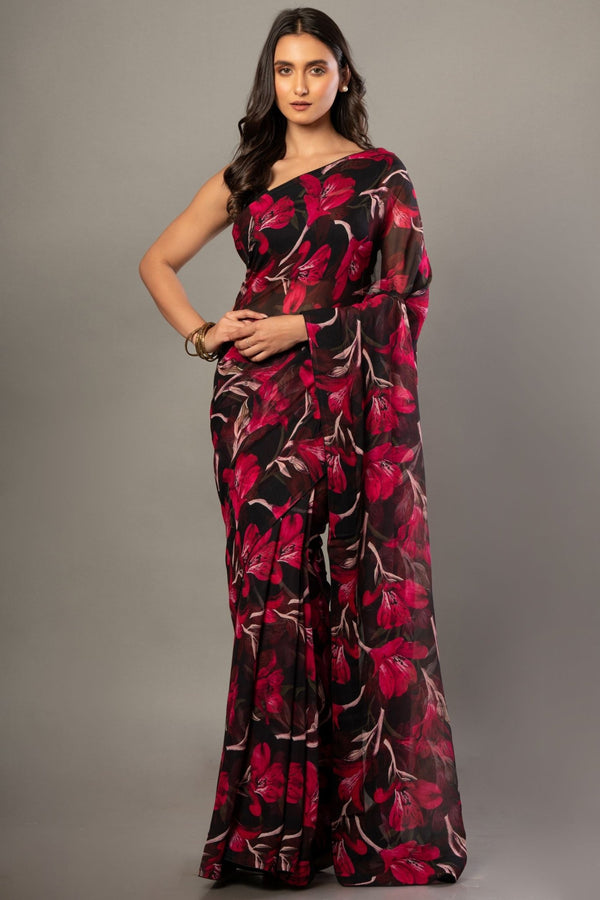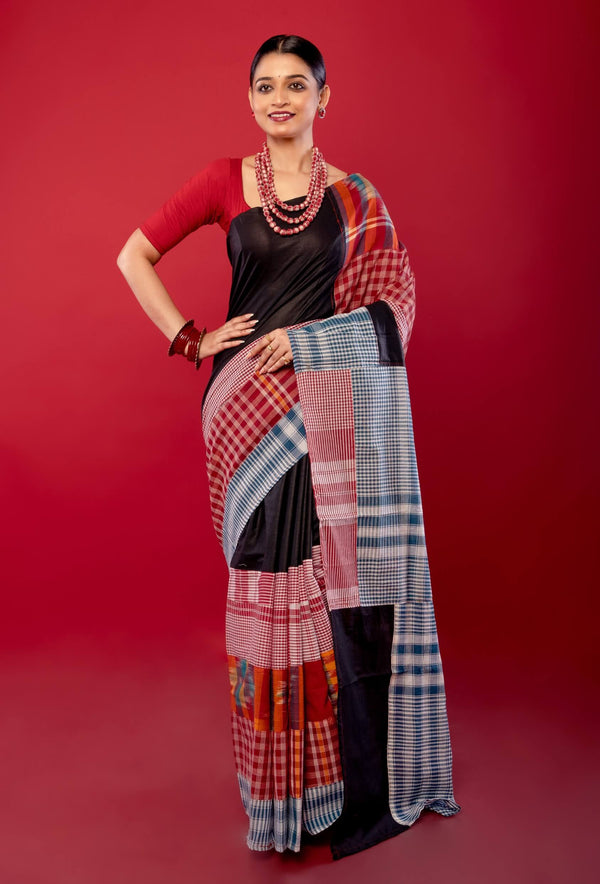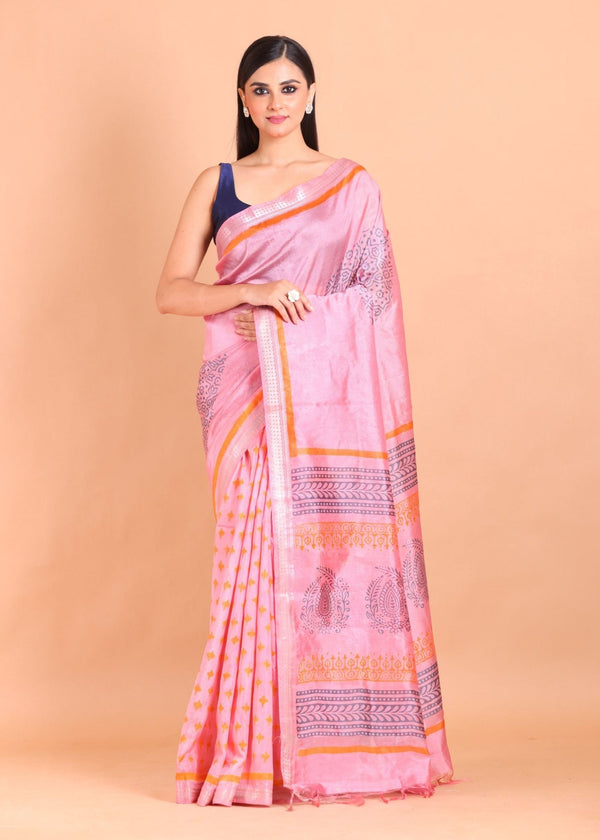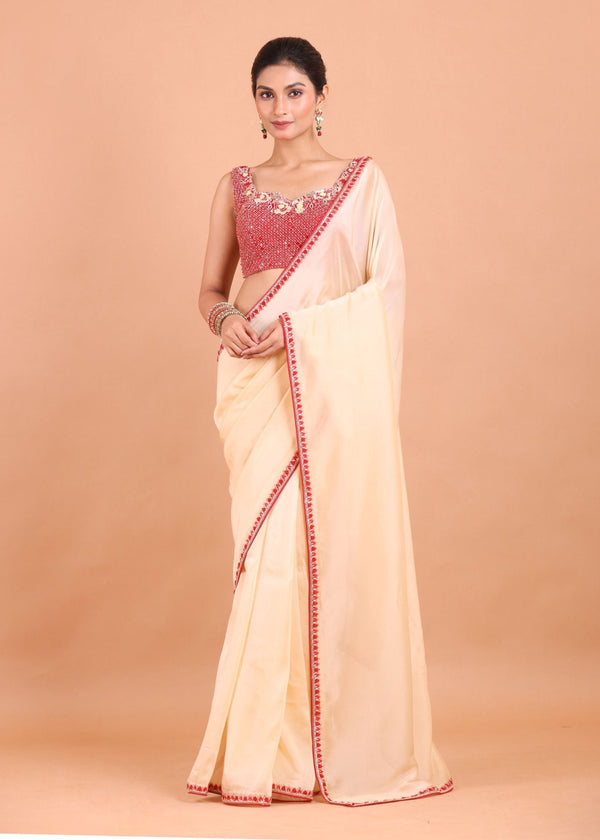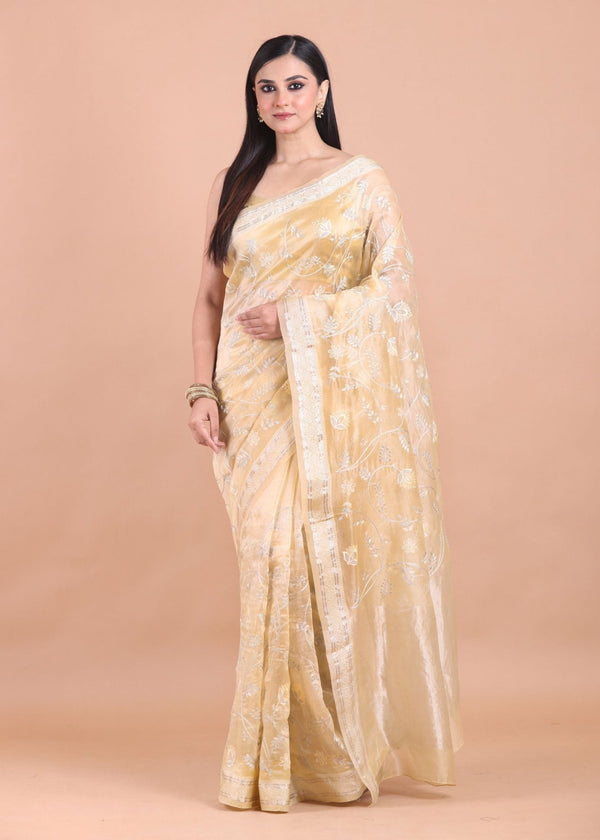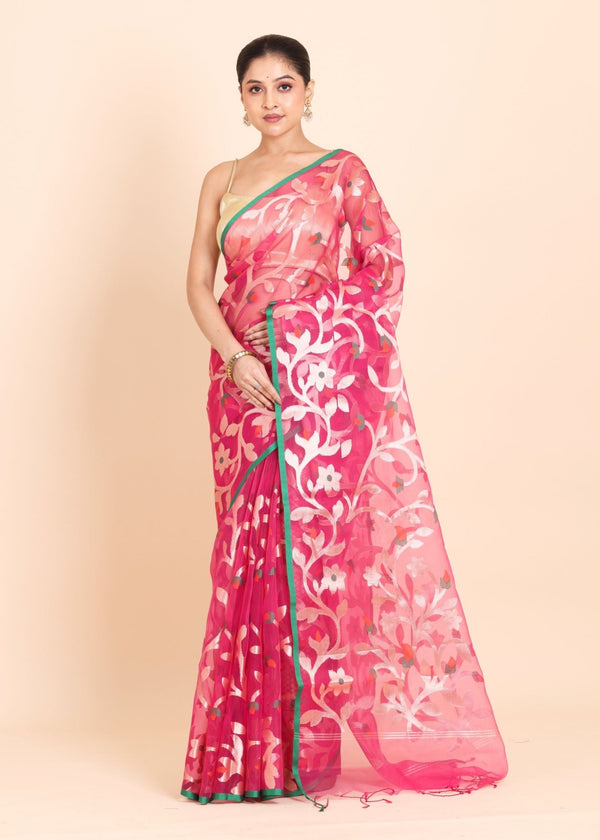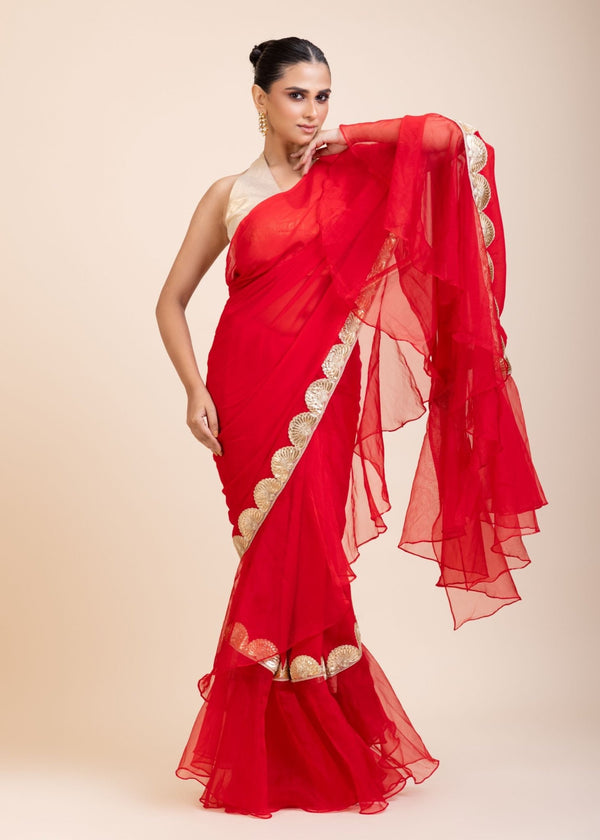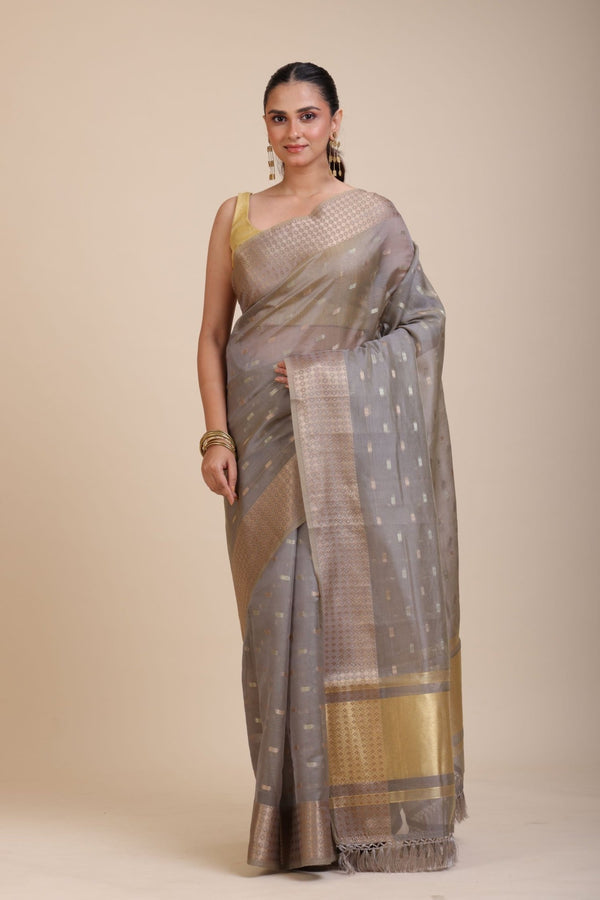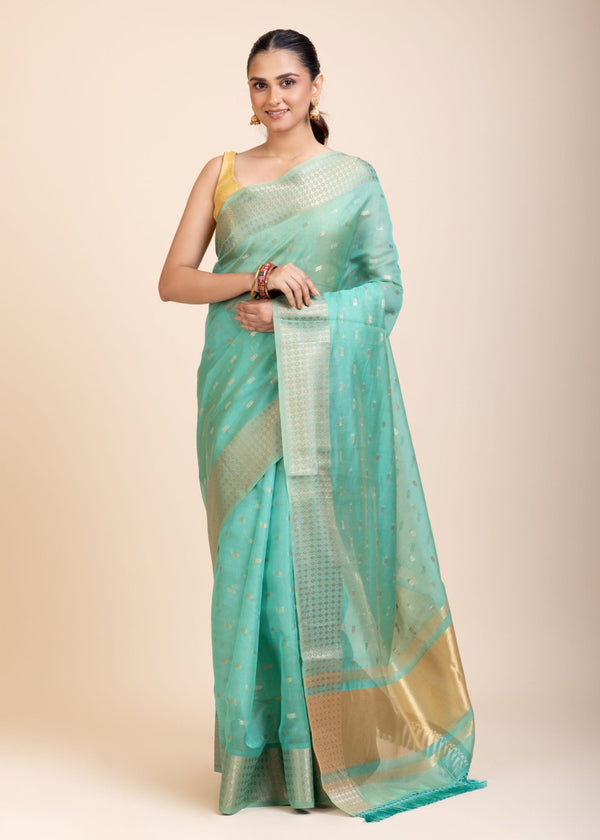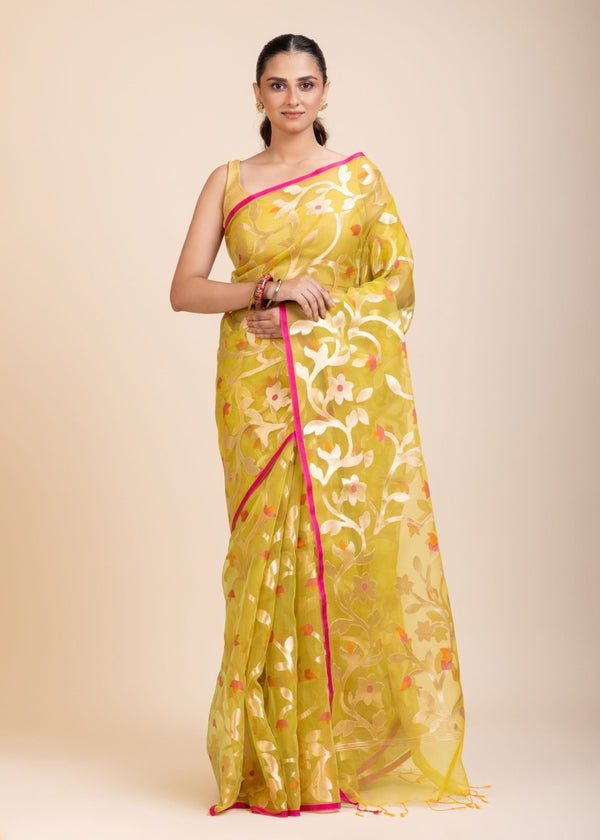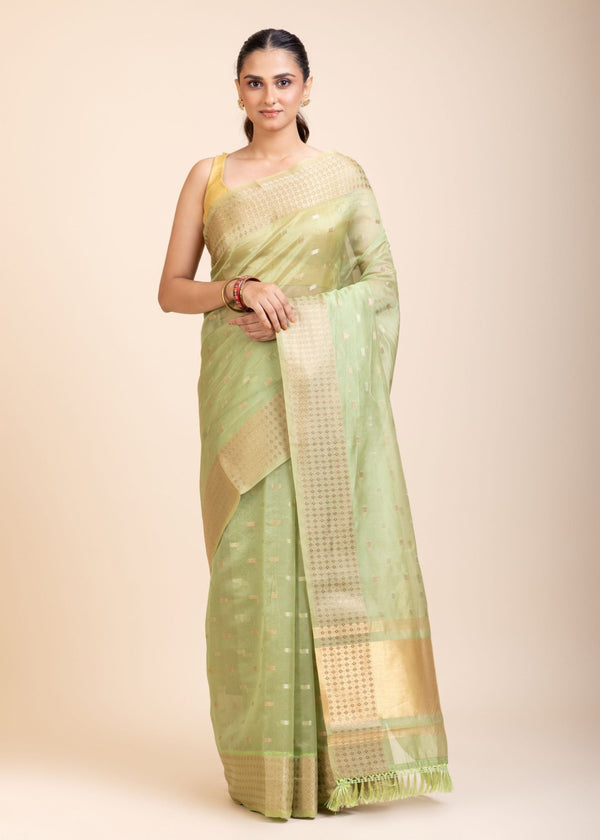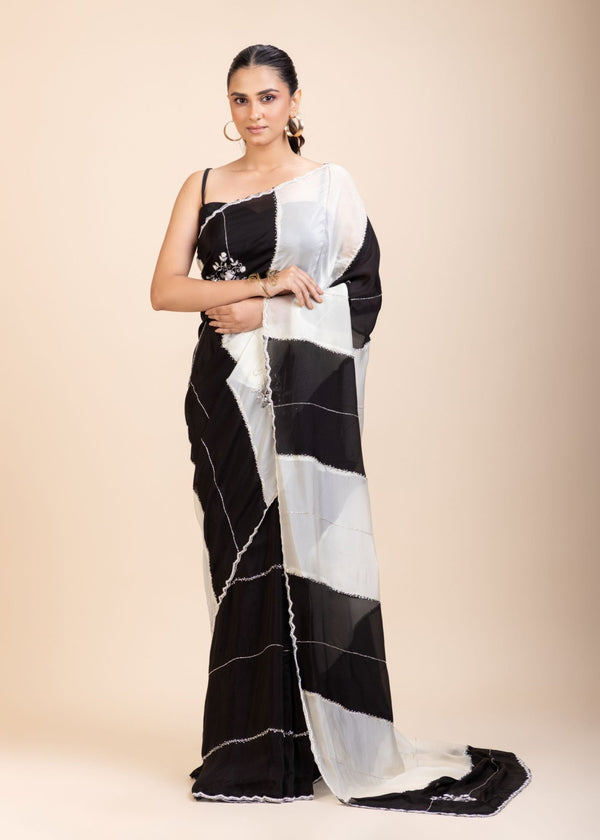




A heavy pallu saree can make a stunning statement, especially when it features rich zari, silk, embroidery or detailed weaving. However, the extra weight can also make the saree harder to manage. The pallu may slip from the shoulder, front pleats may lose their shape, or the saree may feel uncomfortable after wearing it for several hours. The good news is that you do not need to keep adjusting a heavy saree throughout the day. The right blouse and petticoat, secure tucking, neat pleating and strategic pinning can make a big difference. This guide explains how to manage a heavy pallu saree, how to keep the pallu in place, where to use safety pins and how to make the drape more comfortable for weddings, receptions and long celebrations.
Why Heavy Pallu Sarees Can Be Difficult to Manage
A saree with a heavy pallu carries more fabric and weight on one side of the body. Rich Banarasi zari, silk weaving, embroidery, velvet details and embellished borders can add even more weight.
This can create a few common problems:
-
The pallu keeps slipping from the shoulder.
-
Front pleats become loose or uneven.
-
The saree feels heavy around the waist.
-
The pallu pulls backward while walking.
-
The border drags on the floor.
-
Pins may not hold the fabric properly.
-
The saree becomes difficult to manage while sitting or climbing stairs.
Good draping is therefore not only about appearance. It is about creating a stable base so the saree stays comfortable and secure while you move.
What You Need Before Draping a Heavy Saree
A little preparation can make heavy pallu saree draping much easier. Before you start, keep these essentials ready:
-
A well-fitted blouse
-
A secure petticoat or saree underskirt
-
The footwear you plan to wear
-
Good-quality safety pins
-
A full-length mirror
-
A saree belt or kamarbandh, if you want additional waist support
-
A steamer or iron, if the saree has visible creases
-
Fashion tape, if suitable for the blouse and fabric
It is also a good idea to try the complete drape before the actual event. Walk around, sit down and climb a few steps to check whether anything feels loose or uncomfortable.
How to Drape and Manage a Heavy Pallu Saree
1. Wear a Supportive Petticoat and Well-Fitted Blouse
The saree needs a secure foundation. Start with a petticoat that fits comfortably around your waist and does not loosen while you move. A loose petticoat can cause the saree to shift downward, especially when the pallu is heavy. Your blouse is equally important. A well-fitted blouse gives the shoulder area a stable base for the pallu. It should provide support without being uncomfortably tight. If you are looking for different blouse options, Anvi Couture's blouse designs for womens collection can also be considered when planning the complete saree look. For particularly heavy sarees, avoid a blouse that is too loose around the shoulders because the pallu may move more easily. At the same time, do not rely on a very tight blouse to carry the saree's weight. The aim is a comfortable, secure fit.
2. Put on Your Footwear Before Draping
Always wear the footwear you plan to use for the occasion before fixing the saree length. This helps you set the correct height for the saree. If you drape the saree barefoot and put on heels later, the border may sit higher than expected. If the saree is already too long, the heavy border can drag on the floor and make walking difficult. This is particularly important for wedding and reception sarees with wide zari borders or embellished hems.
3. Make a Secure First Tuck
Begin with the plain end of the saree and tuck it securely into the petticoat. Wrap the saree once around your waist, keeping the lower edge at a comfortable height above the floor. The first tuck forms the foundation of the entire drape. If it is loose, the additional weight of a heavy pallu can gradually pull the saree downward. Do not make the tuck unnecessarily tight. It should feel secure but still allow you to sit and move comfortably.
4. Create Wide, Even Front Pleats
Front pleats are one of the most important parts of managing a heavy saree. Instead of making many very narrow pleats, create wider and more structured pleats. Keep them as even as possible and align their bottom edges before tucking them into the petticoat. For many heavy sarees, around six to eight wider pleats can create a neat structure, but the exact number depends on the saree's fabric, width and border. Silk and Banarasi sarees generally benefit from controlled pleating because excessive narrow pleats can create bulk around the waist. If you regularly wear a cotton saree, the same principle applies, although lighter fabrics may need less support.
5. Secure the Pleats From Inside
Once the front pleats are arranged, secure them from the inside with a safety pin if additional support is needed. The pin should hold the pleats together without being visible from the outside. Avoid placing pins through delicate zari, embroidery or fragile threads whenever possible. This extra support is useful when you know you will be walking frequently, climbing stairs, sitting for long periods or moving around during a wedding ceremony. The aim is not to use as many pins as possible. Strategic pinning is better than excessive pinning.
6. Prepare and Pleat the Heavy Pallu
Before placing the pallu on your shoulder, spread it out and check for creases. If the fabric allows it, use light steaming or ironing to help it fall neatly. A heavy pallu with zari, embroidery or woven motifs should not be treated like a lightweight chiffon pallu. The fabric needs enough room to fall naturally without being pulled too tightly. You can first arrange the pallu pleats on a flat surface or with the saree held in front of you. Keep the pleats even and make sure the decorative border is visible. For example, a rich Banarasi pallu shows how a detailed pallu can become a major part of the overall saree look.
7. Place the Pallu Correctly on the Shoulder
Bring the pallu over the shoulder and allow it to fall naturally. The pallu should sit comfortably rather than being pulled excessively toward the back. Check that the decorative border is straight and that the fabric is spread evenly across the shoulder. For a heavy paithani saree, silk saree or heavily embellished designer saree, correct shoulder placement becomes even more important because the pallu itself may have considerable weight. A well-positioned pallu should feel secure without creating unnecessary tension around the neck or shoulder.
8. Pin the Pallu Without Damaging the Saree
A shoulder pin is often the easiest way to prevent a heavy pallu from slipping. Take a small section of the pallu and pin it discreetly to the blouse from the underside. The pin should pass through stable layers of fabric rather than directly through delicate embroidery or zari work. For a particularly heavy pallu, one discreet anchor may not always be enough. A second pin can be used within the pallu folds when necessary. Avoid repeatedly piercing the same area of an expensive silk or embellished saree. Good-quality, sharp safety pins are preferable because rough or damaged pins can catch the fabric. You can also use a brooch as a decorative anchor when it suits the saree. A saree belt or kamarbandh can provide additional structure around the waist, although it does not replace correct pallu placement.
9. Do a Final Movement Check
Never judge a heavy saree only by looking at yourself in the mirror.
Before leaving for the event:
-
Walk for a few minutes.
-
Sit on a chair.
-
Stand up again.
-
Climb a few steps.
-
Move your arms normally.
-
Check whether the pallu is slipping.
-
Check whether the saree border is dragging.
-
Make sure the waist pleats remain in place.
If something moves during this test, fix it before you leave.
How to Keep a Heavy Saree Pallu From Slipping
If your main problem is a pallu that keeps falling from the shoulder, check the following:
Keep the pallu flat: A twisted or bunched pallu can become unstable.
Use a shoulder pin: Secure the pallu discreetly to the blouse from underneath.
Check the blouse fabric: Very smooth blouse fabrics can give the pallu less grip.
Do not make the pallu unnecessarily long: Extra fabric adds weight and can pull the pallu backward.
Use a second discreet anchor: This can help when the pallu is particularly heavy.
Try a brooch: A decorative brooch can provide both support and a finishing detail.
Consider fashion tape carefully: It can help with some slippery fabrics, but adhesive should not be placed directly on delicate saree surfaces.
Most importantly, do not keep adding pins without checking the actual reason for the slipping. If the pallu is too long, badly positioned or pulling unevenly, more pins may not solve the problem.
Where Should You Pin a Heavy Saree?
Strategic pin placement can make a heavy saree much easier to manage.
|
Area |
Purpose |
How to secure it |
|
Waist pleats |
Keeps pleats together |
Pin discreetly from the inside |
|
Shoulder |
Prevents pallu slipping |
Anchor the pallu to the blouse |
|
Pallu folds |
Maintains pleat shape |
Place a concealed pin through the inner layers |
|
Waist/hip |
Provides additional stability |
Use only when necessary |
|
Kamarbandh area |
Adds waist structure |
Use a saree belt or kamarbandh as an optional support |
Avoid placing pins directly through prominent zari motifs, delicate embroidery, sequins or fragile fabric.
How to Manage Heavy Pallu by Saree Fabric
Different fabrics behave differently, so the same draping method may not work equally well for every saree.
|
Saree fabric/type |
Common challenge |
Helpful draping approach |
|
Heavy zari and pallu |
Use structured pleats and secure the shoulder |
|
|
Kanjivaram silk |
Dense silk and zari |
Use a firm foundation and controlled pleats |
|
Paithani silk |
Structured silk and decorative pallu |
Keep the pallu flat and well anchored |
|
Velvet |
Thick and bulky fabric |
Avoid excessive pleating |
|
Structured and sometimes stiff |
Keep pleats neat and controlled |
|
|
Satin silk |
Smooth surface |
Use careful shoulder anchoring |
|
Heavy embroidered saree |
Embellishments add weight |
Support the pallu without over-pinning |
A heavy saree does not necessarily need to be difficult to wear. Understanding how the fabric behaves helps you choose the right amount of support.
Common Heavy Saree Draping Problems and Quick Fixes
The Pallu Keeps Slipping
Check whether the pallu is too long, too smooth or unevenly placed. Reposition it across the shoulder and add a discreet blouse anchor.
The Front Pleats Keep Opening
Make the pleats more even and secure them together before tucking. A concealed pin can provide extra support.
The Saree Feels Too Heavy on One Shoulder
The weight may not be distributed properly. Check the pallu length and positioning rather than immediately adding more pins.
The Saree Looks Bulky Around the Waist
Too many narrow pleats can create unnecessary bulk. Try fewer, wider and flatter pleats.
The Border Keeps Dragging
Check the saree height and footwear. The lower edge should sit close to the floor without dragging.
The Pallu Looks Stiff
Light steaming can help suitable fabrics fall more naturally. Do not use high heat on delicate fabrics or embellishments without checking their care requirements.
Safety Pins Are Catching the Fabric
Replace damaged or rough pins and place them through concealed or stronger layers wherever possible.
7 Heavy Saree Draping Mistakes to Avoid
1. Using a loose petticoat: A weak foundation can make the entire saree shift.
2. Draping before putting on footwear: Your saree length may not be correct for your final footwear.
3. Making too many narrow pleats: This can create unnecessary bulk around the waist.
4. Using only one pin for a very heavy pallu: A particularly weighty pallu may need additional discreet support.
5. Pinning through delicate embellishments: This can damage zari, embroidery or fine fabric.
6. Pulling the pallu too tightly: Excessive tension can make the drape uncomfortable and cause the fabric to pull backward.
7. Trying the drape for the first time on the event day: Always do a trial drape before a wedding or important celebration.
How to Wear a Heavy Saree Comfortably for a Wedding
A heavy saree can be worn comfortably even during a long wedding event when you prepare the drape properly. Start with the final blouse and footwear you plan to wear. Drape the saree and secure the pleats and pallu. Then spend a few minutes moving normally. Try sitting through the complete drape. If you find the saree pulling at the waist or shoulder, make adjustments before adding more pins. Also check the pallu when you walk. If it keeps moving backward, the length or shoulder placement may need to be changed. Keep a few spare safety pins with you during the event. They take up very little space and can be useful if a pleat or pallu becomes loose later. For brides, wedding guests and anyone wearing a heavy silk or designer saree for several hours, this short trial can prevent many last-minute draping problems.
Final Takeaway
Managing a heavy pallu saree is not about using as many pins as possible. It starts with the right foundation and continues with proper pleating, secure tucking, correct pallu placement and strategic anchoring. Whether you are wearing a rich Banarasi, silk, Paithani or heavily embroidered designer saree, take a few minutes to test the complete drape before the occasion. When the saree is secure and comfortable, you can focus on enjoying the wedding, celebration or festive event instead of constantly adjusting your pallu.