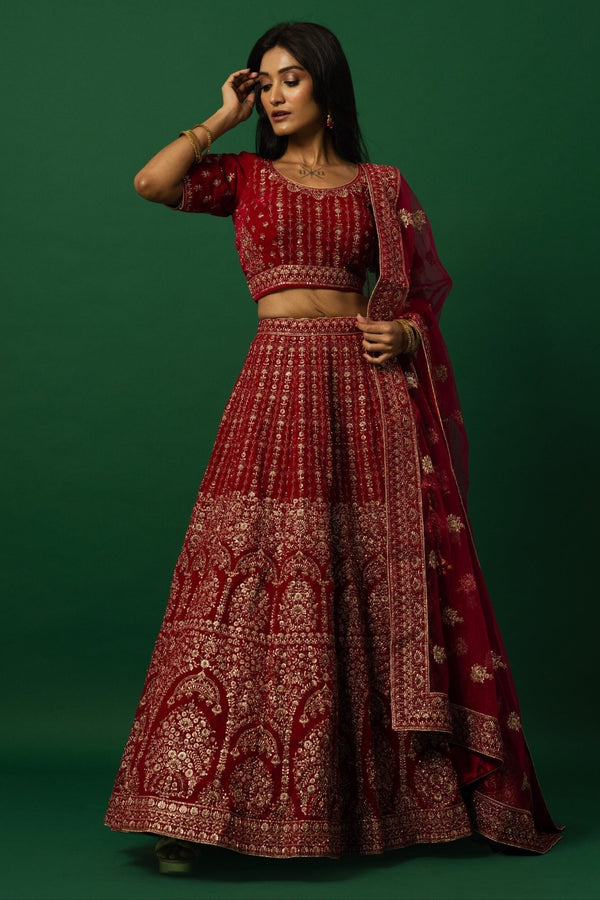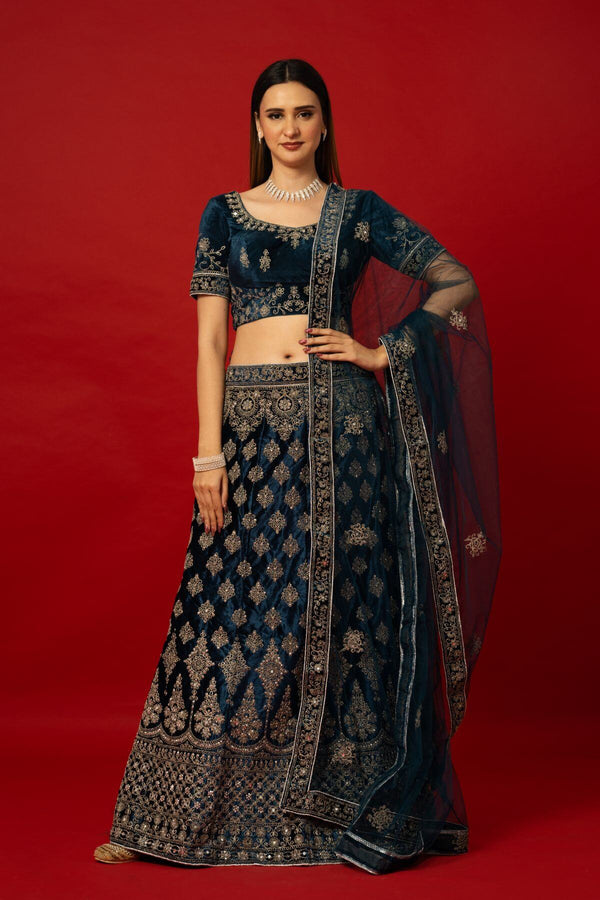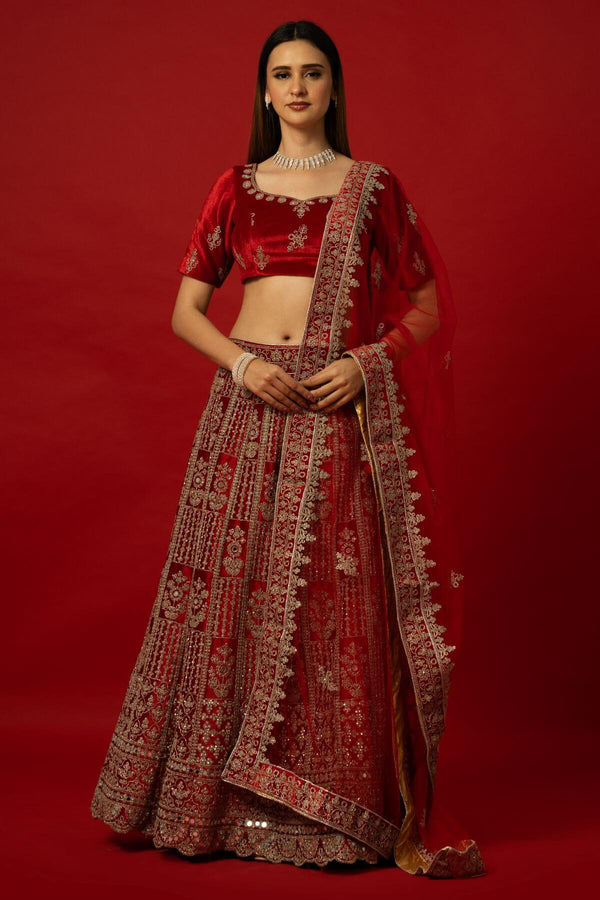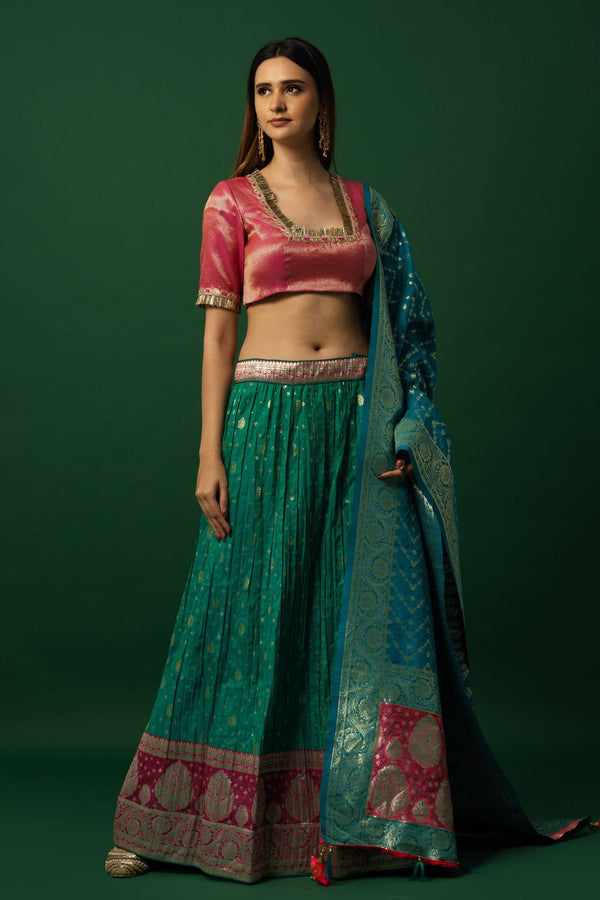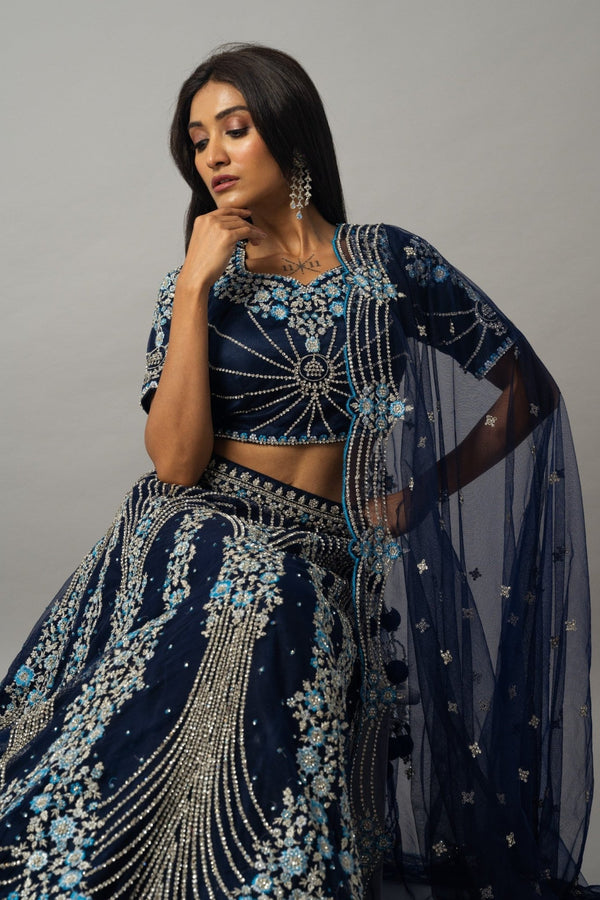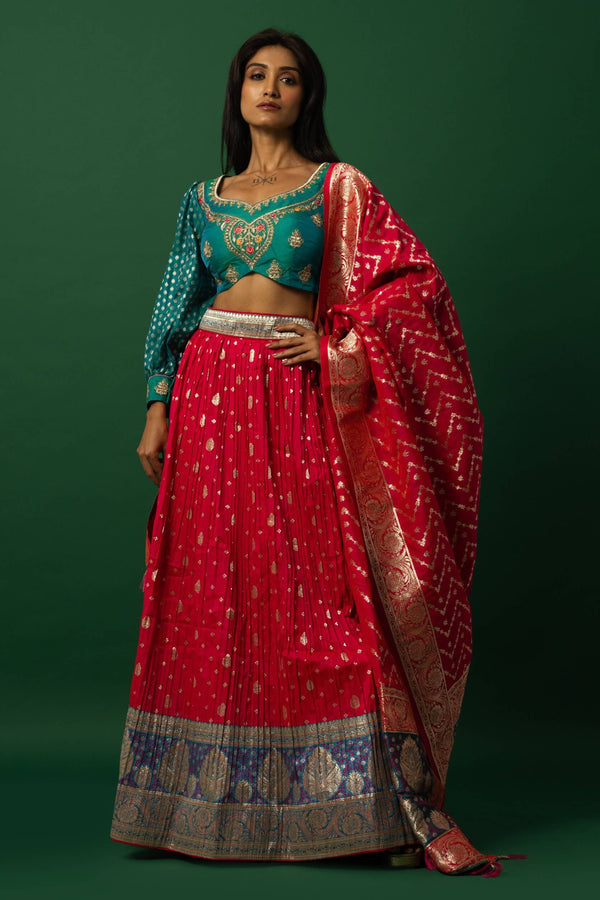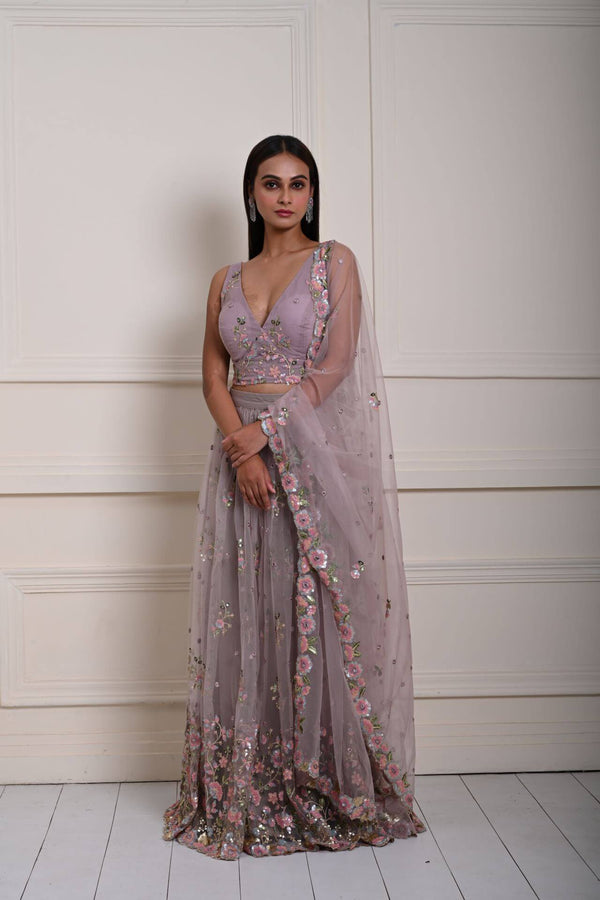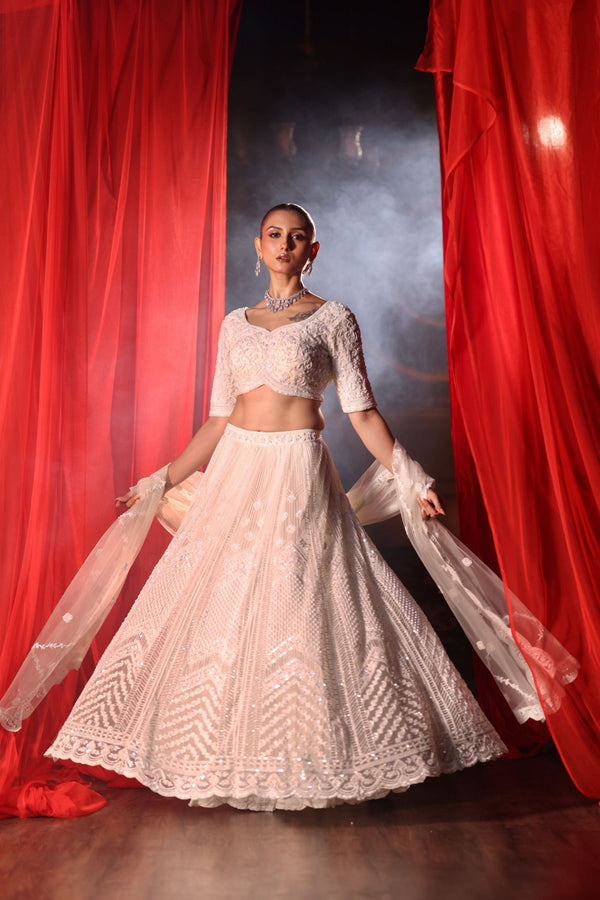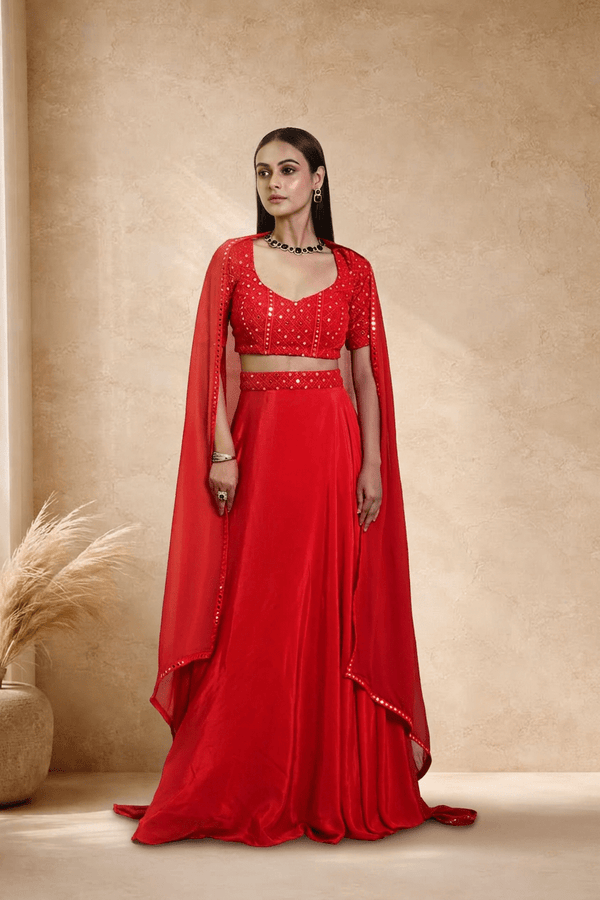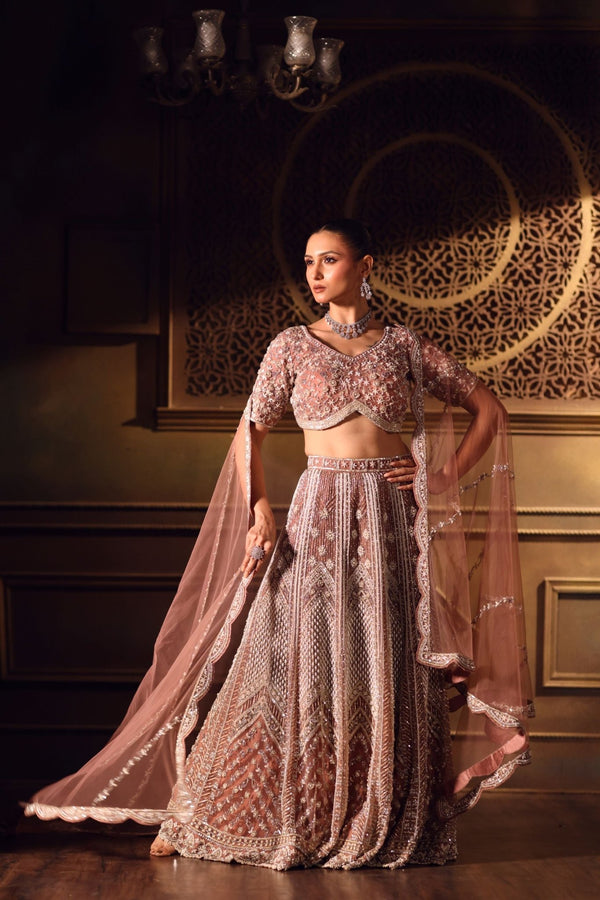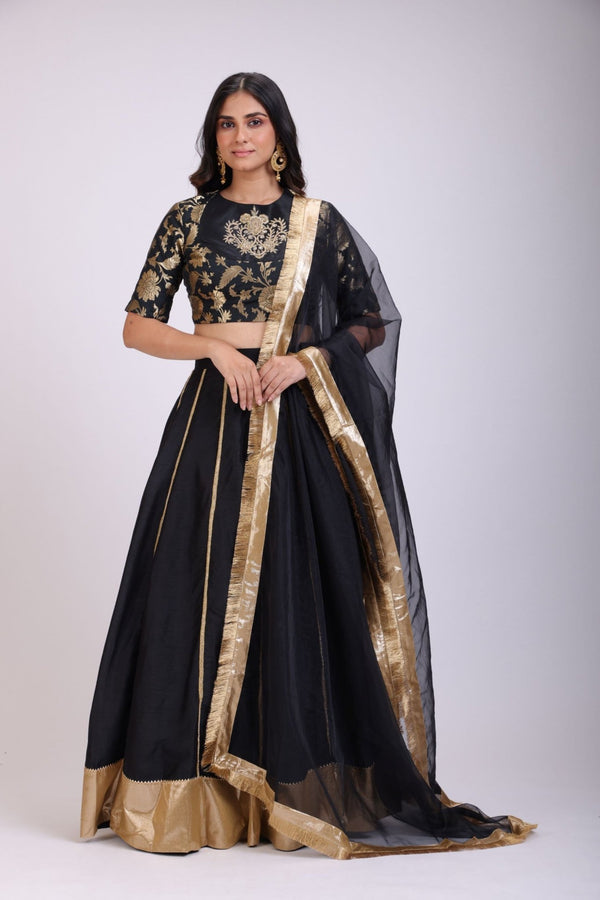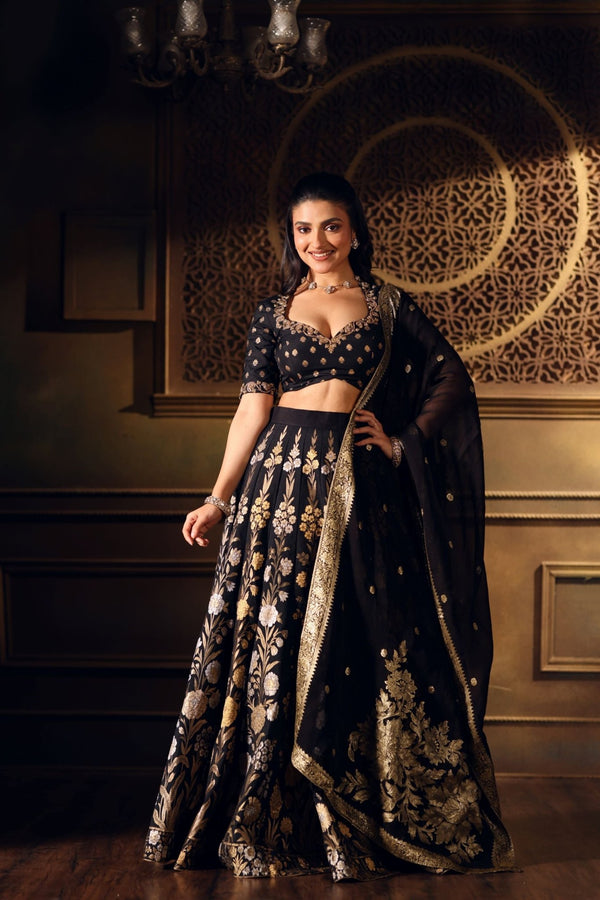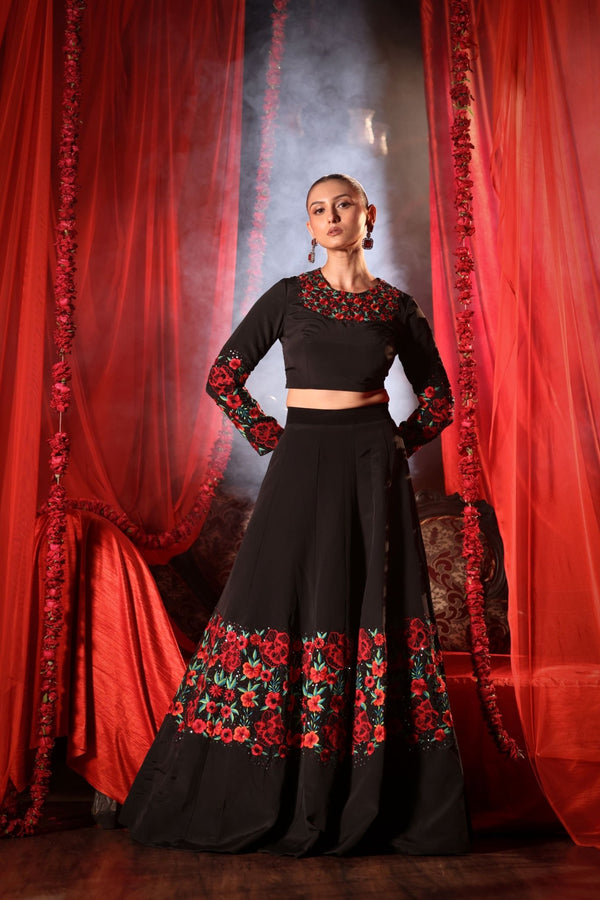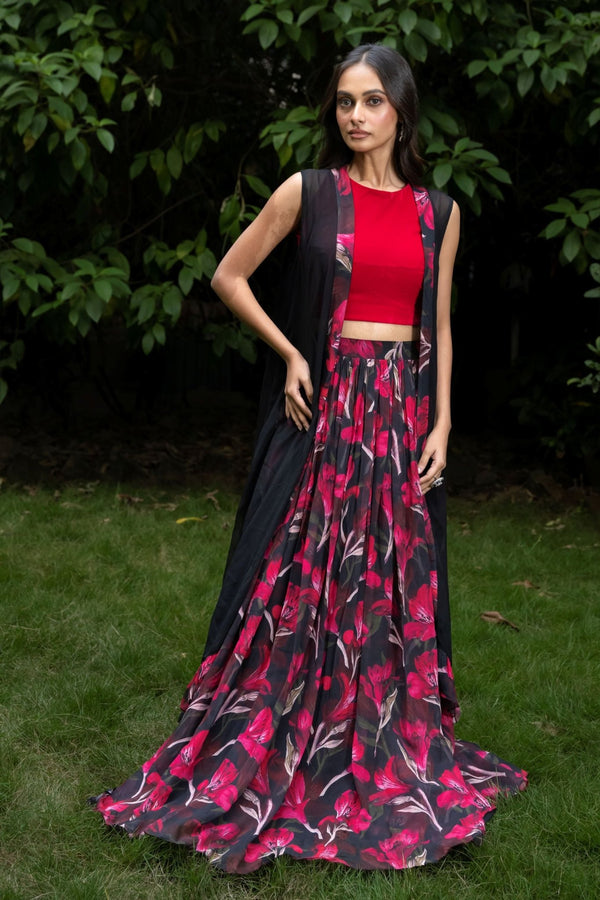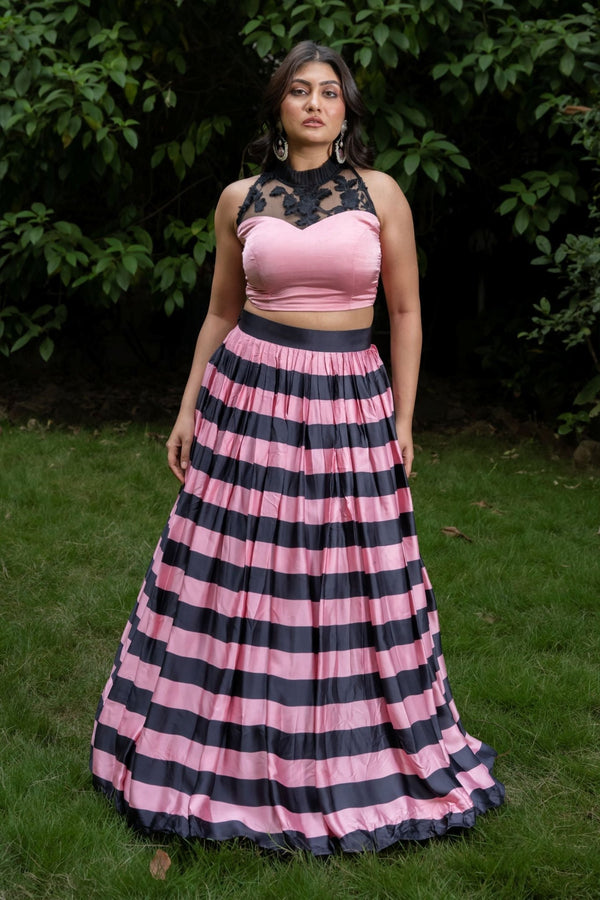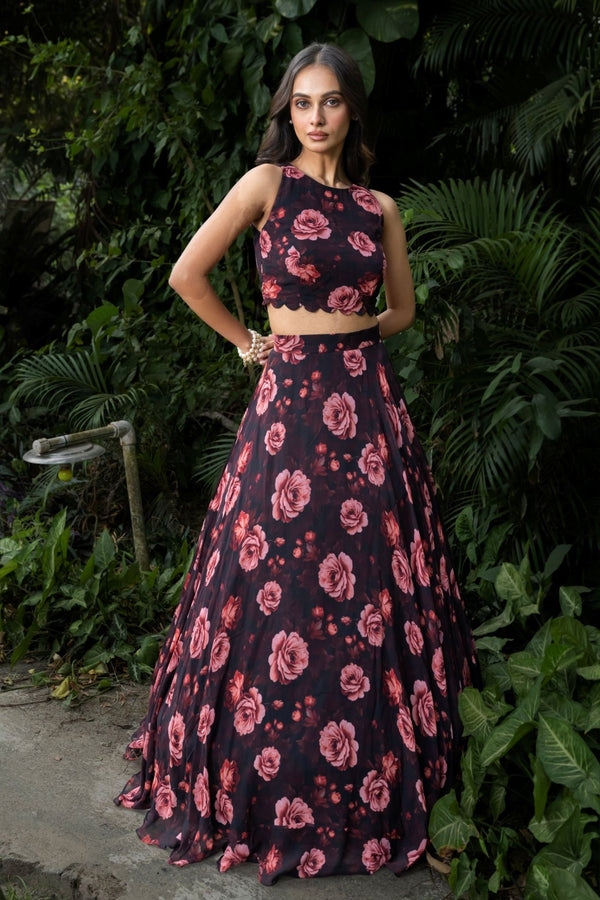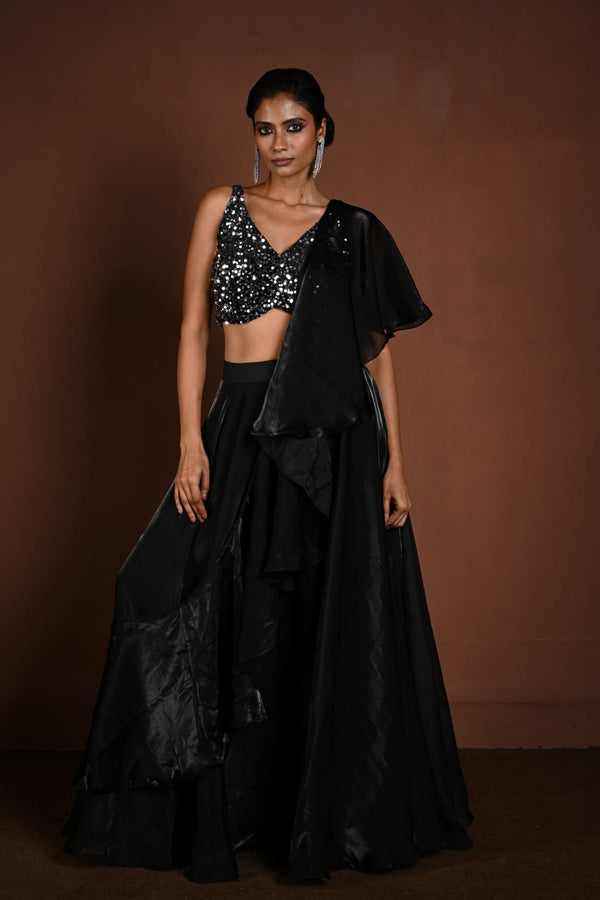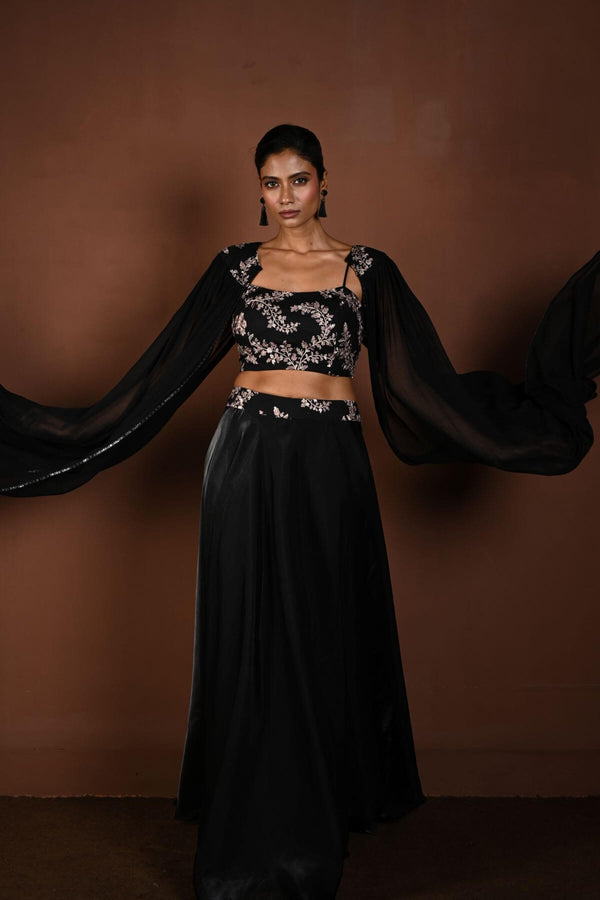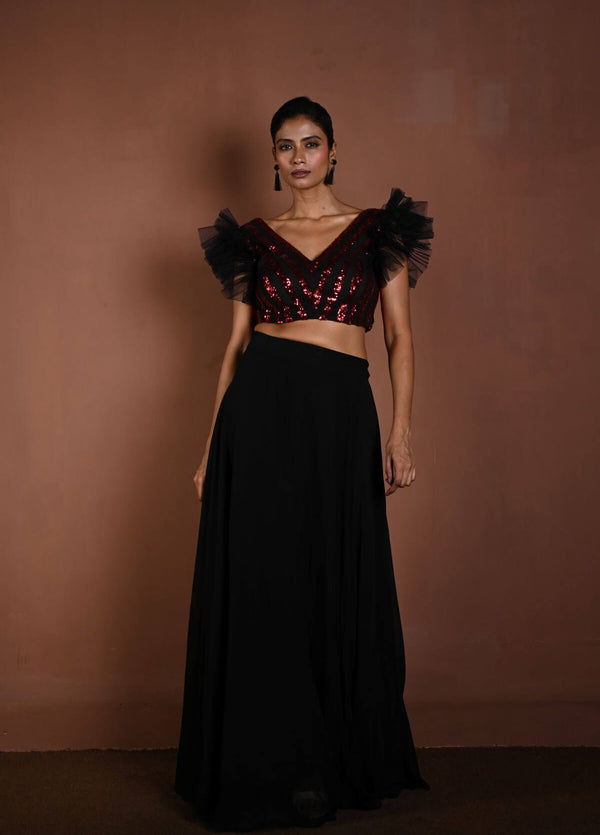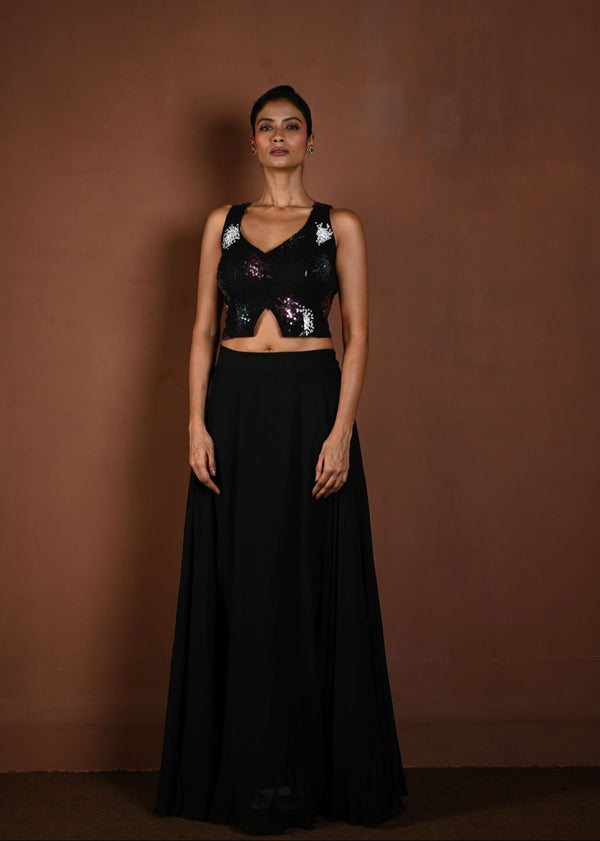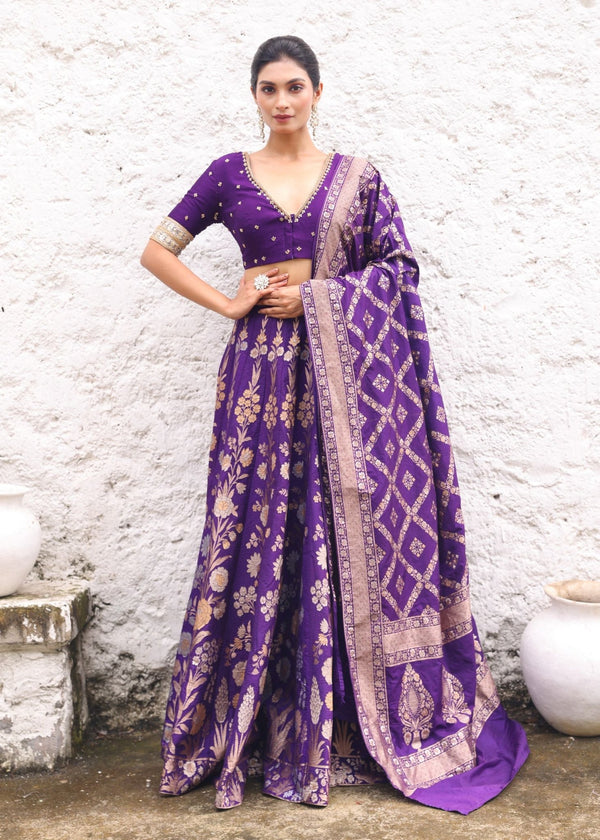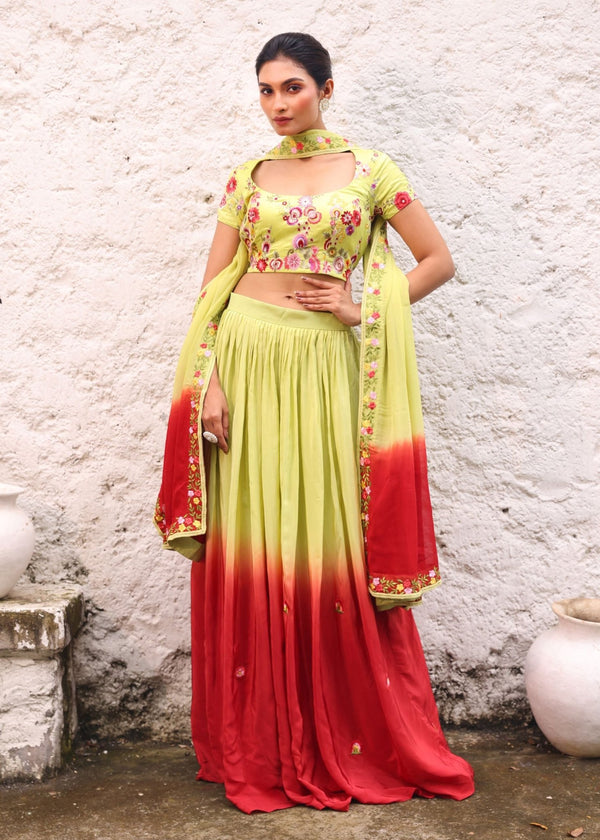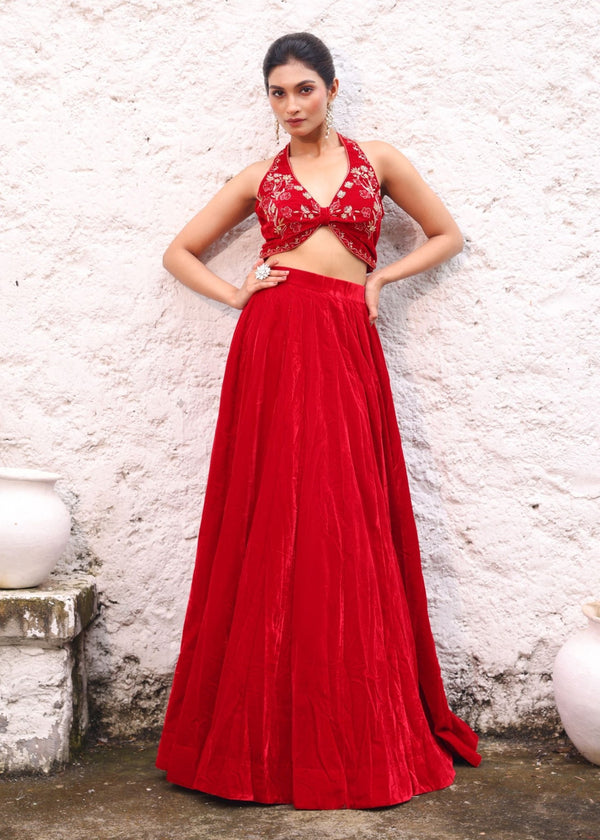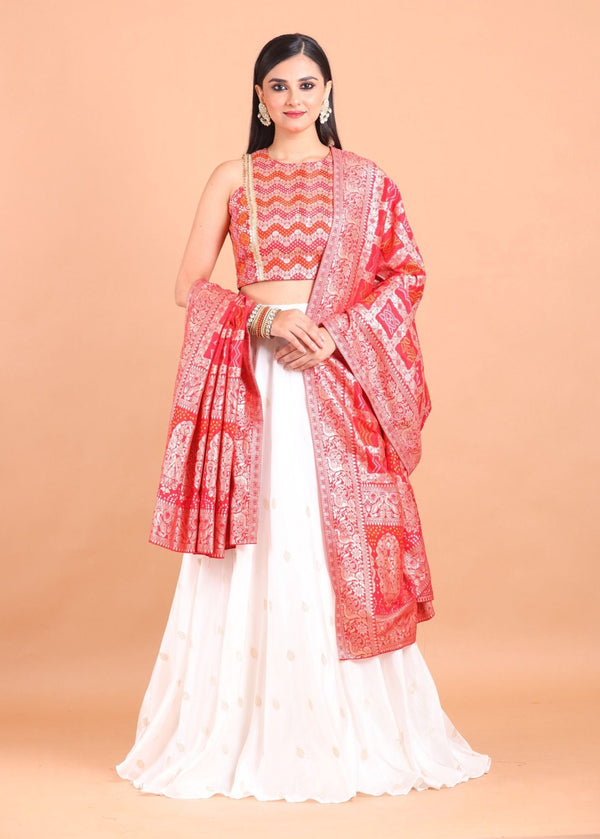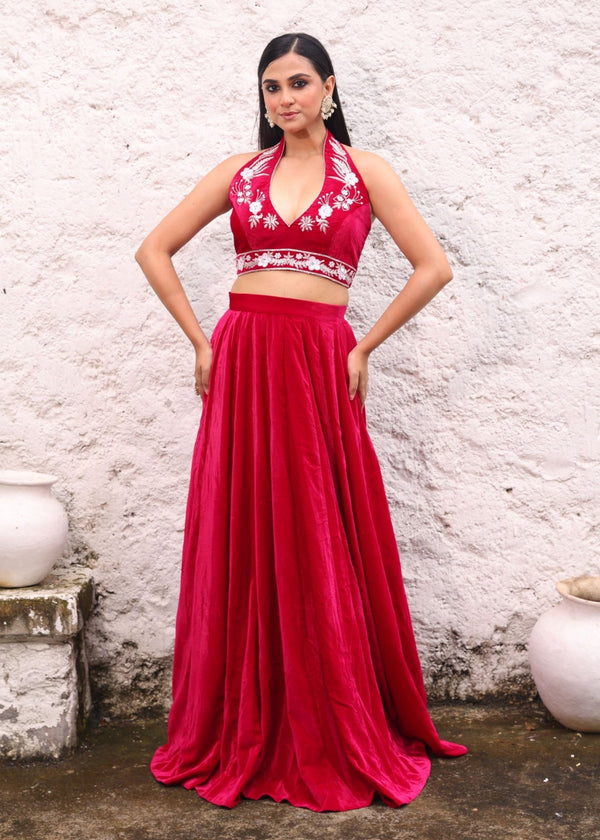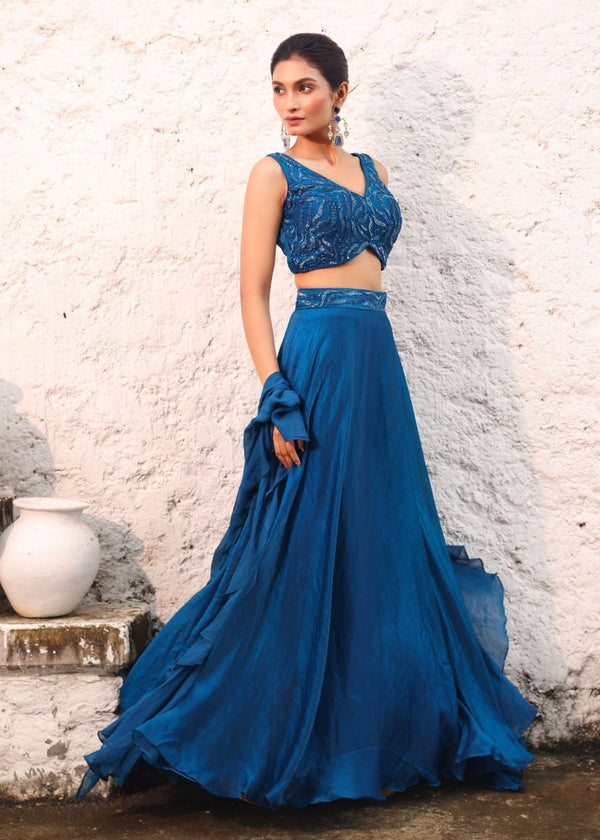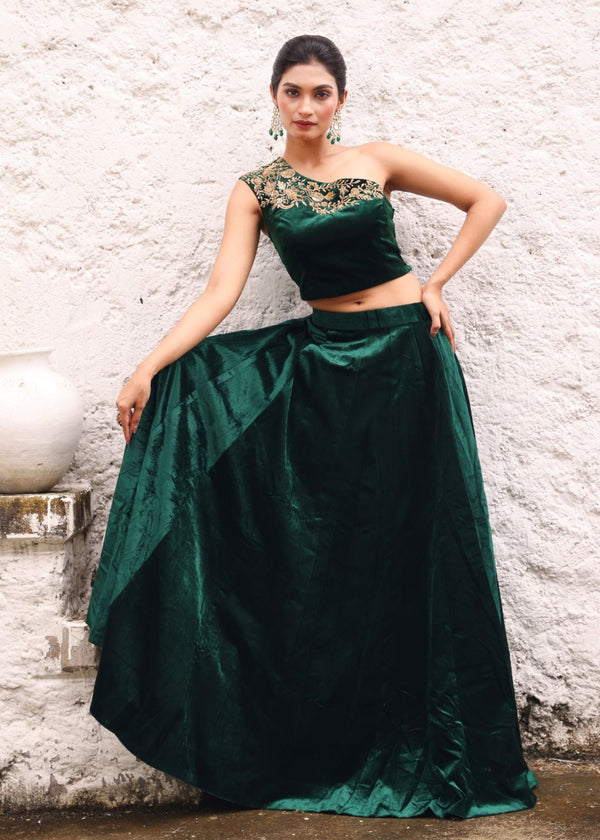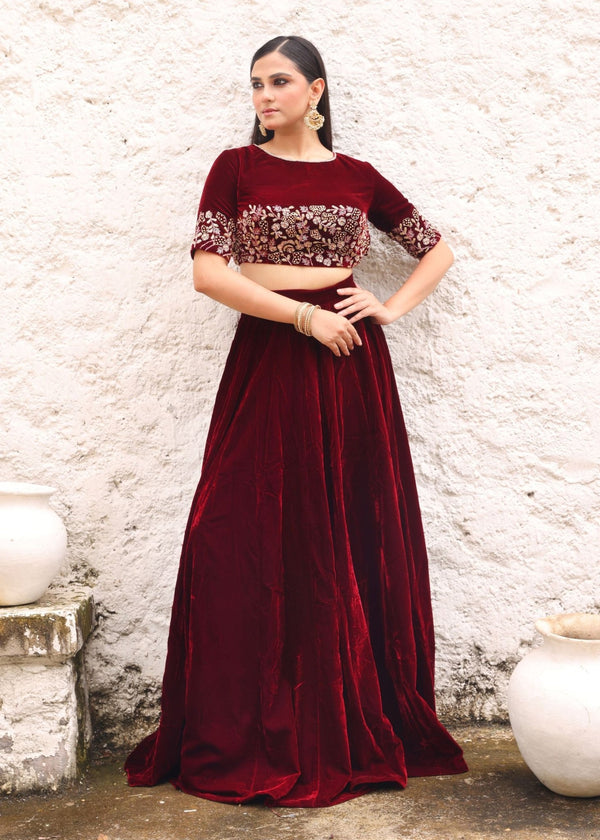




Lehenga and chaniya choli can look very similar at first glance. Both can have a flared skirt, fitted choli and a dupatta or odhani. So, is a chaniya choli the same as a lehenga?
Not exactly, but the two are closely related.
The main difference comes from regional identity, traditional use, silhouette, craftsmanship and styling. Chaniya choli is strongly associated with Gujarat, especially Navratri, Garba and Dandiya celebrations. Lehenga choli is a broader fashion term used for festive, wedding and bridal outfits across India.
There is also plenty of overlap. In modern Indian fashion, designers use different fabrics, cuts and embroidery techniques to create lehengas and chaniya cholis that borrow elements from one another. This is why knowing the traditional difference can make shopping much easier.
Lehenga vs Chaniya Choli at a Glance
|
Feature |
Lehenga Choli |
Chaniya Choli |
|
Regional association |
Widely worn across India, especially for weddings and formal celebrations |
Strongly associated with Gujarat and western India |
|
Basic outfit |
Flared skirt + choli + dupatta |
Chaniya/skirt + choli + odhani |
|
Traditional occasions |
Weddings, receptions, engagements and festive events |
Navratri, Garba, Dandiya and cultural celebrations |
|
Silhouette |
Can be A-line, circular, panelled, layered or contemporary |
Usually known for generous flare and movement |
|
Common fabrics |
Silk, brocade, velvet, organza, georgette, net and blends |
Cotton, Bandhani, rayon, georgette and other lightweight or traditional fabrics |
|
Common embellishment |
Zari, zardozi, sequins, gota patti, threadwork and stones |
Mirror work, folk embroidery, Bandhani, patchwork, beads and colourful threadwork |
|
Styling focus |
Formal, bridal or polished festive styling |
Colour, movement, folk-inspired styling and comfort |
|
Best known for |
Weddings and grand celebrations |
Navratri and Garba |
|
Can the styles overlap? |
Yes |
Yes |
The table gives a general comparison, but these differences are not strict rules. A modern chaniya choli can be heavily embellished, while a contemporary lehenga can be lightweight and comfortable. The occasion and design of the outfit matter just as much as its name.
Is Chaniya Choli the Same as Lehenga Choli?
This is one of the most common questions when shopping for Indian ethnic wear.
A chaniya choli and lehenga choli share the same basic outfit structure: a long or flared skirt, a choli and a dupatta or odhani. In fact, terms such as chaniya, ghagra and lehenga can overlap depending on the region and context.
The important difference is the cultural identity attached to the terms.
A chaniya choli is particularly associated with Gujarati culture and is strongly connected with Navratri, Garba and Dandiya. Its styling often includes vibrant colours, mirror work, Bandhani-inspired details and a generous flare that creates movement while dancing.
A lehenga choli is a broader fashion category. Today, it is widely used for bridal wear, wedding guest outfits, receptions, engagements, Sangeet ceremonies and festive occasions. It can range from a simple lightweight lehenga to a heavily embroidered bridal lehenga.
So, the easiest way to understand it is:
A chaniya choli can be considered part of the broader Indian skirt-and-choli tradition, but its Gujarati cultural identity and traditional styling make it distinct from the way the term lehenga is commonly used today.
What Is a Lehenga Choli?
A lehenga choli is a traditional Indian three-piece outfit consisting of a lehenga skirt, choli or blouse, and dupatta. The skirt can have different silhouettes, including A-line, circular, panelled and layered designs. Contemporary lehengas may also feature modern blouse cuts, corset-inspired cholis, crop blouses and statement dupattas.
Lehengas are especially popular for weddings and other occasions where a more formal ethnic look is expected. Depending on the design, they can feature silk, velvet, brocade, organza, georgette, net and other fabrics.
The embellishment can also vary widely. Zari, zardozi, sequins, resham embroidery, gota patti, pearls, stones and threadwork are commonly seen in festive and bridal designs.
A lehenga does not always have to be heavy. A lightweight georgette or organza lehenga can work well for a summer wedding, while a richly embroidered silk or velvet lehenga can create a more traditional bridal look.
Common Lehenga Styles
Some popular lehenga silhouettes include:
-
A-line lehenga
-
Circular or flared lehenga
-
Panelled lehenga
-
Layered lehenga
-
Bridal lehenga
-
Contemporary designer lehenga
-
Lightweight festive lehenga
The right silhouette depends on the occasion, comfort level and the amount of movement you expect during the event.
What Is a Chaniya Choli?
Chaniya choli is a traditional outfit strongly associated with Gujarat and Gujarati festive culture. It generally consists of a chaniya or flared skirt, choli and odhani.
The outfit is especially recognised during Navratri and Garba celebrations, where women often choose colourful skirts with mirror work, embroidery, traditional motifs and contrasting dupattas.
The chaniya is designed to create movement. Its flare, panels and vibrant detailing become especially noticeable while dancing.
Gujarati chaniya choli designs can include mirror work, Bandhani, patchwork, beads, shells, colourful threadwork and regional embroidery techniques. Contemporary versions may also combine traditional details with modern fabrics and blouse designs.
In other words, a chaniya choli is not simply a “lighter lehenga”. It carries its own regional fashion identity.
Lehenga vs Chaniya Choli: Difference in Regional Roots
The easiest way to understand these outfits is to look at their cultural context.
The term lehenga is now used widely across India for flared skirt-and-blouse ensembles, particularly formal and festive styles. Different regions have their own versions and traditions, and the modern designer lehenga has evolved considerably over time.
The chaniya choli, meanwhile, has a strong connection with Gujarat and its folk and festive traditions. It is particularly visible during Navratri, when Garba and Dandiya celebrations bring together music, dance, colour and traditional clothing.
It is important not to treat the two as completely separate garments. Indian traditional clothing has always evolved through regional exchange, and names such as lehenga, ghagra and chaniya may be used differently across communities.
What makes a Gujarati chaniya choli immediately recognisable is often the combination of colour, mirror work, folk-inspired embroidery, generous flare and festive styling.
1. Soft Mint Green Lehenga Choli Reflecting North Indian Heritage
A soft mint green lehenga choli brings together a flared silhouette, a fresh colour palette and detailed festive styling. A design like this works well for weddings, receptions and other celebrations where you want a polished ethnic look.

buy this product
2. Chaniya Choli with Vibrant Mirror Work for Gujarati Festive Celebrations
Mirror work is one of the most recognisable details associated with Gujarati festive dressing. A colourful chaniya choli with reflective embellishment can create a lively look for Garba nights, Navratri and cultural celebrations.

Source From Pinterest
Lehenga vs Chaniya Choli: Difference in Skirt and Silhouette
The skirt is where you can often notice the difference most clearly.
A traditional chaniya usually has a wide, generous flare. Multiple panels, gathers or kalis can create a beautiful circular movement, which is particularly useful for Garba and Dandiya.
Lehenga skirts can also be heavily flared, but their construction is much more varied. An A-line lehenga has a more controlled shape, while a circular or panelled lehenga can offer significant volume. Bridal lehengas may also include layers, can-can or structured underskirts to create a fuller silhouette.
Therefore, it is not correct to say that every chaniya is more flared than every lehenga.
Instead, think about the purpose:
Chaniya choli traditionally prioritises movement and dance, while lehenga designs offer a wider range of silhouettes for formal, bridal and festive styling.
Lehenga vs Chaniya Choli: Difference in Fabric
Fabric plays an important role in how an outfit looks and feels.
Lehengas can be made from silk, brocade, velvet, organza, georgette, net, satin and blended fabrics. Richer fabrics are often selected for weddings and formal events because they create structure and add visual depth to embroidery.Chaniya cholis are traditionally associated with cotton and other comfortable fabrics, along with Bandhani and colourful textile traditions. However, modern chaniya cholis can also be made from georgette, rayon, silk blends and other fashion fabrics.For Garba, fabric selection should be based on breathability, weight and movement. If you plan to dance for several hours, a lighter outfit is generally more comfortable than a heavily layered ensemble.
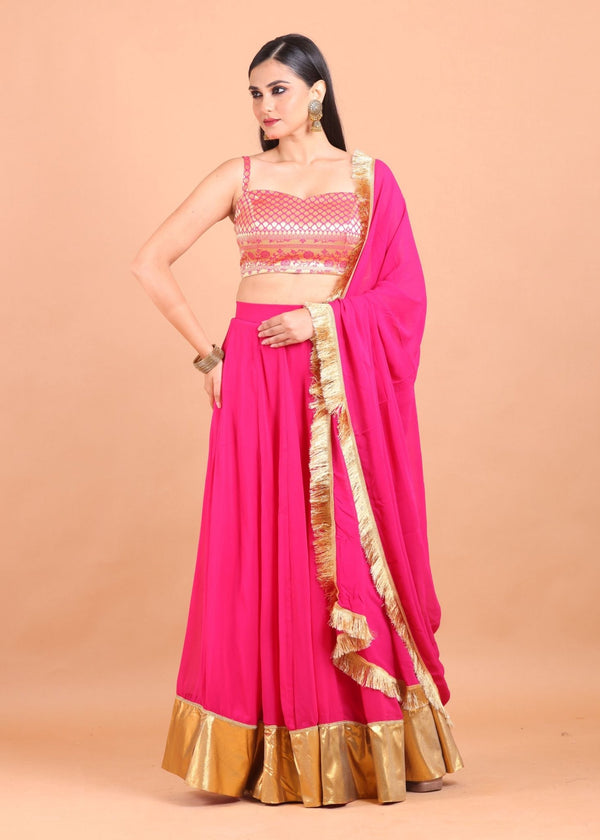
1. Bright Pink Lehenga Skirt with Blouse Set and Dupatta
A bright pink lehenga with a matching blouse and dupatta can create a strong festive look. The colour makes the outfit suitable for weddings, receptions, festive parties and other celebrations.

2. Red Color Mirror Work Printed Cotton Chaniya Choli
A cotton chaniya choli with mirror work and colourful prints combines traditional detailing with a comfortable fabric. It can be a practical choice for festive gatherings and cultural celebrations where movement is important.

Source From Pinterest
Lehenga vs Chaniya Choli: Difference in Embroidery and Craftsmanship
The embroidery and surface detailing can also help create a visual difference.
Lehengas for weddings and formal occasions may feature zari, zardozi, sequins, resham embroidery, pearls, stones and gota patti. The embroidery is often concentrated around the hem, panels, waistband and blouse to create a rich finish.
Chaniya cholis are widely associated with mirror work, colourful threadwork, patchwork, Bandhani, beads and folk-inspired motifs. These details often create a bright and playful appearance.
However, modern fashion has blurred these boundaries. You can now find heavily embroidered chaniya cholis and lightweight lehengas with mirror work.
1. Yellow Net Embroidery Work Lehenga for a Soft Festive Look
A yellow net lehenga with floral embroidery offers a softer take on traditional festive dressing. The light colour and detailed embroidery can work particularly well for weddings, receptions and evening celebrations.

2. Cotton Chaniya Choli with Embroidery and Patch Work
Embroidery and patchwork can give a cotton chaniya choli a distinctly handcrafted appearance. Combined with colourful textile details, these techniques create a festive look that feels connected to folk fashion.

Source From Pinterest
How Do You Style a Lehenga vs a Chaniya Choli?
Styling depends largely on the occasion.
A lehenga is often styled with statement jewellery, embellished footwear and a more structured dupatta drape. For weddings, women may pair it with jhumkas, chandbalis, a choker or layered necklace depending on the neckline of the blouse.A chaniya choli can be styled with oxidised jewellery, colourful bangles, jhumkas, anklets and traditional footwear. The odhani can be draped over the shoulder or styled in a way that keeps it secure while dancing.For Garba, comfort is particularly important. Avoid accessories or dupatta styling that restrict movement.
1. Red Organza Lehenga Paired with Jewellery
A red organza lehenga paired with statement jewellery creates a polished festive appearance. This combination can work particularly well for wedding receptions, engagement celebrations and formal festive events.

2. Chaniya Choli with Digital Prints for a Contemporary Festive Look
Traditional chaniya choli does not have to look old-fashioned. Digital prints, modern blouse cuts and contemporary colour combinations can give the outfit a more current appearance while keeping its flared silhouette and festive character.
Lehenga vs Chaniya Choli: Which One Should You Wear?
There is no single winner. The better choice depends on the event, dress code, comfort and the type of look you want.
For a Wedding
A lehenga is usually the more natural choice for a main wedding ceremony or reception, especially when the dress code is formal. Choose the fabric and embroidery according to the level of formality.
For Sangeet
Both can work well. If you expect a lot of dancing, choose a lighter lehenga or a chaniya-inspired silhouette with enough flare for movement.
For Mehendi
A colourful chaniya choli, lightweight lehenga or fusion lehenga can work beautifully for a Mehendi celebration.
For Navratri and Garba
Chaniya choli is the traditional choice, particularly if you plan to participate in Garba or Dandiya. The flare, festive colours and movement-friendly construction make it well suited to the occasion.
For a Wedding Reception
A formal lehenga generally works better when the event calls for a polished and heavily styled ethnic look. A lightweight designer lehenga can also be comfortable enough for a long evening.
For a Cultural Celebration
A chaniya choli can be an excellent choice when the event celebrates Gujarati or western Indian traditions. Its folk-inspired details help create a stronger cultural connection.
Can You Wear a Chaniya Choli to a Wedding?
Yes. A chaniya choli can absolutely be worn to a wedding, but the styling should match the event. For a Gujarati wedding, Garba night, Sangeet or Mehendi, a richly detailed chaniya choli can be a beautiful choice. For a very formal wedding ceremony or reception, you may prefer a more structured lehenga, especially if the invitation calls for formal or traditional wedding attire. The key is not simply the name of the outfit. Look at the fabric, embroidery, colour palette, blouse design and overall finish.
Can You Wear a Lehenga for Garba?
Yes, but choose the right lehenga.
A very heavy bridal lehenga with dense embroidery, multiple layers and a long dupatta may not be the most comfortable option for several hours of Garba.
Instead, choose a lehenga with:
-
A comfortable waistband
-
Good flare
-
Lightweight fabric
-
Secure dupatta styling
-
Minimal heavy layering
-
Comfortable footwear
If dancing is your main priority, a traditional chaniya choli is generally the more practical option.
Lehenga vs Ghagra vs Chaniya Choli: What’s the Difference?
These terms can be confusing because Indian traditional clothing has different names across regions.A lehenga generally refers to a long, flared skirt and is now widely used in contemporary fashion.A ghagra is another traditional term for a flared skirt and is used across several regions of India.A chaniya is commonly used in Gujarati to refer to the skirt worn as part of a chaniya choli.The terms can overlap, especially in modern fashion. The cultural context, fabric, silhouette and craftsmanship often tell you more about the outfit than the label alone.This is why a modern designer may use terms such as lehenga, ghagra, chaniya or lehenga choli for garments that share similar construction.
How to Choose the Right Lehenga or Chaniya Choli
Before choosing between the two, think beyond colour and embroidery.
1. Consider the Occasion
Start with the event. A wedding reception, Navratri night and daytime festive celebration have very different dress requirements.
2. Choose the Right Fabric
If you will be dancing or attending an outdoor event for several hours, look for fabrics that are comfortable and allow movement. For formal occasions, richer fabrics can create more structure and visual depth.
3. Check the Flare and Movement
Try to understand how much volume the skirt has. If you plan to dance, walk frequently or sit comfortably, make sure the flare does not restrict movement.
4. Consider Embellishment and Weight
Heavy embroidery can make an outfit look beautiful, but it also adds weight. For a long event, balance the amount of embellishment with comfort.
5. Check the Choli Fit
The blouse should fit properly around the bust, shoulders, waist and armholes. A beautiful lehenga or chaniya choli can feel uncomfortable if the choli is too tight or the armhole restricts movement.
6. Plan the Dupatta or Odhani
Think about how you will wear it. For a formal wedding, a traditional shoulder or head drape may work well. For Garba, a secure and movement-friendly drape is much more practical.
Modern Lehenga and Chaniya Choli Styles
Modern Indian fashion has made the difference between lehenga and chaniya choli less rigid.Designers now combine traditional crafts with contemporary silhouettes, including:
-
Crop cholis
-
Corset-inspired blouses
-
Statement sleeves
-
Digital prints
-
Contemporary mirror work
-
Modern colour combinations
-
Lightweight fabrics
-
Fusion dupatta styling
-
Belted lehengas
-
Minimal embroidery
This means you do not always have to choose between “traditional” and “modern”.A chaniya choli can have a contemporary blouse and still retain its Gujarati character. Similarly, a lehenga can use mirror work, Bandhani-inspired prints or a wider flare while still looking appropriate for a formal event.
Lehenga or Chaniya Choli: Which One Is Better?
The answer depends on what you need from the outfit.
Choose a lehenga when you want a formal, bridal or polished festive look for a wedding, reception, engagement or grand celebration.Choose a chaniya choli when you want a colourful, movement-friendly outfit for Navratri, Garba, Dandiya or a Gujarati cultural celebration.If you are still confused, ask yourself one simple question:Do I need the outfit mainly for formal styling or for movement and celebration?For formal styling, a lehenga may be the better choice. For dancing and traditional festive energy, a chaniya choli is often the more natural choice.Both are beautiful expressions of Indian fashion, and modern designs allow plenty of room for the two styles to overlap.